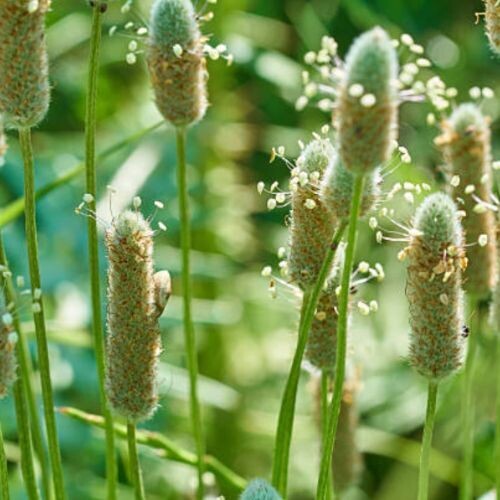
PSYLLIUM for Horses (Organic)
Sand exposure, loose droppings, or a gut that could use a little more "mopping up"?
Psyllium is one of the first individual fibres we’d consider where sand intake may be a concern, or where droppings need help holding their form.
The husk absorbs water and expands to create a soft, gel-like fibre mass within the digestive tract. This gives Psyllium its rather useful ability to support normal intestinal clearance while helping to mop up excess moisture and become part of a more formed dropping.
It can be fed individually when this particular fibre action is the priority, or used within a wider gut-support plan where digestive balance needs a little more help.
A quiet-looking husk with a surprisingly clever relationship with water. Nature’s gut broom has rather more finesse than its nickname suggests.
*Please note this is a nutritional, functional horse food supplement and not veterinary medicine.
For more on this see Dr Kellon's Horse Sense - Nutrition is not 'Alternative' Therapy
.
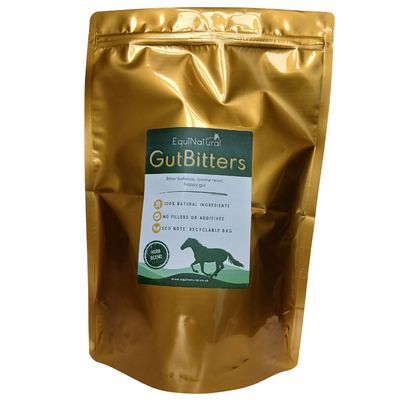
Find organic Psyllium in the EquiNatural range
Here’s where you’ll also find Psyllium in our supplement support for horses:
- SiboCARE- effective equine hindgut dysbiosis/SIBO stabiliser
- VermClear- supports parasite clearance naturally
Overview - why Is Psyllium so useful for the horse's gut?
Psyllium - a fibre with two faces
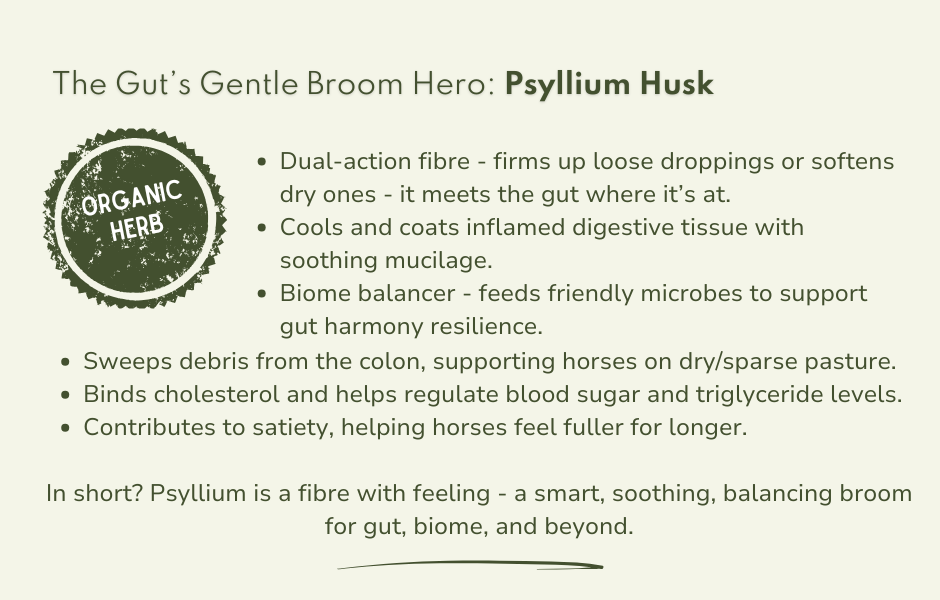
Psyllium is affectionately known as the “colon broom” - and for good reason. Its husks are rich in both soluble and insoluble fibre, making it one of nature’s most effective and versatile gut balancers.
What makes psyllium special is that it works in both directions:
- If things are overly wet, Psyllium's fibre absorbs and holds water, helping loose droppings develop more structure and firm up.
- If things are sluggish, psyllium adds bulk and moisture, making stools softer, larger, and easier to pass.
In other words, whether digestive contents are overly wet or moving a little sluggishly, Psyllium's unusual relationship with water helps support better moisture, structure and movement.
Add water to Psyllium husk and something rather extraordinary happens
Those light, dry flakes begin to swell, holding many times their own weight in water and forming a thick, slippery gel.
This comes from the husk’s unusual fibre structure. Psyllium contains a high proportion of soluble, gel-forming fibre alongside less soluble material that contributes bulk. Together, these give it a physical action within the digestive tract that few other fibres quite replicate.
And that helps explain its two best-known uses in horses.
Sand and normal intestinal clearance
Horses grazing sparse pasture, eating hay from sandy ground or simply being enthusiastic hooverers can take in soil and sand along with their forage.
Psyllium’s expanding, water-rich fibre adds bulk to the intestinal contents and helps support their normal passage through the gut. This is where the familiar “gut broom” description comes from – although Psyllium behaves rather more like a soft gel moving with the digestive contents than a little brush sweeping the bowel.
It’s useful support where sand exposure is part of the horse’s environment, but good management still matters: feed forage away from bare ground, avoid overgrazing and seek veterinary advice if sand accumulation or colic is suspected.
Helping droppings hold their form
Psyllium can also be useful when droppings are loose or overly wet.
Because its fibre binds water, it helps incorporate excess fluid into the digestive contents, giving the droppings more structure as they move through the bowel. This is why the same herb associated with supporting clearance can also help when everything appears to be travelling a little too freely.
If loose droppings continue or repeatedly return, though, Psyllium may only be one piece of the picture. Forage changes, spring grass, stress, dental health, parasites and hindgut imbalance may all need considering.
Fibre for the microbiome
Psyllium doesn’t simply pass through unnoticed.
Some of its fibre can be fermented by the hindgut microbiome, providing substrate for beneficial bacteria and contributing to the short-chain fatty acids produced during fibre fermentation. These compounds help nourish the intestinal environment and support normal gut function.
So Psyllium’s value lies in a deceptively simple physical quality: it holds water beautifully.
That allows one modest little husk to add moisture, bind excess fluid, provide bulk and support healthy movement through the digestive tract – depending on what it meets along the way.
Nature’s gut broom, perhaps. But a rather clever, gel-forming one.
Composition & feed guide
🌿Organic Dried Psyllium Husk
Grown, harvested and dried without the use of agri-chemicals, non-irradiated and GMO free - see our Quality page for Quality Management & Certification Documents.
- Plantago ovata, d ried husks
- Organically cultivated
- Origin France
- Feed Guide - 5g/100kg bodyweight per day, i.e. 25g for a 500kg horse.
Recommended
- If your horse is experiencing a spell of looser poo – perhaps around spring grass or a forage change – Psyllium can be fed daily while additional fibre support is useful. If it persists or repeatedly returns, we'd look at the wider digestive picture rather than simply continuing to mop up the moisture.
Footnotes
- Laboratory tested for identification and compliance to the British and European Pharmacopoeia standards.
- Human grade.
- Please be aware that if you're purchasing our dried botanicals for human use, our dried range is cut to appropriate sizes for feeding to horses.
- ♻️ Eco Note: Our packaging is recyclable and refillable.
- 🧊 Storage Tip: Keep cool and dry.
"Energetics" - how Psyllium works
When it comes to herbs and herbal formulations, you may have heard herbalists talk about energetics. It’s simply the way we describe how a herb or formula supports the body in a balanced and purposeful way. The science helps us understand why that structure works.
Psyllium is a classic mucilaginous, bulk-forming fibre, supporting digestive consistency and movement through its remarkable ability to absorb and hold water.
Think of it as helping the contents of the gut find the right balance between moisture, structure and movement.
How Psyllium works
- Holds water – gel-forming soluble fibre absorbs and retains moisture.
- Creates structure – hydrated fibre adds soft bulk and incorporates excess free water into the digestive contents.
- Supports gut motility – that better-structured, water-rich mass moves onwards with the bowel's normal contractions.
Some fibre is also fermented by the hindgut microbiome, contributing to the nutritional environment of the gut.
Big picture
Psyllium isn’t really a laxative or a stool firmer. It’s an adaptable fibre that responds to the conditions it meets.
Too wet, it mops up. Too dry, it holds water. Either way, its job is better-structured movement through the gut.
Clinical considerations
Psyllium is considered well tolerated. However, it could delay the absorption of certain medications, therefore we suggest consulting your vet if your horse is on other medicines.
Psyllium FAQs
My horse has loose poo – is Psyllium worth trying?
Yes – particularly when the problem is simply that the droppings contain rather more water than we'd like.
Psyllium absorbs and holds water, forming a soft gel within the digestive contents. Instead of all that excess moisture remaining free, some becomes incorporated into the fibre mass, helping the droppings hold their shape a little better.
For something that looks suspiciously like a bag of beige flakes, it's remarkably clever stuff. If loose droppings keep returning, though, we'd look beyond simply firming them up. Spring grass, forage changes, stress, parasites, dental health and hindgut imbalance can all be part of the wider picture.
How can Psyllium help loose poo AND constipation? Surely that's doing opposite things?
It sounds completely contradictory, doesn't it? The secret is that Psyllium isn't really telling the bowel to speed up or slow down.
It's holding water.
Where things are overly wet, its gel-forming fibre binds excess moisture and adds structure. Where digestive contents are drier or sluggish, that same fibre retains water and adds soft bulk.
So rather than forcing the gut in one direction, Psyllium helps create better-structured digestive contents for the bowel to move naturally onwards.
A bit less traffic policeman; a bit more moisture manager.
Does Psyllium actually sweep sand out of my horse's gut?
Not quite – despite its famous “gut broom” nickname.
Psyllium doesn't scrub the intestine clean or somehow grab individual grains of sand as it passes.
Once hydrated, it creates a bulky, water-rich fibre mass that becomes incorporated into the intestinal contents and moves onwards with the bowel's normal contractions.
That's why it's traditionally used where horses may ingest sand or soil – particularly those grazing sparse paddocks or enthusiastically hoovering forage from bare ground.
And yes, we're looking at you, horse who can apparently locate the one remaining blade of grass in an acre of mud. 😉
Should I feed Psyllium routinely if my horse lives on sandy ground?
Psyllium can be useful nutritional support where sand exposure is part of everyday life, but we'd never want the supplement tub to replace sensible management.
Feeding forage away from bare sandy ground, avoiding overgrazing and reducing the amount of soil or sand being swallowed in the first place are still enormously important.
And if you suspect your horse may already have significant sand accumulation – particularly if they're showing colic signs or digestive discomfort – that's a vet conversation, rather than simply adding more Psyllium to the feed bowl.
Does Psyllium feed the good bacteria too?
Some of it can, yes.
Psyllium is best known for what it physically does with water, but some of its fibre can also be fermented by the hindgut microbiome.
That fermentation contributes to the production of short-chain fatty acids, which form part of the healthy nutritional environment supporting the intestinal lining.
So while we're admiring Psyllium for its clever mopping abilities, the microbiome hasn't been entirely forgotten either.
When is Psyllium not enough for loose poo?
This is probably the most important question of the lot.
If your horse has a short spell of wetter droppings – perhaps during a spring grass flush or forage change – Psyllium may be all the additional support they need.
But if loose droppings are persistent, repeatedly return, or sit alongside bloating, excessive gas, digestive sensitivity or other signs that the hindgut itself isn't particularly happy, we'd start asking why rather than endlessly mopping up the evidence.
That's when we'd look at the wider digestive picture and whether more targeted gut support – such as SiboCARE – might be appropriate.
Because sometimes the wet poo is the problem, or sometimes it's simply the clue.
© EquiNatural 2026. All content is original work protected under copyright, and may not be re-published, duplicated, or rewritten for commercial use without permission.