
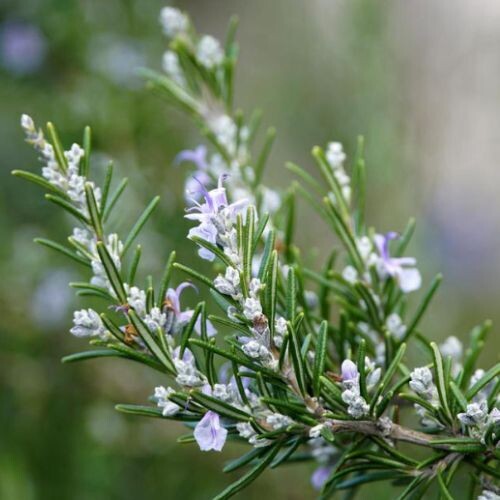
ROSEMARY for Horses (Salvia rosmarinus) | Gut Microbiome & Digestive Support
Looking for aromatic support for a healthier gut environment?
Rosemary is one of the individual herbs we’d consider when microbial balance and sluggish digestive function are the main priorities.
Its fragrant volatile oils give Rosemary its traditional digestive character, while rosmarinic acid and other protective plant compounds help support the intestinal environment and normal antioxidant defences.
Feed it individually when Rosemary’s particular aromatic action is what you’re looking for, or find it within our BiomeTonic where it works alongside other oily herbs as part of a wider microbiome-support plan.
It may smell like Sunday lunch, but Rosemary is doing much more interesting work further south!
*Please note this is a nutritional, functional horse food supplement and not veterinary medicine.
See Dr Kellon's Horse Sense - Nutrition is not 'Alternative' Therapy
.
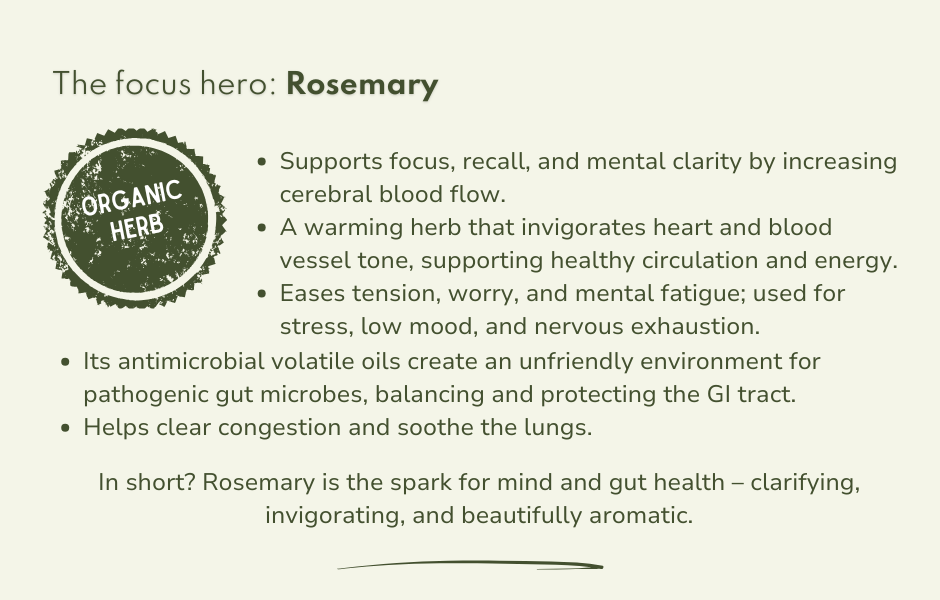
Find Rosemary in the EquiNatural range
We blend rosemary into our BiomeTonic , together with other ‘oily’ herbs to complement the intestinal environment.
Overview – why does the gut take Rosemary so seriously?
Crush a Rosemary leaf between your fingers and its character announces itself immediately.
That powerful Mediterranean aroma comes from the plant’s volatile oils – including cineole, camphor and borneol – alongside protective compounds such as rosmarinic and carnosic acids.
Together, they help explain why Rosemary has been valued for centuries wherever digestion feels sluggish and the intestinal environment needs a little more botanical encouragement.
An aromatic herb for digestive movement
Digestion depends upon movement, secretions and communication between the gut, nervous system and microbiome.
Traditional herbalists use aromatic herbs such as Rosemary to help wake up this digestive activity – supporting normal secretions, comfortable movement through the gastrointestinal tract and the efficient handling of food.
It isn’t about pushing the gut into overdrive - think of it as opening the kitchen windows and encouraging everyone to get back to work.
Microbial balance – not microbial wipe-out
A healthy gut is not a sterile one. It relies upon a vast and diverse community of bacteria, fungi and other microorganisms working alongside the horse.
Rosemary’s volatile oils and polyphenols have shown antimicrobial activity in laboratory research, while studies in other species suggest its compounds can influence the composition and activity of the gut microbiota.
That doesn’t mean Rosemary marches through the hindgut indiscriminately destroying microbes. That's why our interest in Rosemary is less about microbial wipe-out and more about supporting the wider intestinal environment in which a balanced community can function.
Current microbiome research is promising, but most Rosemary studies have used isolated compounds, concentrated extracts or non-equine models. We therefore keep its equine placement firmly within traditional digestive and nutritional support.
Protecting the intestinal environment
The gut lining is constantly exposed to food particles, fermentation products, microbes and the oxidative work of everyday metabolism.
Rosemary’s rosmarinic acid, carnosic acid and flavonoids contribute antioxidant support, helping protect cells and tissues within that busy digestive environment.
This is an important part of Rosemary’s character. It doesn’t simply bring aromatic microbial support; it also helps look after the terrain in which the microbiome lives.
Where does Rosemary fit?
Choose Rosemary when you want one aromatic herb to support digestive tone, microbial balance and the intestinal environment.
Where the horse needs broader support across microbial diversity and natural parasite resilience, BiomeTonic brings Rosemary together with complementary oily herbs.
Bright, warming and unmistakably aromatic, Rosemary helps keep the digestive environment moving, protected and suitably inhospitable to the wrong dinner guests.
Feed guide
💧Organic Rosemary Leaf Tincture
Our human-grade, certified organic tinctures capture the plant's naturally occurring constituents in a concentrated, easy-to-feed liquid form.
- Rosmarinus officinalis (Rosemary), Leaf
- Distilled/Infused 1:3 30%
- Organic Cultivated
- Feed Guide - 6ml/100kg bodyweight, daily in feed.
🌿Organic Dried Rosemary Leaf
Grown, harvested and dried without the use of agri-chemicals, non-irradiated and GMO free - see our Quality page for Quality Management & Certification Documents.
- Rosmarinus officinalis (Rosemary), Leaf
- Wild Harvested
- Origin Spain/Turkey
Feed Guide - 5g/100kg bodyweight per day, i.e. 25g for a 500kg horse.
Footnotes
- Laboratory tested for identification and compliance to the British and European Pharmacopoeia standards.
- Human grade.
- Please be aware that if you're purchasing our dried botanicals for human use, our dried range is cut to appropriate sizes for feeding to horses.
- ♻️ Eco Note: Our packaging is recyclable and refillable.
- 🧊 Storage Tip: Keep cool and dry.
Naturally occurring plant constituents
Include volatile oils such as cineole, camphor and borneol; rosmarinic and carnosic acids; flavonoids; diterpenes, triterpenes and other polyphenolic compounds.
Energetics - how Rosemary works
If you want the science, 'energetic architecture' explains how a herb is designed to work within the body – not just what's in it, but the particular tissues and functions it has an affinity with.
How Rosemary works
- Waking up digestive function - Rosemary’s volatile oils stimulate the senses as soon as the leaf is crushed. Within the digestive system, this aromatic character traditionally supports normal secretions, digestive tone and comfortable movement – particularly where everything feels a little sluggish.
- Shaping the microbial environment - Rosemary's volatile oils have demonstrated antimicrobial activity in laboratory research, supporting its traditional use where maintaining a healthy intestinal environment is the aim.
- Protecting - Rosmarinic acid, carnosic acid and other polyphenols provide antioxidant support for the intestinal tissues. This helps protect the busy environment in which digestion, fermentation and microbial communication take place.
Big picture
Rosemary doesn’t support the microbiome by focusing upon microbes alone. It works on the whole environment – digestive activity, microbial balance and the tissues underneath.
Wake up the function, steady the residents, protect the environment.
Clinical considerations
- Generally regarded as safe, but always check with your vet before feeding to the pregnant or nursing mare.
Rosemary in history & tradition
Crush a Rosemary leaf between your fingers and you immediately know you've done it.
That unmistakable rush of warm, resinous aroma seems to fill the whole space around you – which perhaps explains why people have been finding uses for Rosemary for thousands of years.
Native to the Mediterranean, it thrives in hot, dry places close to the sea, and its old name rosmarinus is traditionally translated as “dew of the sea”. The loveliest name for something we mostly associate with roast potatoes.
The herb of remembrance
Rosemary became deeply woven into Greek and Roman life, particularly around memory, loyalty and remembrance. It was worn, carried and used ceremonially, and over the centuries found its way into weddings, funerals and countless household traditions.
That association with memory proved remarkably persistent. Even Shakespeare gave it to Ophelia in Hamlet :
“There's rosemary, that's for remembrance.”
And long before anyone began investigating Rosemary's aromatic compounds in a lab, people had already noticed that its scent seemed to sharpen the senses and clear a foggy head.
And they didn't know about cineole, camphor or rosmarinic acid. They just knew Rosemary made everything feel alright...
From herb garden to cooking pot
Of course, Rosemary didn't remain tucked away in ceremonial wreaths. It appeared in kitchens, herb gardens, infusions, remedies... And that's where its other great reputation developed – as a warming aromatic herb for digestion.
There's a simplicity to it when you think about it - smell Rosemary and your senses immediately respond. Taste it and the same aromatic oils arrive in the digestive tract, where generations of herbalists used it whenever digestion seemed sluggish and needed a bit of encouragement.
And long before anybody talked about gut microbes, they were already using aromatic plants to change the digestive environment.
The language has moved on rather a lot, but rosemary itself hasn't.
Rosemary today
These days we can look more closely at those volatile oils and protective polyphenols and begin to understand why Rosemary became such a valued digestive herb.
But I think the old herbalists had already captured its character rather well - it's an awakener.
It wakes up the senses. It traditionally wakes up sluggish digestion. And its wonderfully aromatic chemistry helps explain why we're still interested in Rosemary wherever digestive function and microbial balance are the priorities.
Which makes it a perfect fit for the modern horse's gut - not bad for something that smells like Sunday lunch.
Rosemary FAQs
How do I know if Rosemary is the right herb for my horse?
If you're looking for one individual herb with a particular affinity for digestion + microbial balance, Rosemary is a lovely place to look for sluggish digestive function and supporting a healthy microbial environment.
It's traditionally used to encourage normal digestive secretions, comfortable gut movement and digestive tone, while its volatile oils and protective plant compounds bring another dimension to the intestinal environment.
And you get that unmistakable Sunday-lunch smell thrown in for free.
What do you mean by “sluggish digestion”?
Not necessarily a horse with an obvious digestive problem. We're talking more about the normal digestive machinery – secretions, movement and the efficient handling of food – where aromatic herbs have traditionally been used to give things a little botanical nudge.
Rosemary's volatile oils are what give it that bright, stimulating character.
If Rosemary is antimicrobial, won't it kill the good gut bacteria too?
A healthy hindgut needs a rich and diverse microbial population, so the last thing we're trying to create is a sterile gut.
Rosemary's volatile oils have shown antimicrobial activity in laboratory research, and there's growing interest in how its plant compounds may influence microbial communities. But most of that research isn't in horses, so we don't translate it into claims that Rosemary selectively kills particular equine gut microbes.
Instead, we use it as traditional aromatic support for a healthy intestinal environment and microbial balance.
Microbial support , not microbial wipe-out.
What's the difference between feeding Rosemary and BiomeTonic?
- Rosemary is the individual-herb option when its particular aromatic digestive character is what you're looking for.
- BiomeTonic takes a wider approach, combining Rosemary with other oily herbs as part of a broader formula for hindgut microbial balance and natural parasite resilience.
So if Rosemary itself fits the horse, feed Rosemary.
If you're looking at the wider hindgut ecosystem, we'd be more inclined towards BiomeTonic.
Can Rosemary be fed every day?
Yes, Rosemary can be used as everyday nutritional herbal support.
As with any individual herb, though, we'd periodically ask whether it's still doing a useful job rather than assuming it needs permanent residency in the feed room.
Feed the herb that fits the horse – for as long as it still fits.
© EquiNatural 2026. All content is original work protected under copyright, and may not be re-published, duplicated, or rewritten for commercial use without permission.
