
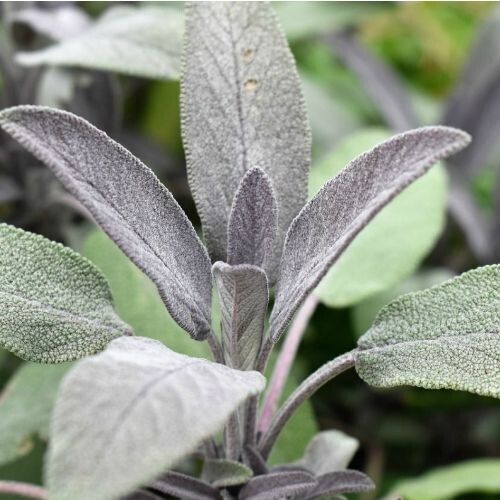
SAGE for Horses (Salvia officinalis) | Gut Microbiome & Digestive Support
When the gut needs a little more tone as well as microbial support.
Sage is one of the individual herbs we’d consider where digestion feels sluggish, the intestinal environment needs support, or droppings have become a little softer than usual.
Its aromatic oils help support microbial balance, while its bitters encourage normal digestive activity and its tannins provide a gently drying, tissue-toning action.
Feed Sage individually when that particular combination is the priority, or find it within BiomeTonic where it works alongside Rosemary, Oregano and other protective oily herbs.
A familiar kitchen herb, but one with a surprisingly firm grasp of what should, and shouldn’t, be happening after dinner.
*P
lease note this is a nutritional, functional horse food supplement and not veterinary medicine.
See Dr Kellon's Horse Sense - Nutrition is not 'Alternative' Therapy
.

Find Sage in the EquiNatural range
We use Sage within BiomeTonic , where its aromatic oils, bitters and tannins complement the wider digestive and microbial formula. You'll also find it in VermClear and MellowMare , where it contributes its broader herbal character to those targeted blends.
Overview – why does digestion need both movement and tone?
Because food must be broken down, digestive secretions need to flow, and intestinal contents must keep moving. Meanwhile, the gut lining needs to maintain its integrity and the microbial community needs to stay balanced.
Sage brings those two sides together.
The aromatic nudge
Like rosemary, when you crush a sage leaf you can smell its volatile oils immediately.
Alongside its bitter constituents, these aromatic oils help explain sage’s traditional use where appetite or digestion has become a little sluggish. Bitterness acts as an early digestive signal, helping the body prepare for food and supporting normal digestive activity.
It also contains valuable tannins, which give the leaf its astringent, tissue-toning character.
This makes it particularly interesting where sluggish digestion sits alongside occasional soft droppings or a gut that appears to need a little more tone.
The aim isn’t to stop normal moisture or motility – simply to support a better-regulated intestinal environment.
Supporting microbial balance
The horse's hindgut should be densely populated with fibre-fermenting microbes, all playing a central role in digestive health. Sage's volatile oils and polyphenols have attracted research interest for their antimicrobial activity and potential influence on microbial communities.
Most of that research isn't in horses, so we don't translate it into claims about selectively encouraging or suppressing particular equine gut microbes. Instead, we use Sage as traditional aromatic support for a healthy intestinal environment and microbial balance.
And while rosemary brings bright aromatic movement, with oregano bringing stronger antimicrobial intent, sage sits neatly between them – warming, protective and just a little firmer around the edges.
A wise old leaf, indeed. It knows a healthy gut needs a regular conversation, and sage is great at chairing the meeting.
Feed guide
💧Organic sage leaf tincture
Our human-grade, certified organic tinctures capture the plant's naturally occurring constituents in a concentrated, easy-to-feed liquid form.
- Salvia officinalis (Sage), Leaf
- Infused 1:3 35%
- Organic Cultivated
- Feed Guide - 6ml/100kg bodyweight, daily in feed.
🌿Organic dried sage leaf
Grown, harvested and dried without the use of agri-chemicals, non-irradiated and GMO free - see our Quality page for Quality Management & Certification Documents.
- Salvia officinalis (Sage), Leaf
- Wild Harvested
- Origin Albania
- Feed Guide - 5g/100kg bodyweight per day, i.e. 25g for a 500kg horse.
Footnotes
- Laboratory tested for identification and compliance to the British and European Pharmacopoeia standards.
- Human grade.
- Please be aware that if you're purchasing our dried botanicals for human use, our dried range is cut to appropriate sizes for feeding to horses.
- ♻️ Eco Note: Our packaging is recyclable and refillable.
- 🧊 Storage Tip: Keep cool and dry.
Naturally occurring plant constituents
Including volatile oils such as thujone, cineole, camphor and borneol; bitter compounds; tannins; flavonoids; and phenolic acids including rosmarinic and caffeic acids.
Energetics - how Sage works
- Priming digestion - Sage’s bitters and volatile oils help signal that food is on its way, supporting normal digestive secretions, appetite and movement where digestion has become sluggish.
- Bringing tone to the tissues - Its tannins provide a gently drying, astringent action that helps tone the intestinal tissues and give softer droppings a little more structure – without trying to stop normal moisture or motility.
- Supporting the microbiome - Sage's aromatic oils and polyphenols have attracted research interest for their antimicrobial activity, supporting its traditional use where a healthy intestinal environment and microbial balance are the aims.
Big picture
Healthy digestion needs both activity and restraint: enough movement to process food, enough tone to maintain structure, and a healthy intestinal environment in which the microbial community can function.
Aromatic encouragement up front; firmer boundaries further along.
Clinical considerations
Sage is generally well tolerated at normal feeding levels.
- Not recommended for pregnant/nursing mares, as safety at supplemental feeding levels has not been established during pregnancy or lactation.
- Check with your vet before introducing concentrated Sage supplementation.
Sage in history & tradition
Some plants seem to acquire a personality over the centuries, and Sage has certainly managed that.
Its botanical name, Salvia , comes from the Latin salvare – to heal or save – and for generations this aromatic Mediterranean herb was held in such high regard that an old saying asked:
“ Why should a man die whilst Sage grows in his garden? ”
Maybe a little ambitious, but it tells you something about the esteem in which this rather ordinary-looking grey-green leaf was once held.
A wise old resident of the herb garden
The Greeks and Romans valued sage, and later it became a familiar sight in monastery and physic gardens across Europe, where herbalists used it for everything from digestion and sore mouths to memory and general wellbeing.
It also found its way very happily into the kitchen - and I think that's part of Sage's charm. Like rosemary, it never really belonged exclusively to the medicine cupboard. It was never far from the pot, helping flavour and preserve food while generations of cooks and herbalists also learnt what happened when those same bitter, fragrant leaves reached the digestive system.
Long before anyone identified volatile oils, tannins or rosmarinic acid, they knew sage had a particular way of getting sluggish digestion moving while also bringing a little firmness where things had become rather too loose.
Maybe the name wasn't such an accident
Over time, Sage became strongly associated with wisdom, memory and longevity – so much so that its everyday name eventually came to mean a wise person too.
And while I'd hesitate to suggest that eating Sage will turn any of us into Aristotle, modern research has become interested in some of those old associations, particularly its aromatic compounds and their effects within the nervous system.
I always find that fascinating - the old herbalists couldn't name the chemistry, but they were very good at noticing patterns.
And Sage acquired a reputation for clarity and good judgement long before a lab could investigate why.
Sage today
For horses, we're interested in a rather more down-to-earth kind of judgement.
A healthy gut needs activity, but it also needs restraint. Food needs to move, digestive secretions need to flow, microbial communities need to remain balanced – and sometimes softer intestinal contents could do with a little more tone.
Sage happens to bring those qualities together rather beautifully: aromatic oils and bitters to encourage digestive activity, alongside tannins that provide its traditional drying, tissue-toning character.
So perhaps our ancestors weren't entirely wrong about the wisdom thing. Sage seems to know when to encourage, when to steady, and when to bring a little order to proceedings. Not too bad a definition of wisdom at all.
Sage FAQs
How do I know if sage is the right herb for my horse?
We'd particularly think about sage where sluggish digestion sits alongside a need for a little more intestinal tone.
Its bitters and aromatic oils traditionally support normal digestive activity and microbial balance, while its tannins bring a gently astringent, tissue-toning character.
So if digestion seems a little slow and droppings have become softer than usual, sage brings a useful combination.
Encourage what's sluggish; steady what's getting a little too enthusiastic. Very Sage.
Can sage help with soft droppings?
It can be useful where occasional softer droppings are part of the digestive picture.
Sage naturally contains tannins, which give it its traditional astringent action – helping support intestinal tissue tone and giving softer contents a little more structure. But we're not trying to dry the gut out or stop normal motility.
What's the difference between sage, rosemary and oregano?
They're all wonderfully aromatic herbs, but each brings a slightly different character.
- Rosemary is the digestive awakener, particularly where sluggish digestive activity and microbial balance are the priorities.
- Oregano is the stronger antimicrobial where more focused microbial support is wanted.
- Sage sits neatly between them – aromatic and microbiome-supportive, but with additional tannins providing gentle tissue tone.
So rosemary encourages, oregano applies a bit more pressure, and sage chairs the meeting and restores some order.
What's the difference between feeding sage and BiomeTonic?
Choose Sage on its own when its particular combination of digestive, microbial and tissue-toning support fits what you're seeing.
BiomeTonic takes a broader approach, combining sage with rosemary, oregano and other herbs to support the wider hindgut microbial environment. So you don't automatically need BiomeTonic simply because you're feeding Sage.
One specific herb needed? Keep it simple. Wider microbial picture? That's when we'd bring in the team.
Should I choose dried Sage or the tincture?
Either – it mostly comes down to what suits you and your horse.
Our dried sage leaf gives you the whole dried herb and can simply be added to the daily feed.
The s age tincture captures the plant's naturally occurring constituents in a concentrated liquid form, which can be handy where you prefer a smaller feeding volume.
Same wise old herb, two different routes into the feed bowl.
Ned, naturally, reserves the right to have an opinion.
Can sage be fed every day?
Yes, Sage can be fed daily where its particular digestive support is useful.
But as with any individual herb, we'd periodically ask whether the reason you started feeding it is still there.
If the softer droppings have settled and digestion seems perfectly happy, you may decide Sage has done the job you wanted it for. If digestive problems are recurring or the picture becomes broader – gas, bloating, flank sensitivity or ongoing instability, for example – we'd look again at what might be sitting underneath them.
And we don't recommend Sage during pregnancy or nursing.
Feed it because it fits the horse – not because the tub happens to be open.
© EquiNatural 2026. All content is original work protected under copyright, and may not be re-published, duplicated, or rewritten for commercial use without permission.
