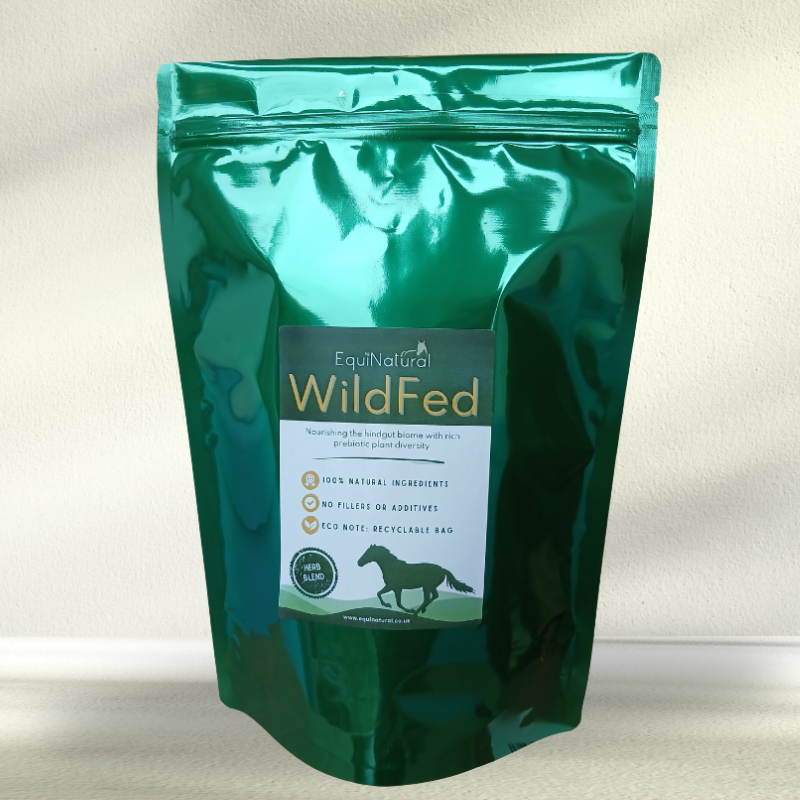
WILDFED for Horses | A Natural Prebiotic Botanical Buffet for the Feedbowl 🍂NOVEMBER SALE - 20%-OFF

Have you noticed how a horse will happily leave a perfectly good field of grass just to bury their face in a hedge, strip bark from a fallen branch, or disappear into a patch of brambles?
Because if grass was all they needed... why would they bother?
The answer is that horses didn't evolve eating one or two plants - they evolved browsing hundreds.
" A perfect addition for my hedge-munching horse - filling the natural gap in his diet.” Amy W.
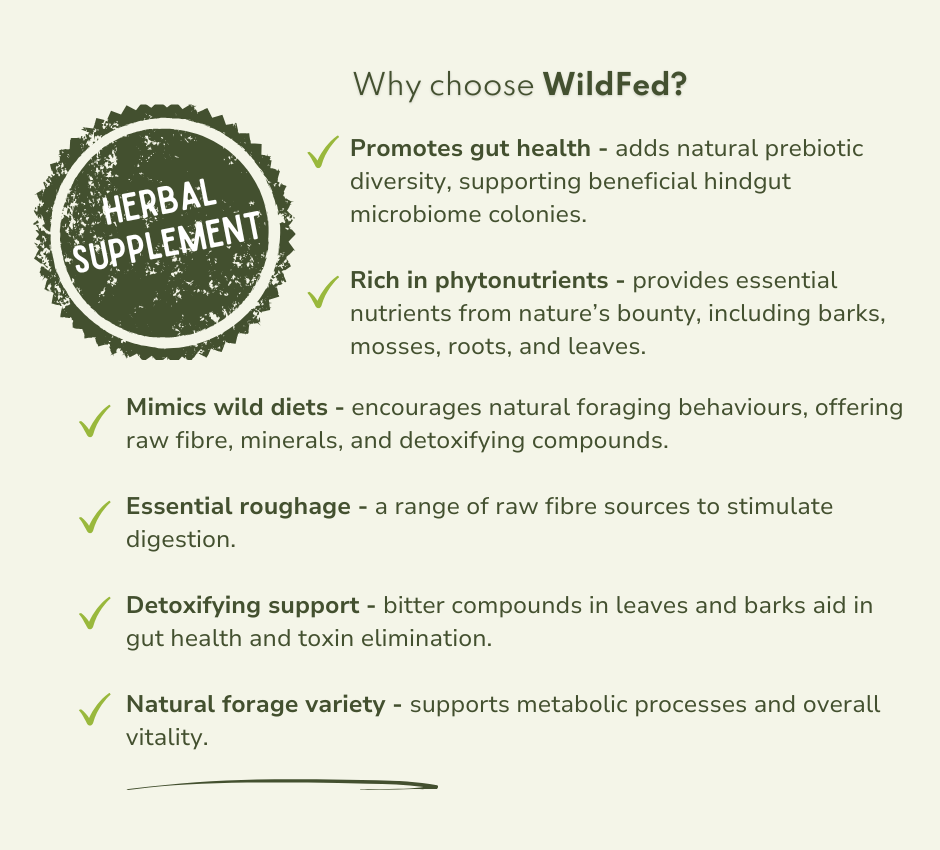
Leaves, barks, flowers, seeds, mosses, shrubs, herbs... Every mouthful brings an extraordinary diversity of different fibres, minerals, bitters, and natural prebiotic botanical roughage that supports a healthy hindgut microbiome by providing the plant diversity your horse is naturally designed to thrive on.
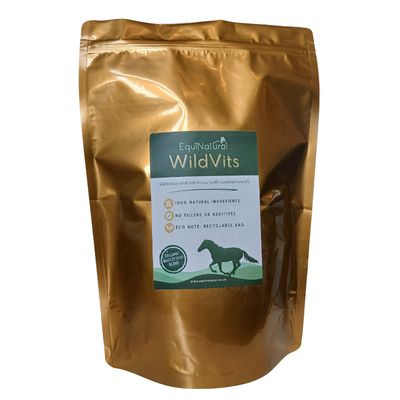
Meet WildFed - nature's year-round botanical buffet. It mimics the diverse diet of the natural horse, while helping nourish the beneficial microbes that thrive on variety - and supporting the natural browsing instincts horses have followed for thousands of years.
Think of it as gently re-wilding the feed bowl.
Overview - why does a horse want more than grass?
One of the biggest differences between a wild horse and a domesticated horse isn't how much they eat - it's how many different plants they eat.
Wild horses rarely graze one species for weeks on end. Instead, they move constantly through the landscape, browsing whatever is seasonally available - grasses, hedgerows, leaves, bark, flowers, seed heads, roots, berries, and countless other plants.
Every mouthful offers something slighty different - fibres, minerals, polyphenols, and plant compounds, all helping to nourish an incredibly diverse microbial ecosystem within the hindgut.
Modern horses, by comparison, often eat remarkably little botanical diversity - the same grass, the same hay, and the same feed - every single day - perhaps with an exciting change of field if they're lucky. Functional, yes. Diverse? No.
Nutritionally, that may meet basic requirements, but biologically it's a long way from the menu the equine digestive system evolved to expect.
The horse's digestive system evolved on a varied forage diet, and that appetite for browsing certainly hasn't disappeared. Given the opportunity, any horse will investigate hedges, trees, branches and all sorts of plants alongside grass.
That broader botanical menu can provide a much wider range of structural fibres, bitters, minerals, polyphenols and other naturally occurring plant compounds.
Together, they broaden the nutritional environment available to the horse and its hindgut ecosystem.
WildFed was created around that idea. Rather than acting as another supplement or gut treatment, it simply reintroduces some of the botanical diversity that's largely disappeared from modern equine diets.
Barks, leaves, sea plants, flowering tops, and other naturally fibrous plants all contribute different compounds that help nourish the hindgut microbiome.
In short?
Horses evolved eating variety – and their hindgut microbes evolved alongside them. WildFed simply puts some of that missing botanical variety back into the modern feed bowl, giving the hindgut ecosystem a broader menu to work with.
Is Wildfed right for my horse?
✔ Your horse lives mainly on grass, hay, and a relatively simple diet
✔ They instinctively browse hedgerows, trees, or shrubs whenever they get the chance
✔ You'd like to increase natural plant diversity within the hindgut
✔ You're thinking about long-term digestive resilience rather than fixing one specific problem
✔ Your horse has completed a gut reset and you're looking for everyday nutritional support
✔ You enjoy feeding as nature intended, rather than relying on highly processed feeds
In short: if you're looking to nourish the hindgut rather than chase digestive problems, WildFed is one of the simplest places to start.
The foundations
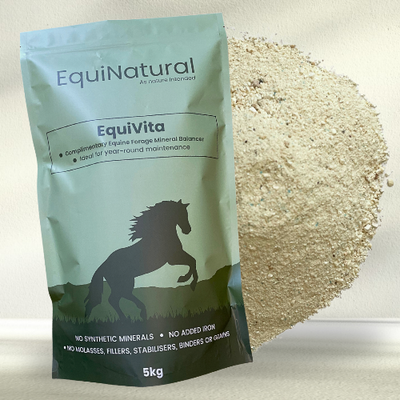
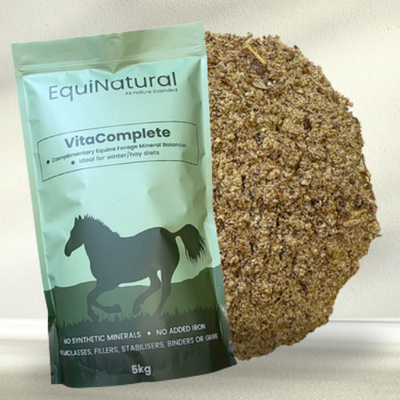
WildFed complements rather than replaces the foundations of a healthy diet. Good-quality forage, a forage-balanced mineral solution such as VitaComplete or EquiVita, and opportunities for natural movement all help create the conditions in which the hindgut microbiome can flourish.
*If you're not already feeding a mineral balancer, try one of our 1kg trial bags.
Composition & feed guide
*WildFed is a nutritional, functional food supplement and not veterinary medicine. For more information, see Dr Kellon's article - Nutrition is not 'Alternative' Therapy .
What's in WildFed?
WildFed brings some of the botanical variety of the hedgerow back into the modern forage diet, nurturing the hindgut biome through raw fibre, minerals, tannins, mucilage, and antioxidants.
Botanical roughage: Ash Bark and Leaf ( Fraxinus excelsior ), Birch Bark and Leaf ( Betula pendula ), Blackberry Leaf ( Rubus fruticosus ), Hawthorn Flowering Tops and Berries ( Crataegus oxyacantha ), Irish Moss ( Chondrus crispus ), Milk Thistle Herb ( Silybum marianum ) and Willow Bark and Leaf ( Salix alba ).
Feed guide
🌿Dried herb blend
Human grade, produced to ecological standards and free from agro-chemicals. See our Quality page for Organic Certification Documents.
- Feed a generous handful per horse, half for ponies, spread over hay or as a top-dressing to the feedbowl, every couple of days.
♻️ Eco Note: Our packaging is recyclable and refillable.
Energetics - how WildFed works
If you want the science, 'energetic architecture' explains how a blend is designed to work across the body's interconnected systems – not just which plants are included, but how they interact to create a specific effect.
WildFed is a little different, because its architecture isn't really about individual herbs doing particular jobs - the diversity is the job.
How the formula works
More plants means more variety, and WildFed combines leaves, bark, berries and sea plants, bringing together different fibres, tannins, mucilage, minerals, polyphenols and other naturally occurring plant compounds.
Rather than supplying one isolated prebiotic fibre, it provides lots of different botanical material for the hindgut ecosystem to work with.
Feeding the ecosystem, not steering it
An important distinction - as WildFed isn't designed to push the microbiome in one particular direction or correct a specific digestive problem. It simply broadens the nutritional environment available to the microbes already living there.
Think botanical buffet rather than marching orders.
Big picture
If grass really provided everything horses needed, why do they spend so much time searching for everything else?
WildFed = more plants, more variety, more for the hindgut ecosystem to tuck into. And considerably less need for your horse to dismantle the hedge
Clinical considerations / veterinary reference
Advisories
- Feed alongside a balanced forage-based diet.
- Ideal year-round, especially for stabled horses or those with limited browsing.
Contraindications
- Contains Salix alba (Willow), which provides salicylates - always check competition rules.
- Use caution with pregnant or nursing mares (mild hormonally active plant compounds).
Veterinary Reference / Formulary Extract
A concise, vet-friendly reference is available for sharing with your vet.
WildFed FAQs
My horse already has good grass and hay – why add WildFed?
Because good forage and varied forage aren't quite the same thing.
Most domestic horses eat a fairly repetitive menu – grass, hay or haylage, often from only a handful of grass and plant species.
Yet given half a chance, every horse will wander away from perfectly respectable grass to investigate a hedgerow or strip a twig.
WildFed simply brings a little of that botanical browsing variety back into the modern feed bowl.
Think less supplement ; more edible hedgerow.
Is WildFed a prebiotic?
In the broad nutritional sense, yes – but not because we've added one fashionable prebiotic ingredient.
WildFed provides a mixture of valuable "roughage" - leaves, bark, berries, sea plants and naturally varied plant fibres, giving the hindgut microbial community a wider botanical menu to work with.
Different plants bring different fibres and plant compounds. And microbes, like horses, love a bit of variety.
What's the difference between WildFed and BiomeTonic?
They make particularly good companions because they approach microbiome maintenance from different directions.
- WildFed feeds the residents – bringing varied botanical fibres and plant diversity into the diet.
- BiomeTonic helps look after the neighbourhood – using aromatic herbs to support a healthy, balanced intestinal environment.
That's why we like the two together after SiboCARE or another gut reset: you've worked hard to settle the hindgut, so rather than waiting for it to wobble again, WildFed and BiomeTonic provide simple proactive maintenance.
Look after the neighbourhood. Feed its residents.
Very EquiNatural.
Does my horse need digestive problems to have WildFed?
Not at all. In fact, WildFed makes most sense when we stop thinking of it as something we feed because a horse has a “gut problem”.
It's simply a way of adding some of the plant diversity modern horse diets often lack – whether your horse has completed a gut programme or is already perfectly happy and healthy.
No crisis required - just scatter, browse and enjoy.
How often should I feed WildFed?
However it fits into your routine.
A generous handful for a horse, half for a pony, sprinkled over hay or added to the feed bowl every couple of days is plenty.
It doesn't need weighing to the last gram or administering solemnly at precisely 07:42 each morning. And if your horse spends ten minutes carefully picking through it deciding which interesting bit deserves eating first?
That's the whole point. 😉
© EquiNatural 2026. All content is original work protected under copyright, and may not be re-published, duplicated, or rewritten for commercial use without permission.