ASHWAGANDHA for Horses (Organic)
Ashwagandha ( Withania somnifera) is a traditional adaptogenic root used to support calm, resilience and recovery in horses living with ongoing physical or emotional stress.
An adaptogen is a herb traditionally used to help the body adapt to pressure, and ashwagandha is one of the best known. It's a revered tonic in Ayurvedic tradition, and the one I'd think of for the horse who's tense but tired, slow to bounce back, or just not quite himself after a rough patch. Think steady and sturdy, not sleepy.
It works with the body's stress response, the conversation between brain, nerves and hormone-producing glands, to help your horse meet a challenge and then recover from it.
At a glance:
- Organic cultivated, human-grade and lab tested to British and European Pharmacopoeia standards.
- Tincture: 6ml/100kg daily in feed. Dried root (origin India): 5g/100kg daily, i.e. 25g for a 500kg horse.
- NB. Avoid in pregnancy and lactation, and check with your vet if your horse is on sedative, thyroid or immune-suppressing medication.
Note: This a nutritional, functional food supplement and not veterinary medicine. For more information, refer to Dr Kellon's Horse Sense - Nutrition is not 'Alternative' Therapy .

Where to find Ashwagandha in the EquiNatural range
Ashwagandha plays an integral part of several of our formulas:
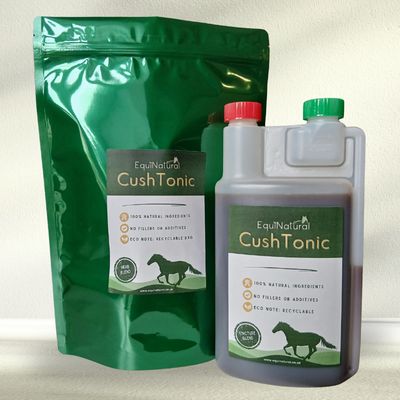
- CushTonic - endocrine-ease, hormone-harmony, everyday-vitality
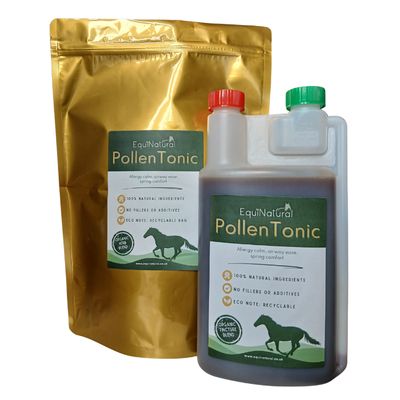
- PollenTonic - allergy calm, airway ease, spring comfort
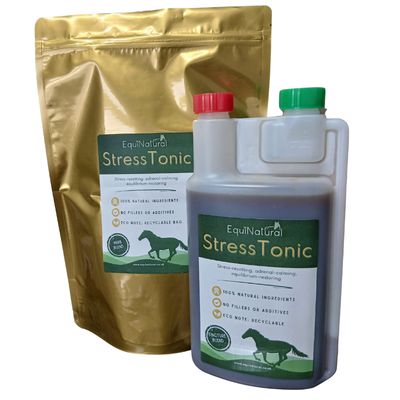
- StressTonic - stress-resetting, adrenal-calming, equilibrium-restoring
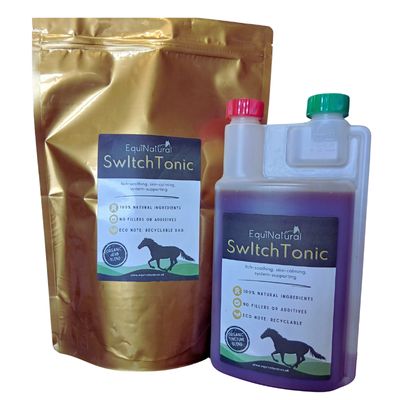
- SwitchTonic - itch-soothing, skin-calming, system-supporting
- UlsaTonic - stomach-soothing, acid-calming, mucosa-nourishing support
Ashwagandha feed guide & dosage
💧Organic ashwagandha root tincture
Our human-grade, certified organic tinctures capture the plant's naturally occurring constituents in a concentrated, easy-to-feed liquid form.
- Withania somnifera, Dried Root
- Decocted 1:3 35%
- Organically cultivated
- Feed Guide - 6ml/100kg bodyweight, daily in feed.
🌿Organic dried ashwagandha root
Grown, harvested and dried without the use of agri-chemicals, non-irradiated and GMO free - see our Quality page for Quality Management & Certification Documents.
- Withania somnifera, Cut Dried Root
- Organic Cultivated
- Origin India
- Feed Guide - 5g/100kg bodyweight per day, i.e. 25g for a 500kg horse.
Naturally occurring plant constituents
Includes: Alkaloids, steroidal lactones, sitoindosides, iron.
Footnotes
- Laboratory tested for identification and compliance to the British and European Pharmacopoeia standards.
- Human grade.
- Please be aware that if you're purchasing our dried botanicals for human use, our dried range is cut to appropriate sizes for feeding to horses.
- ♻️ Eco Note: Our packaging is recyclable and refillable.
Energetics - how Ashwagandha works
If you'd like the science, ‘energetic architecture’ explains how a herb is designed to work within the body - not just what’s in it, but the particular tissues and functions it has an affinity with.
Ashwagandha is a warming, restorative adaptogen with a particular affinity for the neuroendocrine stress response - the communication between the brain, nervous system and hormone-producing glands.
Think of it as supporting calm strength: enough response to meet the challenge, without spending longer than necessary in survival mode.
- Regulating the stress response - Ashwagandha's withanolides support the signalling pathways involved in the body's response to ongoing pressure, helping keep the cortisol response more proportionate and the return to baseline easier. There's a small horse study behind this: in 24 healthy horses fed ashwagandha for 21 days, cortisol and adrenaline were lower than in the control horses after exercise, separation and noise stress ( Priyanka et al., 2020, Frontiers in Veterinary Science). It's small, short and in healthy horses, so it's early days.
- Rebuilding after prolonged demand - When the stress response stays switched on, energy keeps getting diverted away from repair, digestion and recovery. Ashwagandha is traditionally used for resilience and restoration where the horse looks depleted, flat or unable to recover properly between challenges.
- Steadying immune communication - Long-term stress can throw immune regulation off in either direction. Ashwagandha has traditionally been seen as an immune balancer, not a booster or a suppressant. In the horse study above, the healthy horses did show higher white cell counts and lymphocyte percentages, so it isn't an inert herb, but I'd call the balancing idea a tradition, not a proven fact.
Big picture
Ashwagandha's job is to help the horse use the stress response appropriately without getting trapped there. Respond when necessary, recover when it's over, and rebuild what prolonged stress has quietly used up. Ashwagandha safety
Ashwagandha is generally used as a nutritional adaptogenic herb, but equine-specific safety research is limited, so there are a few situations where we'd take a little more care.
- Pregnant or nursing mares – we don't recommend feeding Ashwagandha during pregnancy or while nursing unless advised by your vet.
- Other veterinary medication – if your horse is receiving ongoing prescribed medication or has a significant health condition, check with your vet before introducing Ashwagandha.
Ashwagandha in history & tradition
If herbs had personalities, ashwagandha would be the calm capable friend who never panics, never rushes, and somehow always knows exactly what to say when life gets a bit much. In Ayurveda it's classed as a rasayana , a life-enhancing, longevity-supporting tonic that helps the body find its centre again. A sort of ancient deep exhale in botanical root form.
Its name translates as 'the smell of a horse', with the strength and vitality of a horse thrown in. Don't worry, that doesn't mean your cupboard will suddenly smell like a stable (your feed room probably already does). The name is more symbolic, a tribute to the grounded strength, stamina and calm the herb is said to restore. And while the old texts wax lyrical about its energising qualities, it's not a herbal fireworks display. It simply clears the stress that tends to fog drive and vitality in the first place.
First and foremost, though, ashwagandha is an adaptogen: it helps the body adapt to pressure, fatigue and emotional strain. It doesn't push, it gently coaxes the internal systems back towards balance. If you're after an instant jolt of energy you'll be disappointed, but if you want steady resilience, calmer responses and fewer frazzled edges, you'll find a loyal friend.
So what makes it so special?
Beyond its talent for taming runaway stress responses, ashwagandha is also thought of as an immunomodulant: one of those clever herbs said to help the immune system stay in that 'not too much, not too little' zone. Lab and small studies suggest it may:
- Help protect white blood cell numbers
- Activate lymphocytes (the killer cellular army)
- Support the body during recovery from illness or strain
Ayurveda has celebrated these qualities for thousands of years, and modern research is gradually catching up. In people it has been studied for stress, sleep and mood, and the findings are promising rather than conclusive.
And for horses?
Ashwagandha's calm, grounding, restorative nature suits horses under stress, whether it's emotional, physical or environmental. Instead of sedating, it helps the body unwind tension patterns and respond more appropriately to pressure. It's the herbal equivalent of dropping your shoulders and taking a proper breath.
In short? It's the herb you reach for when everything feels a bit too much, or when you're rebuilding from depletion and want strength that isn't frantic, but calm, deep and dependable. A fabulous root for resilience, and a tonic for steadiness.
Ashwagandha FAQs
How do I know if Ashwagandha is the right herb for my horse?
I'd look at it when the horse seems to have been living with ongoing physical or emotional pressure for rather too long. Perhaps they're tense but tired, slower to recover, easily overwhelmed, or have simply lost some of their usual resilience after a spell of stress, change, illness or hard work. It's less about making a horse sleepy and more about supporting their ability to respond, recover and find their baseline again. Think calm strength, not calm at any cost.What exactly is an adaptogen?
A herb traditionally used to help the body adapt more appropriately to physical and emotional stress. That doesn't mean ashwagandha somehow knows whether Fred needs winding up or winding down. 😉 Its role is subtler: supporting the pathways involved in the stress response, so the body can meet a challenge when it has to without staying stuck in survival mode long after it's passed. Respond when needed, recover when it's over. That's the adaptogen bit.Will Ashwagandha make my horse sleepy?
It shouldn't be thought of as a sedative. Its calming reputation comes from supporting the stress-response system, not from simply dulling alertness. That matters if the horse is already flat, depleted or tired-but-wired, because we're not looking to take more energy away. The aim is a steadier, more resilient horse, not one left wondering where the rest of Tuesday went.What's the difference between Ashwagandha and StressTonic?
Think single adaptogen versus complete stress formula. Ashwagandha is a lovely single-herb choice when its mix of stress regulation, resilience and recovery fits the horse. StressTonic is where we'd go when ongoing stress has become a bigger whole-horse pattern and we want several herbs working together across the nervous system, stress response and recovery. One clear job? Ashwagandha may be beautifully enough. A horse who's been running on emotional fumes for months? That's when we bring in the team.
How quickly should I expect to notice a difference?
Ashwagandha isn't an 'I fed it yesterday and Ned is transformed' sort of herb. We're supporting regulation and recovery after ongoing demand, so give the horse time and watch the overall pattern, not one dramatic effect. Are they settling more easily after a challenge? Recovering better? Less frazzled around the edges? Looking more like themselves again? Those quieter changes are exactly what we're after. And if the reason for the horse's tiredness, poor recovery or behaviour change isn't clear, investigate that first, rather than assuming stress is the whole story.© EquiNatural 2026. Written by Carol Moreton, Founder, EquiNatural.
All content is original work protected under copyright, and may not be re-published, duplicated, or rewritten for commercial use without permission.