AGNUS CASTUS for Horses (Vitex agnus castus) | Organic Hormonal Support for Mares & Endocrine Balance ((Including PPID)
Benefits of organic Agnus castus for horses
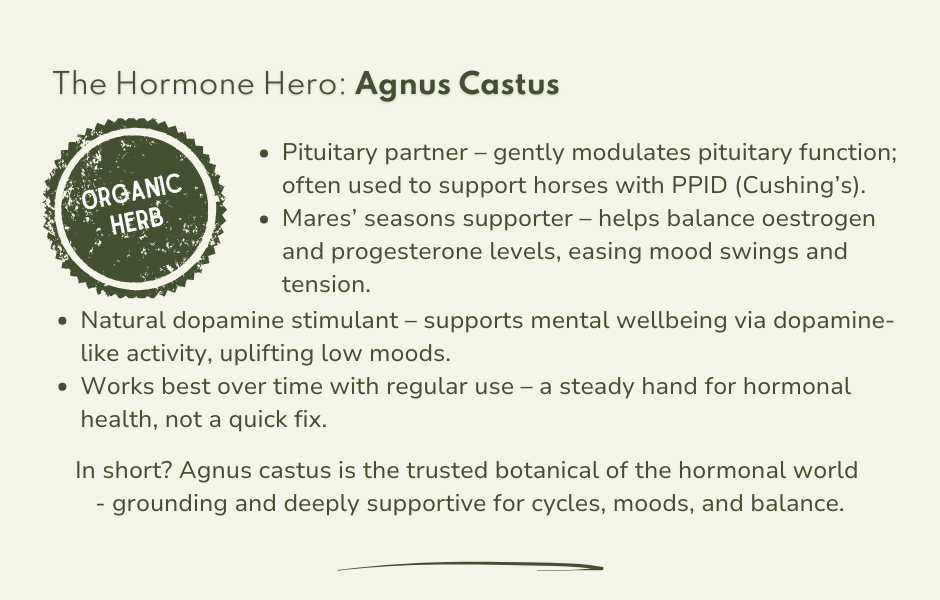
Agnus castus for horses is a traditional botanical used to support hormonal balance, behaviour, and pituitary function, particularly in mares and horses with endocrine challenges such as PPID (Cushing’s).
A time-honoured botanical that gently supports the pituitary gland and hormone equilibrium, helping to bring balance to mares, stallions, and horses with endocrine challenges such as PPID (Cushing’s).
Rich in dopaminergic compounds, Agnus castus encourages steadier endocrine rhythms, emotional calm, and natural hormonal harmony - a quiet regulator for body and mind.
*This a nutritional, functional food supplement and not veterinary medicine. For more information, refer to Dr Kellon's Horse Sense - Nutrition is not 'Alternative' Therapy
.
Find Agnus castus in the EquiNatural range
You'll also find agnus castus in:
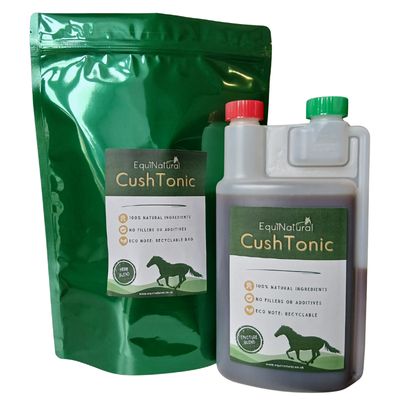
- CushTonic - endocrine-ease, hormone-harmony, everyday vitality
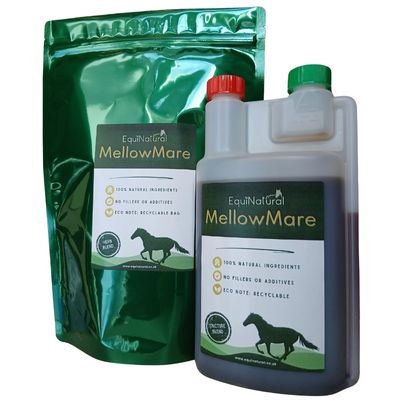
- MellowMare - hormone-supporting, season-soothing, and mood-softening
Composition & feed guide
💧Organic Agnus castus tincture
Our human-grade, certified organic tinctures give you a ready-to-absorb potent source of phytonutrients at the highest-strength available, for immediate absorption straight into the bloodstream and to the body’s cells.
- Vitex agnus-castus Berry
- Distilled /Decocted 1:3 25%
- Wild harvested
~ Feed Guide - 6ml/100kg bodyweight, daily in feed.
🌿Organic Agnus castus berry (dried)
Grown, harvested and dried without the use of agri-chemicals, non-irradiated and GMO free - see our Quality page for Quality Management & Certification Documents.
- Vitex agnus-castus , Whole Dried Berry
- Organic Cultivated
- Origin Turkey
~ Feed Guide - 5g/100kg bodyweight per day, i.e. 25g for a 500kg horse.
Footnotes
- Laboratory tested for identification and compliance to the British and European Pharmacopoeia standards.
- Human grade.
- Please be aware that if you're purchasing our dried botanicals for human use, our dried range is cut to appropriate sizes for feeding to horses.
- ♻️ Eco Note: Our packaging is recyclable and refillable.
- 🧊 Storage Tip: Keep cool and dry.
Clinical considerations
Agnus castus is a gentle herb traditionally used to support natural hormonal balance and behaviour in mares, rigs, and horses needing emotional steadiness. It is generally well tolerated when fed at the recommended rate.
Advisories
- Agnus castus supports the body’s own hormonal rhythms, so if your horse has a known or suspected endocrine condition, it’s sensible to use it with guidance from your vet or practitioner.
- Always check with your vet before using in pregnant or nursing mares, as hormonally active herbs may not be suitable at these times.
- Competition rules can change, so if you compete, it’s good practice to double-check your discipline’s current permitted substances list before feeding.
Contraindications
- Not suitable for horses diagnosed with Cushing’s/PPID who are receiving Prascend (pergolide). Agnus castus also works on dopamine pathways, and using both together may interfere with how the medication functions.
Agnus castus in history & tradition
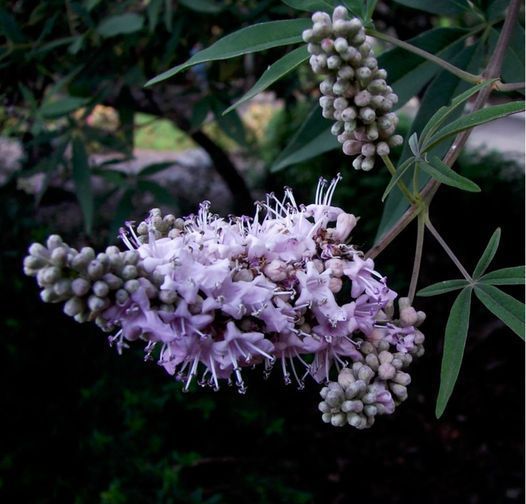
Agnus castus may look like an unassuming little seed, but don’t let its size fool you - this herb has been causing a stir for a few thousand years. Native to the sunniest corners of the Mediterranean and a botanical cousin of verbena, it earned itself the nickname “chaste tree” back in the Middle Ages.
Why? Well, legend has it the monks used it to… ahem … keep their minds on prayer and off more earthly temptations. Whether it actually worked is anyone’s guess, but the story certainly lived on. Herbalists like Christopher Hobbs chalked it up to agnus castus being “warming and drying,” apparently cooling passions in some and, oddly enough, sparking them in others. Quite a talent.
This tiny berry has quite the historical résumé. Dioscorides — the ancient Greek doctor whose influence still echoes through herbalism — described it as warming, astringent, and helpful for all sorts of uterine concerns. Hippocrates himself recommended wine infused with the leaves to help regulate menstrual flow (clearly herbal cocktails are older than we thought). By the 1700s, the English had added it to their digestive toolkit as well.
Fast forward to today, and agnus castus has become the go-to herb for that gentle nudging effect it has on hormones. It doesn’t bulldoze or override anything — instead, it works more like a quiet, steady voice reminding progesterone and estrogen to behave themselves. Its influence on dopamine pathways also explains why some people report feeling that little lift in mood when taking it. And it has a long-standing reputation as a galactagogue, supporting milk production in nursing mothers.
And why do we use it for horses?
Because the hormonal logic is universal.
Just as it helps smooth the peaks and troughs in humans, agnus castus is a wonderful ally for mares whose seasons make them uncomfortable, anxious, sharp, or just not quite themselves. That gentle balancing influence can help soften those hormonal swings and make the whole cycle feel far less dramatic.
It’s also appreciated for its relationship with the pituitary gland, which is why herbalists often include it in support protocols for horses with Cushing’s (PPID). Again — gentle, steady, not a quick fix, but a reliable long-term companion.
Agnus castus works best with consistency. Think of it as the herb that takes your horse’s hormonal system by the hand, not the one that shouts instructions from across the yard.
Across centuries, continents, monasteries, medical texts, and stables, this little berry has held its place as a trusted friend for hormonal harmony, mood steadiness, and reproductive wellbeing.
Tiny? Yes. But absolutely mighty.
© EquiNatural 2026. All content is original work protected under copyright, and may not be re-published, duplicated, or rewritten for commercial use without permission.