CUSHTONIC for Horses | Natural PPID (Cushing's) Support
If your horse has PPID (Cushing's), the first question is wonderfully simple - “Is your horse taking Prascend?”
"After her first month on CushTonic, our 24-year-old mare is looking great and feels ready for Badminton!"
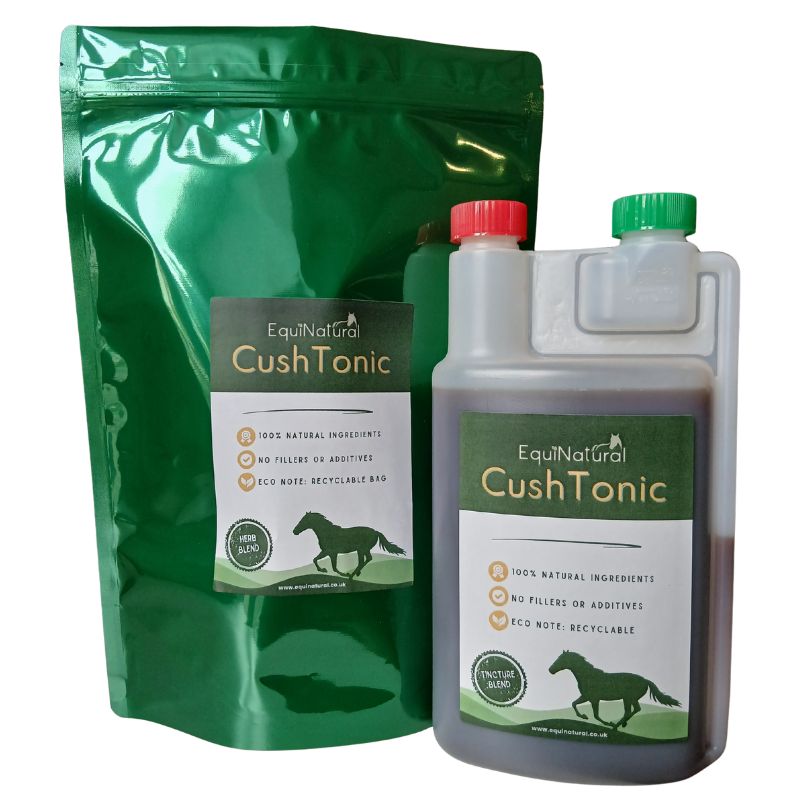
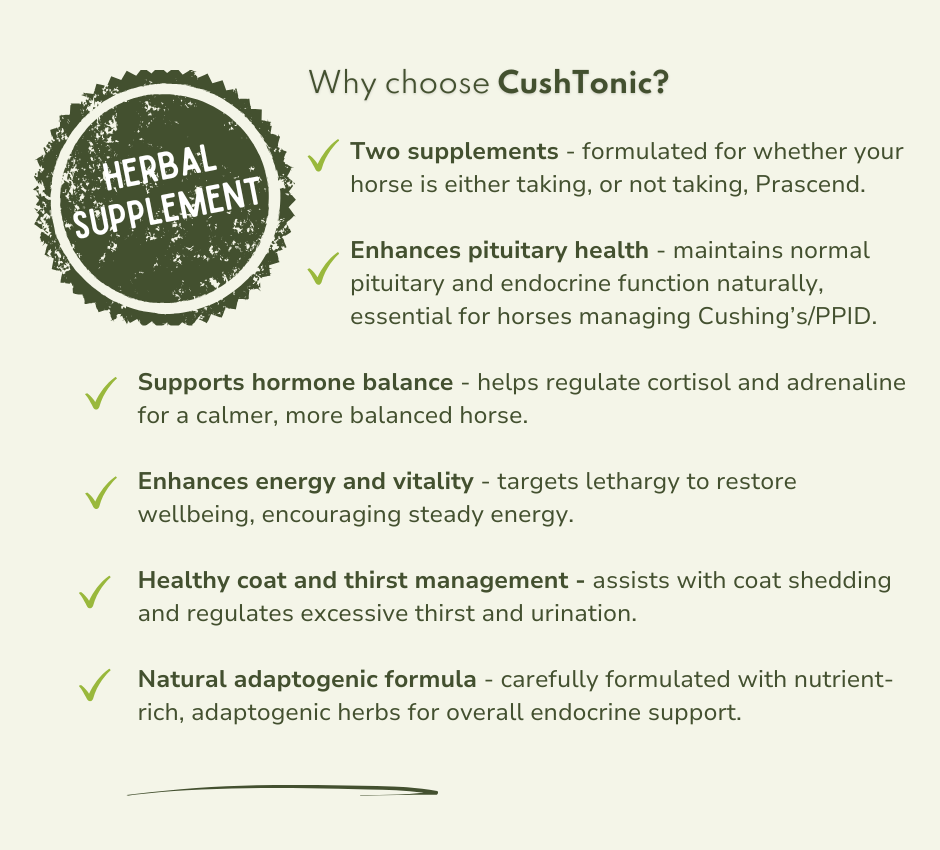
CushTonic is our nutritional and herbal support for horses living with PPID, helping support the wider endocrine and metabolic systems behind energy, seasonal coat changes, muscle condition and everyday vitality.
Because medication changes the picture, CushTonic comes in two carefully formulated versions:
- Not on Prascend? Choose CushTonic-1.
- On Prascend? Choose CushTonic-2.
From there, choosing the right formula becomes refreshingly straightforward.
NB. If your horse also has EMS/IR – we can layer MetaTonic alongside.
Two formulas - one mission
Because every horse’s Cushing’s journey is unique, we’ve created two CushTonic options to ensure safe, effective support whether your horse is on medication or not.
- Not on Prascend? Choose CushTonic-1.
- On Prascend? Choose CushTonic-2.
| Version | Best For | Key Difference |
|---|---|---|
CushTonic-1 |
Horses not on Prascend | Includes Mucuna pruriens – a natural source of L-Dopa to support dopamine levels. |
CushTonic-2 |
Horses on Prascend | Formulated without L-Dopa, for safe use alongside medication. |
* For the latest Cushing's insights, see our main A-Z Horse Library/Cushings page in our Info Centre above.

Overview - what is PPID (Cushing's) in horses?
Whether your horse is on Prascend or managed naturally, w ith PPID it's easy to feel overwhelmed by symptoms, blood tests and management decisions.
At the heart of PPID is a gradual decline in dopamine signalling within the pituitary gland. As those signals weaken, hormone regulation becomes less precise, affecting more than simply coat growth. Energy, metabolism, immune function, muscle condition, and even hoof health can all feel the effects over time.
That's why we formulated CushTonic as supporting the horse rather than simply supporting the diagnosis.
The aim isn't to override the body's own systems, but to help nourish the wider endocrine network that sits behind everyday vitality, helping ageing horses stay brighter, steadier, and more comfortable for longer.
Because medication changes the picture, we created two versions.
- CushTonic-1 is designed for horses who are not taking Prascend. It includes carefully selected botanicals that provide gentle nutritional support for dopamine pathways alongside broader endocrine and metabolic support.
- CushTonic-2 is designed specifically for horses already receiving Prascend. It removes the dopaminergic herbs, allowing the medication to do its job while the blend supports the surrounding systems - adrenal resilience, metabolism, liver function, and overall vitality.
In other words, the first question isn't "How advanced is my horse's PPID?"
It's simply, "Are they taking Prascend?"
Once you've answered that, choosing the right CushTonic becomes refreshingly straightforward.
How CushTonic fits into your horse's support plan
CushTonic is a good fit when your horse is living with PPID and you'd like to support the wider endocrine system that sits behind energy, metabolism, seasonal coat changes, and everyday vitality.
✔ Their coat is slower to shed or looks thicker, duller, or out of sync with the season
✔ They're not as bright or forward as they once were
✔ Seasonal changes seem to affect them more than they used to
✔ They're drinking or urinating more than before
✔ They've been diagnosed with PPID, or are showing early signs that suggest the condition may be developing
✔ You want to support the horse alongside the diagnosis
In short: if your horse is living with PPID, CushTonic helps support the wider endocrine and metabolic systems that influence how they feel day to day.
- Choosing the right formula comes first
- CushTonic-1 → for horses not receiving Prascend.
- CushTonic-2 → for horses already taking Prascend.
Once you've chosen the correct version, support can then be adapted to your horse's individual needs.
- Building metabolic support
- MetaTonic – where insulin regulation, EMS tendencies, or laminitic sensitivity form part of the picture alongside PPID.
- Supporting recovery and comfort
- DuoBute – where stiffness, footiness, or everyday comfort needs a little extra support.
- Foundation support
PPID affects far more than hormone balance alone. Supporting your horse's baseline nutrition with a forage-balanced mineral solution such as EquiVita or VitaComplete helps provide the nutritional foundations that healthy muscles, hooves, metabolism, and immune function all depend upon.
*If you're not already feeding a mineral balancer, try one of our 1kg trial bags.
In summary
Start by choosing the correct CushTonic formula based on whether your horse is taking Prascend. From there, build additional support around the individual horse - whether that's metabolic, comfort, or nutritional - rather than around the diagnosis alone.
Why CushTonic comes in two formulas
PPID (Cushing’s) doesn’t look the same in every horse - and neither should the support.
One of the key changes in PPID is a decline in dopamine activity, which disrupts pituitary signalling and leads to hormonal imbalance. How that dopamine shortfall is managed matters greatly, especially when medication is involved.
That’s why CushTonic comes in two carefully designed formulas, each with the same mission - endocrine steadiness and everyday vitality - but with different safety requirements.
CushTonic-1 - for horses not on Prascend
CushTonic-1 includes Mucuna pruriens , a natural source of L-Dopa, to gently nourish dopamine pathways in horses managed naturally or in early PPID.
This version is suitable when:
- the horse is not receiving Prascend or other dopamine agonists
- PPID is mild, early, or being managed without medication
CushTonic-2 — for horses on Prascend
CushTonic-2 contains no dopaminergic herbs and is designed specifically for safe use alongside Prascend (Pergolide).
Instead, it focuses on:
- adrenal and endocrine resilience
- liver and metabolic support
- vitality, coat, and seasonal comfort
This version supports the body around the medication - without interfering with it.
Why this matters
By separating the formulas, we ensure:
- safe, appropriate support at every stage
- clarity for owners and vets
- endocrine balance without unnecessary risk
If you’re unsure which version is right for your horse, please ask.
Composition & feed guide
CushTonic is a nutritional, functional food supplement and not veterinary medicine. For more on this, see Dr Kellon's article - Nutrition is not 'Alternative' Therapy .
What's in CushTonic?
Each herb works in synergy to support healthy pituitary, adrenal, and metabolic function. This functional, adaptogenic formula helps maintain hormonal balance, dopamine activity, and overall vitality.
- Vitex agnus-castus – Supports natural pituitary rhythm, healthy hormone balance, and stable mood. (CushTonic-1 only)
- Withania somnifera – Adaptogenic root helping to sustain calm energy, emotional steadiness, and adrenal resilience during times of stress.
- Astragalus membranaceus – Strengthens vitality and immune function while helping to sustain natural energy and endocrine balance.
- Mucuna pruriens – Natural source of L-Dopa, supporting dopamine production and pituitary communication for improved vitality and comfort. (CushTonic-1 only)
- Bacopa monnieri – Neuroprotective tonic that supports clarity, calm focus, and balanced neurological signalling across the pituitary–adrenal axis.
- Taraxacum officinale Folia – Mineral-rich tonic that aids gentle detoxification, fluid balance, and healthy liver support.
- Ginkgo biloba – Supports oxygen delivery and circulation, particularly to the brain and pituitary gland, nurturing clarity and focus.
- Galega officinalis – Traditionally recognised for supporting glucose metabolism and healthy pancreatic function, complementing pituitary balance.
- Silybum marianum – Protects and nourishes the liver, aiding detoxification and hormone metabolism.
- Urtica dioica – Rich in trace minerals that restore vitality and endocrine tone, supporting overall metabolic health.
- Smilax ornata – Traditional endocrine and liver tonic that harmonises hormonal pathways and supports detoxification.
Feed guide
💧Organic tincture blend
- Feed 6ml/100kg bodyweight per day, i.e. 30ml for a 500kg horse.
🌿Dried herb blend
Human grade, produced to ecological standards and free from agro-chemicals. See our Quality page for Organic Certification Documents.
- Feed 5g/100kg bodyweight per day, i.e. 25g for a 500kg horse.
Fussy eater?
Horses sometimes have their own opinions (and strong tastebuds!), so introduce gradually over several days. See our Fussy Eaters guide as we've many helpful tips.
♻️ Eco Note: Our packaging is recyclable and refillable.
"Energetics" - the science behind CushTonic
When it comes to herbs and herbal formulations, you may have heard herbalists talk about energetics.
It's simply the way a herb or formula has been designed to support the body in a balanced and purposeful way - and the science helps to understand why that structure works.
Both CushTonic blends share the same goal - helping support horses living with PPID.
Where they differ is simply how they approach dopamine support.
- CushTonic-1 is designed for horses not receiving Prascend, where gentle nutritional support for dopamine pathways is appropriate.
- CushTonic-2 is designed specifically for horses already taking Prascend, supporting the wider endocrine system while allowing the medication to do its job.
Two different routes to the same destination - one supporting the dopamine pathway directly, while the other supports everything around it.
How the formulas are built
Both formulas are built around the same core biological jobs.
- Supporting endocrine resilience
– Ashwagandha, Astragalus
- Helping the adrenal and endocrine systems adapt to the everyday demands of ageing and long-term hormonal change. - Supporting brain–endocrine communication
– Bacopa, Ginkgo
- Providing botanical support for healthy neurological signalling, circulation, and communication between the brain and endocrine system. - Supporting metabolic balance
– Galega
- Helping maintain healthy glucose metabolism and supporting the wider metabolic picture often seen alongside PPID. - Supporting liver and hormone processing
– Milk Thistle, Dandelion Leaf, Smilax
- Helping maintain the body's natural processing and clearance pathways that contribute to endocrine balance and overall vitality. - Providing nutritional resilience
– Nettle
- Supplying mineral-rich nutritional support to help maintain everyday vitality, coat quality, and healthy ageing.
Where the formulas differ
- CushTonic-1 only adds Mucuna pruriens and Vitex agnus-castus to provide gentle nutritional support for dopamine pathways in horses not receiving Prascend.
- CushTonic-2 deliberately omits these herbs, making it suitable for horses already receiving Prascend while continuing to support the horse's wider hormonal health.
Big picture
PPID is a whole-horse condition that affects metabolism, hormones, immunity, muscles, coat, and vitality.
That's why CushTonic helps support the wider systems that allow ageing horses to stay brighter, steadier, and more comfortable - whichever route they take.
Clinical considerations / veterinary reference
Advisories
- Allow at least 3-4 weeks before assessing how your horse is responding.
- If your horse has PPID + EMS/IR, CushTonic can be paired with MetaTonic; simply feed them at different times of day.
- CushTonic-1 contains Mucuna pruriens (a natural L-Dopa source) and is best fed in the morning to align with natural dopamine cycles.
- CushTonic-2 contains no dopaminergic herbs and is the version intended for horses on Prascend or other dopamine-acting medications.
Contraindications
- Not recommended for pregnant or nursing mares due to hormonally active botanicals.
- Horses on Prascend should only use CushTonic-2 - avoid CushTonic-1 because of its natural L-Dopa content.
- Use caution if your horse is receiving steroid-modifying drugs; seek veterinary advice if unsure.
Veterinary Reference / Formulary Extract
A concise, vet-friendly reference is available for sharing with your vet.
CushTonic FAQs
What are the early signs of PPID in horses?
PPID often develops gradually, so the earliest changes can be surprisingly easy to overlook.
Common early signs include:
• A coat that takes longer to shed in spring
• Reduced energy or enthusiasm for work
• Loss of topline or muscle condition
• Increased drinking or urination
• Recurrent footiness or unexplained laminitic episodes
• Slower recovery after exercise
• Greater sensitivity to seasonal changes
• More frequent infections or slower healing
Not every horse shows every sign though - our own experience with both Dinks and Cookie were very different - Dinks had been drinking excessively for a few weeks then suddenly developed laminitis in all four hooves; with Cookie her coat simply refused to shed, growing longer and curly while she became noticeably more depressed.
Either way, many of these changes can occur as part of normal ageing or other conditions., hence why we encourage owners to look at the whole picture rather than focusing on one symptom in isolation.
If you suspect your horse may be developing PPID, speak to your vet about appropriate testing. Early recognition allows you to make informed decisions about management and support.
W hich CushTonic should I choose?
The first question is wonderfully simple:
Is your horse taking Prascend?
- No → Choose CushTonic-1, which includes natural nutritional support for dopamine pathways.
- Yes → Choose CushTonic-2, which has been formulated specifically for horses receiving Prascend.
Once you've answered that question, choosing the right blend becomes very straightforward.
Why do you have two different CushTonic formulas?
Because medication changes the picture.
One of the key changes in PPID is reduced dopamine activity. For horses being managed naturally, CushTonic-1 includes Mucuna pruriens to provide nutritional support for healthy dopamine pathways.
However, once a horse is receiving Prascend, we deliberately remove dopaminergic herbs so the medication can do its job while the blend supports the wider endocrine system around it.
Same goal, different route.
Can CushTonic be fed alongside Prascend?
Yes - provided you're using CushTonic-2.
CushTonic-2 was designed specifically for horses receiving Prascend and contains no dopaminergic herbs.
CushTonic-1 should not be used alongside Prascend because it contains Mucuna pruriens, a natural source of L-DOPA.
My horse has only just been diagnosed with PPID. Which version should I start with?
That depends entirely on whether your vet has prescribed Prascend.
- If your horse is being managed naturally, CushTonic-1 is usually the appropriate choice.
- If Prascend has already been introduced, CushTonic-2 is the correct option.
If you're ever unsure, we're always happy to help you choose.
What does CushTonic actually support?
CushTonic was designed to support the wider endocrine and metabolic systems affected by PPID.
Rather than focusing on one symptom, it helps support hormonal balance, vitality, metabolism, seasonal coat changes, and healthy ageing - helping many horses feel brighter, steadier, and more comfortable day to day.
Can CushTonic replace Prascend?
No. CushTonic is a nutritional support programme, not a veterinary medicine.
If your horse has been prescribed Prascend, you should always follow your vet's advice.
CushTonic-2 was specifically formulated to complement veterinary management, supporting the wider systems affected by PPID alongside prescribed medication.
My horse has PPID and EMS. Can I feed MetaTonic as well?
Absolutely - in fact, we recommend it - it's recognised that PPID horses will also develop insulin dysregulation or EMS tendencies.
In these situations, MetaTonic layers beautifully alongside CushTonic to provide additional nutritional support for healthy glucose metabolism.
We usually recommend feeding the two products at different times of the day.
Is CushTonic only for horses with advanced PPID?
Not at all. Many owners begin supporting their horse as soon as early PPID changes begin to appear, such as slower coat shedding, reduced vitality, increased drinking, or subtle age-related changes.
Supporting the wider endocrine system early often makes more sense than waiting for changes to become more pronounced.
How long does CushTonic take to work?
Every horse is different. Some owners notice changes within the first week or so, whilst for others improvements appear more gradually as seasonal coat changes, vitality, and everyday comfort begin to improve.
Natural nutritional support is generally best viewed as a long-term partnership rather than a quick fix.
Can CushTonic help older horses that just seem to have lost their sparkle?
Many owners contact us because they feel their horse simply isn't quite themselves anymore.
Whilst there can be many reasons for these changes, supporting healthy endocrine function and everyday vitality often forms an important part of helping ageing horses stay bright, engaged, and comfortable.
If you're concerned about new or unexplained changes, it's always worth discussing them with your vet, as PPID testing may be appropriate.
Why is dopamine so important in PPID?
One of the key changes in PPID is a gradual decline in dopamine signalling within the pituitary gland.
As dopamine communication becomes less efficient, hormone regulation can become disrupted, influencing much more than coat growth alone.
Energy, muscle condition, metabolism, immune function, and overall vitality can all be affected.
This is why supporting the horse's wider endocrine system forms such an important part of the EquiNatural approach.
Do all horses with PPID eventually need Prascend?
Not always. Some horses do just fine without it - in fact, one of our EquiNatural horses ,remained very comfortable and happy on CushTonic-1, whilst others benefit from medication sooner.
Our role is simply to provide appropriate nutritional support for whichever stage of that journey your horse is on.
Do I still need a mineral balancer if my horse has PPID?
Yes - because PPID affects much more than hormone balance alone.
Healthy muscles, hooves, immunity, metabolism, and tissue repair all depend upon strong nutritional foundations.
That's why we recommend supporting your horse's everyday nutrition with a forage-based mineral foundation such as EquiVita or VitaComplete alongside any targeted endocrine support.
© EquiNatural 2026. All content is original work protected under copyright, and may not be re-published, duplicated, or rewritten for commercial use without permission.