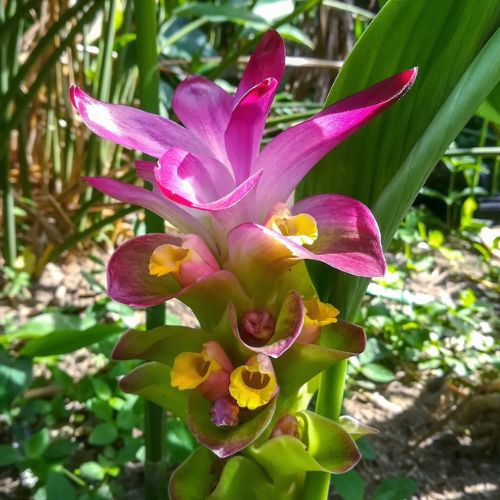
TURMERIC (Curcuma longa) ☀️JUNE SALE - 20%-OFF *Organic herb for horses - a versatile botanical for comfort, recovery, and everyday support

Benefits of Turmeric for horses
If there was one herb that repeatedly appears across discussions about comfort, recovery, metabolism, gut health, and healthy aging, it's probably turmeric.
" Great service and lovely product , has really helped my horse . Will be re ordering" Nicola B.
That's because turmeric isn't really a "joint herb" or a "metabolic herb" - it's one of those rare botanicals that seems to have a foot in many different camps.
For horses needing a little extra support with stiffness, recovery, day-to-day comfort, or general wellbeing, turmeric is often one of the first herbs owners reach for.
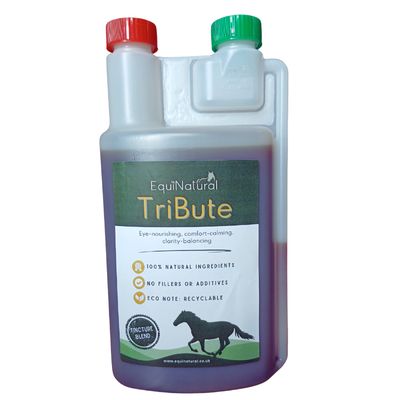
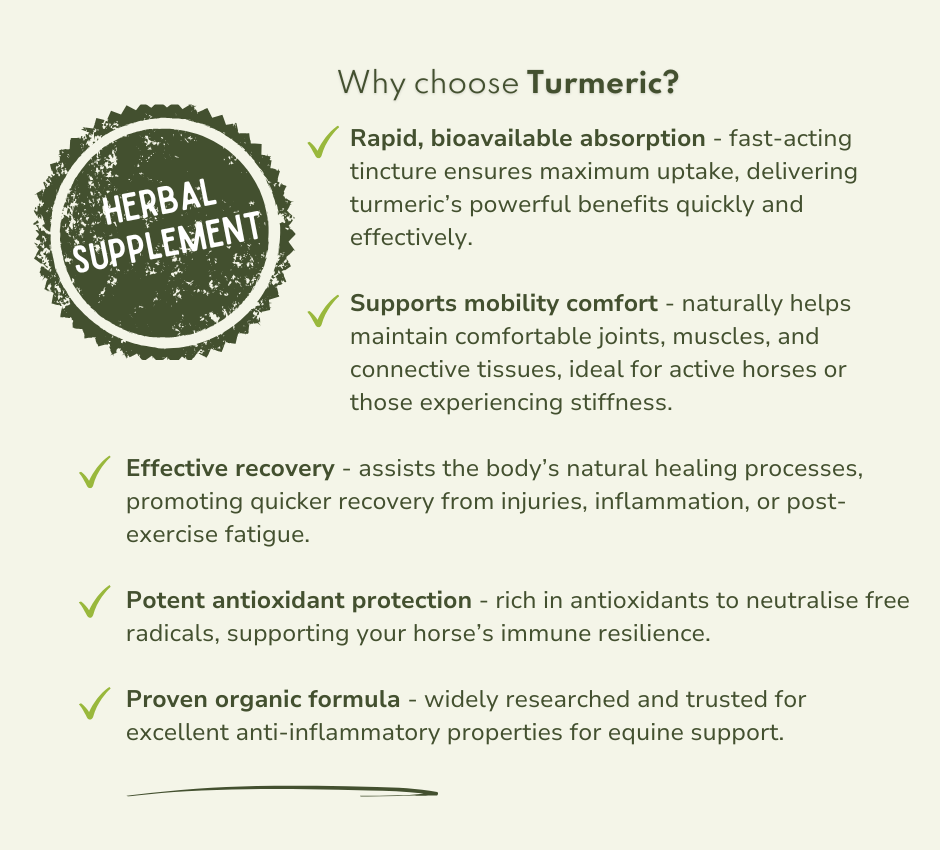
We offer it as a tincture rather than a powder - a more effective, ready-to-absorb source of turmeric's valuable phytonutrients without the usual challenges of digestion and absorption. A simple, single-herb option that fits easily into a range of feeding plans, it'soften used alongside joint, comfort, or metabolic support where a little extra help is needed.
*Please note this is a nutritional, functional food supplement and not veterinary medicine. For more on this, see Dr Kellon's Horse Sense - Nutrition is not 'Alternative' Therapy
.
Overview
Here's something I've always found interesting about turmeric.
For years it was mainly thought of as a spice. Then researchers started looking more closely at the compounds inside it and discovered that this bright yellow kitchen ingredient was interacting with an extraordinary number of biological pathways throughout the body.
Which helps explain why turmeric keeps appearing in conversations about so many seemingly unrelated issues - everything from comfort, recovery, metabolic health, gut function, healthy aging...
All different systems, yet they share one thing in common - they rely on the body's ability to maintain balance in the face of everyday stress and wear.
Which could be why turmeric has become one of the most widely researched botanicals in the world - supporting multiple systems involved in resilience, recovery, and healthy function over time. How Turmeric fits into your horse's support plan
Turmeric is a good fit when you're looking for broad, everyday support rather than targeting one specific issue.
✔ Your horse feels a little stiffer than they once did
✔ Recovery after work, competition, or training seems slower
✔ You're supporting an older horse and thinking about long-term wellbeing
✔ You're building a wider support plan and looking for a versatile botanical that fits alongside other supplements
In short: if you're looking for a versatile botanical that can sit alongside many different support plans, Turmeric is a popular place to start.
From there, support can be layered depending on what you're seeing.
- Supporting comfort and mobility
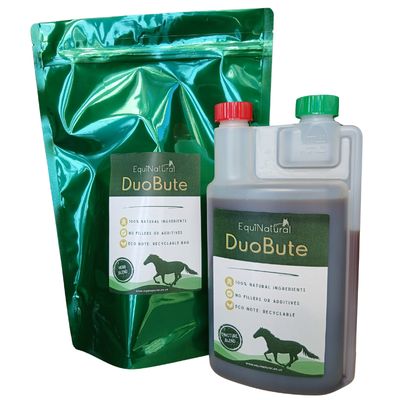
- DuoBute – where day-to-day comfort and ease of movement need more targeted support.
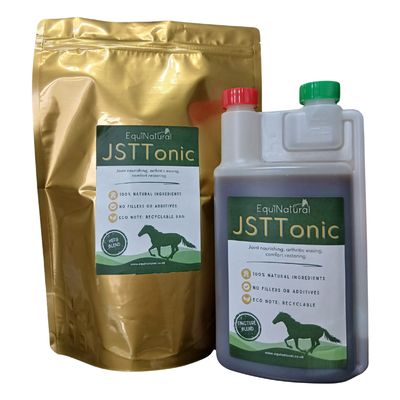
- JSTTonic – where stiffness, wear-and-tear, or age-related mobility patterns are becoming more established.
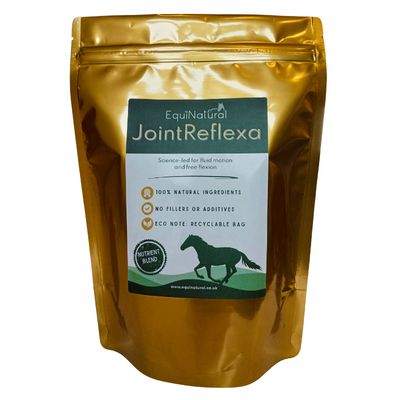
- JointReflexa – where additional support for cartilage, connective tissue, and long-term structural resilience is needed.
- Supporting metabolic wellbeing
- MetaTonic – where comfort concerns sit alongside EMS, insulin sensitivity, or metabolic challenges.
- Foundation support
Even the most versatile botanical works best when the wider nutritional foundations are in place. Supporting your horse's baseline nutrition with a forage-based mineral blend such as VitaComplete or EquiVita helps create the conditions for long-term resilience, recovery, and overall wellbeing.
In summary
Think of Turmeric as a versatile supporting player rather than a specialist. Use it alongside more targeted support where additional help with comfort, recovery, or healthy ageing is desired.
Composition & feed guide
💧Organic turmeric tincture
Our human-grade, certified organic tinctures give you a ready-to-absorb potent source of phytonutrients at the highest-strength available, for immediate absorption straight into the bloodstream and to the body’s cells.
- Curcuma longa (Turmeric), Rhizome
- Decocted 1:3 70%
- Organic Cultivated
- Feed Guide - 6ml/100kg bodyweight, daily in feed.
Top tip
Turmeric stains! Especially in liquid form - so beware clean white jods...
Functional nutritional value
Constituents: Volatile oil, curcuminoids (including curcumin), resins.
Footnotes
- Laboratory tested for identification and compliance to the British and European Pharmacopoeia standards.
- Human grade.
- Please be aware that if you're purchasing our dried botanicals for human use, our dried range is cut to appropriate sizes for feeding to horses.
- ♻️ Eco Note: Our packaging is recyclable and refillable.
- 🧊 Storage Tip: Keep cool and dry.
Energetic architecture - the synergy behind Turmeric
Energetic Architecture explains how a herb or formula is structured to support the body's natural functions in a balanced and purposeful way.
Turmeric is unusual because it doesn't sit neatly within a single category. Rather than being known for one specific area of support, it has traditionally been used across a remarkably wide range of applications.
Think of it as a versatile supporting player rather than a specialist - often a useful part of a wider plan.
Functional intent
Turmeric is designed to support:
- Everyday comfort and ease of movement
- Recovery and resilience following physical exertion
- Metabolic wellbeing and healthy ageing
- Antioxidant protection and cellular resilience
- General physiological balance
It's purpose is broad support across multiple systems that help the body maintain normal function over time.
Functional categories – versatile support in action
- Comfort & mobility support - supporting the body's natural processes involved in maintaining comfort, mobility, and ease of movement.
- Recovery & resilience - supporting the body's ability to adapt and recover from the everyday demands of work, training, and ageing.
- Metabolic wellbeing - supporting healthy metabolic function and the systems involved in maintaining long-term physiological balance.
- Antioxidant & cellular support - providing naturally occurring phytonutrients that help support cellular resilience and protection from everyday oxidative stress.
Big picture
Put simply, turmeric's strength lies not in doing one job exceptionally loudly, but in calmly supporting many systems at once.
Clinical considerations
- Turmeric in food is safe during pregnancy in humans, but best to check with your vet for pregnant or nursing mares.
- Long-term high doses can sometimes upset the gut (loose droppings or discomfort).
- Because turmeric can have a mild blood-thinning effect, it shouldn’t be combined with blood-thinning medicines unless under professional guidance. It’s also best to stop giving it at least 2 weeks before surgery.
Turmeric in history & tradition
The bright yellow root that conquered the world
Turmeric is one of those herbs that almost everyone recognises. Even if you've never used it yourself, you've probably seen it in kitchens, health shops, curry powders, supplements, even lattes - and enough social media posts to paint half the internet yellow.
It's become one of the most talked-about plants in the world. But here's the interesting thing - turmeric wasn't discovered by modern wellness culture. People have been using this vivid golden root for thousands of years.
Long before anyone was discussing antioxidants, inflammatory pathways, or curcumin extracts, turmeric was already woven into daily life across India and much of Asia - valued not only as a spice, but as a deeply respected medicinal and cultural plant.
And unlike some herbs that quietly sit in the background, turmeric has never really been shy - its colour alone makes sure of that.
More than just a spice
For centuries, Ayurvedic practitioners regarded turmeric as a herb that helped maintain balance throughout the body.
It appeared in traditions involving digestion, movement, recovery, skin health, and general vitality.
In many households it wasn't viewed as something you only reached for when there was a problem - it was simply part of life - part food, part medicine, part daily ritual.
And I think that's one of the reasons turmeric has survived the test of time. It wasn't treated as a specialist remedy - it became part of the everyday toolkit.
Different cultures found different uses for it, but a common theme kept appearing - turmeric seemed particularly valued whenever the body was under strain.
What generations noticed before science explained it
One of the things I love about turmeric is how beautifully traditional wisdom and modern science overlap.
For thousands of years, people observed that turmeric seemed to support comfort, recovery, resilience, and general wellbeing.
Nobody knew about curcuminoids, nobody had identified curcumin, nobody was discussing cellular signalling pathways - but they simply noticed that this bright yellow root kept earning its place.
Eventually, modern researchers became curious too. And when they started looking more closely, they discovered curcumin and the wider family of curcuminoids that give turmeric both its colour and many of its most studied properties.
Today, curcumin has become one of the most extensively researched plant compounds in the world. The science is fascinating, but in many ways it's simply helping explain observations that herbal traditions had been making for centuries.
Why turmeric is still important today
Here's a classic thing I've noticed over the years - many horses cope remarkably well with modern life - until they don't.
Rich grazing, competition schedules, travelling, environmental pressures, ageing bodies - the general wear and tear that comes with simply being a horse in the modern world.
And none of these things happen in isolation - which is probably why herbs like turmeric continue to attract so much attention.
Not because they're fashionable, or they're new, but because they sit within a long tradition of supporting resilience when life becomes demanding.
At EquiNatural, turmeric often appears as part of a wider conversation about comfort, recovery, movement, and helping horses maintain their natural vitality as the years roll by.
And yet... We've become so used to extracting, concentrating, encapsulating, and commercialising things that we sometimes forget many of our most respected botanicals started life in kitchens, gardens, and everyday meals.
Which is rather fitting - after all, a herb doesn't remain relevant for several thousand years by accident.
© EquiNatural 2026. All content, formulations, and materials are original works protected under copyright.