
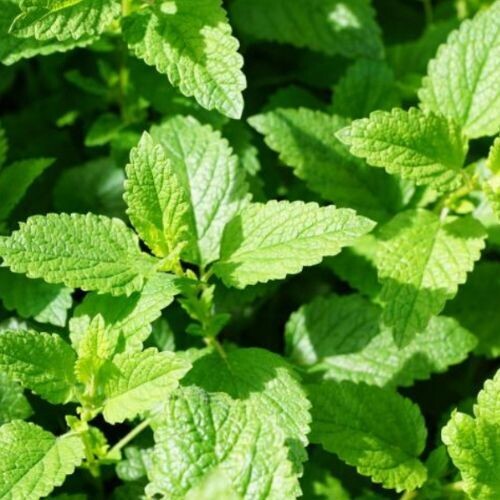
PEPPERMINT for Horses (Mentha piperita) | Digestive Comfort & Support
Gassy, tense gut, or a little uncomfortable after eating?
Peppermint is one of the first individual herbs we'd look at for simple digestive comfort.
A classic aromatic carminative (anti-gas) herb, Peppermint has been traditionally used to support comfortable digestion, particularly where gas and digestive tightness are part of the picture.
And there's another very practical reason we love it – most horses love it too! Its familiar aroma and flavour make Peppermint particularly useful for fussy eaters or for making something less yummy more acceptable in the feed bowl.
You'll also find Peppermint within several EquiNatural blends where digestion forms part of a wider support plan.
*Please note this is a nutritional, functional horse food supplement and not veterinary medicine.
For more on this see Dr Kellon's Horse Sense - Nutrition is not 'Alternative' Therapy
.
Find Peppermint in the EquiNatural range
Here’s where you’ll also find Peppermint in our supplement support for horses:
- CalmTonic - natural organic calm for high-stress situations
- KolicTonic - colic digestive support
- PollenTonic - natural support for spring pollen allergy challenges
- UlsaTonic - supports Equine Gastric Ulcer Syndrome (EGUS)
Overview
Why does peppermint feel cold?
Take a peppermint leaf, crush it between your fingers and breathe in.
You know exactly what's coming - that unmistakable rush of coolness.
But here's the curious bit - t he peppermint hasn't actually made anything colder. Much of that sensation comes from its menthol, one of Peppermint's best-known aromatic compounds.
Menthol interacts with temperature-sensitive receptors involved in our perception of coolness – essentially sending the nervous system a “that's cold” message without necessarily changing the temperature itself.
Clever little plant.
And that distinctive chemistry is part of what has made Peppermint such an enduring digestive herb - because digestion isn't simply about breaking food down.
The gastrointestinal tract is constantly moving – mixing food with digestive secretions, shifting gas, coordinating muscular contractions and gradually carrying everything onwards. And sometimes that movement can become a little less comfortable.
The tummy feels tight, gas accumulates, the horse seems unsettled after eating.
And this is where herbalists have traditionally reached for aromatic carminative (anti-gas) herbs such as Peppermint.
Rather than thinking of Peppermint simply as something that “settles the stomach”, it's more useful to think about comfortable digestive movement – supporting the normal muscular rhythms and passage of gas that help keep everything travelling in the right direction.
And Peppermint has another rather useful trick.
Its aroma and flavour are so familiar and palatable that many horses actively seek it out, which is why we often use it alongside less yummy stuff in the feedbowl.
So yes, Peppermint may be one of the most familiar plants in the herbal cupboard for a very good reason - it's yummy, it's cooling, and it helps digestive comfort.
Composition & feed guide
💧Organic peppermint leaf tincture
Our human-grade, certified organic tinctures capture the plant's naturally occurring constituents in a concentrated, easy-to-feed liquid form.
- Mentha piperita (Peppermint) Leaf
- Infused 1:3 25%
- Organic Cultivated
- Feed Guide - 6ml/100kg bodyweight, daily in feed.
🌿Organic dried peppermint leaf
Grown, harvested and dried without the use of agri-chemicals, non-irradiated and GMO free - see our Quality page for Quality Management & Certification Documents.
- Mentha piperita (Peppermint), Leaf
- Organic Cultivated
- Origin Egypt
- Feed Guide - 5g/100kg bodyweight per day, i.e. 25g for a 500kg horse.
Footnotes
- Laboratory tested for identification and compliance to the British and European Pharmacopoeia standards.
- Human grade.
- Please be aware that if you're purchasing our dried botanicals for human use, our dried range is cut to appropriate sizes for feeding to horses.
- ♻️ Eco Note: Our packaging is recyclable and refillable.
- 🧊 Storage Tip: Keep cool and dry.
Functional nutritional value
Constituents: Volatile oils, vitamins, minerals, flavonoids, tannins.
"Energetics" - the science behind Peppermint
When it comes to herbs and herbal formulations, you may have heard herbalists talk about energetics . It's simply the way we describe how a herb or formula has been designed to support the body in a balanced and purposeful way. The science helps us understand why that structure works.
Peppermint is one of herbal medicine's classic aromatic carminatives (anti-gas), supporting the comfort and coordination of the digestive system as food, fluids and gases move naturally through the gut.
Think of it as helping digestion feel a little freer, a little less tight, and a little more comfortable.
How peppermint works
Peppermint's naturally occurring aromatic oils allow it to support several closely connected aspects of digestive and nervous system function.
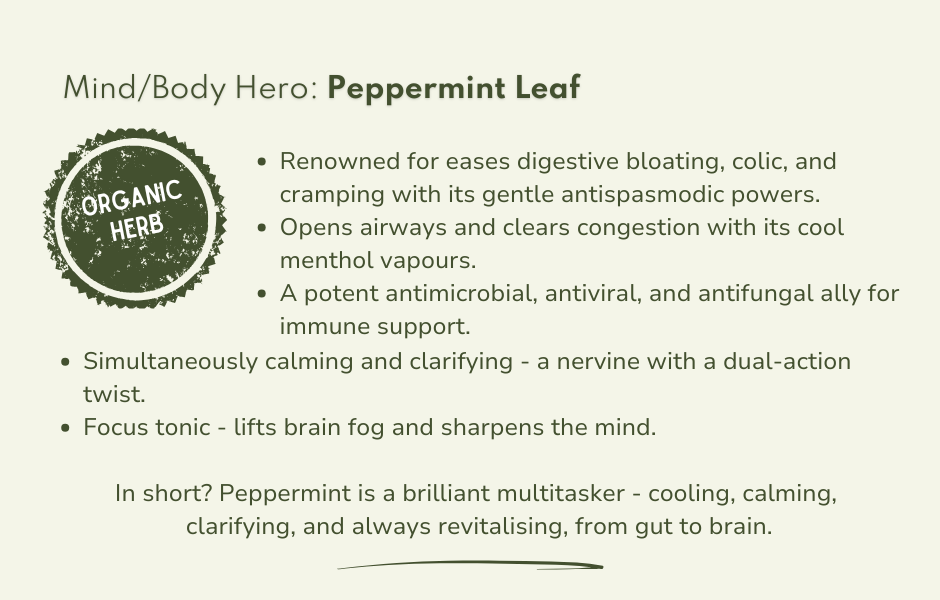
- Supporting comfortable digestive movement
- The volatile oils, including menthol, have traditionally been valued for helping maintain normal digestive motility and easing the sensation of gas and digestive tightness. This is why Peppermint has been used as a classic carminative herb for generations. - Supporting digestive and respiratory comfort
- Peppermint's cooling aromatic constituents create the familiar sensation of freshness while supporting comfort throughout the upper digestive tract and respiratory system. It's one of the reasons the herb appears in blends supporting both gut and airway health.
Big picture
One of the reasons Peppermint has remained such a trusted digestive herb for centuries is its simplicity.
It doesn't force digestion in a particular direction – its aromatic character simply makes it a lovely herb wherever comfortable movement is part of the picture.
Clinical considerations
Advisories
- Always seek veterinary advice for pregnant or nursing mares.
Peppermint in history & tradition
You have to feel a little bit sorry for peppermint. Imagine spending thousands of years becoming one of the world's great digestive herbs, only to be introduced as toothpaste...
If you were to close your eyes for a moment, and imagine crushing a peppermint leaf between your fingers, you'd smell it immediately.
Bright, fresh, cooling - almost impossible to mistake for anything else. It might even make your mouth water a bit too!
That's one of the things I love about peppermint - it hits you straight away, and with one deep breath, everything suddenly feels a little fresher.
A favourite for thousands of years
Peppermint has been alongside us for an astonishingly long time.
The ancient Egyptians valued it, the Greeks and Romans wrote about it, medieval monasteries grew it in their physic gardens, and over the centuries it found its way into kitchens, herbal dispensaries, teas, tinctures, and eventually almost every herb garden imaginable.
Food, medicine, flavour, fragrance, comfort... Few herbs have become quite so woven into everyday life.
And long before anyone identified menthol, herbalists had already noticed something remarkable about peppermint. The moment people smelled it, tasted it, or drank it as a tea, they often described the same feeling - every "sense" seemed to wake up, from digestion to the mind.
Some herbs soothe, others nourish, but peppermint somehow manages to refresh.
Modern science later identified the aromatic oils responsible for that unmistakable cooling sensation, but the observations had already been made centuries earlier.
Once again, the chemistry simply helped explain what generations of herbalists had already noticed.
A herb that loves movement
Peppermint's traditional uses seem to come back to one simple theme – freshness and comfortable movement.
Digestion transit, air through the respiratory tract - it's even known to help focus by gently inhaling a bottle of peppermint essential oil.
Traditional herbalists repeatedly reached for Peppermint whenever they wanted to encourage the body's natural rhythms.
Perhaps that's why it has remained one of the most widely loved herbs in the world - it simply helps things flow a little more comfortably.
Why Peppermint still matters today
Most horses don't choose peppermint because they've read the research - they just love the taste.
It's one of those rare herbs that horses often seem genuinely pleased to find in the feed bowl, plus there's something lovely about a herb that's been appreciated by both people and animals for thousands of years.
Peppermint FAQs
Is Peppermint just a tasty herb?
It certainly tastes lovely (most horses seem to think so!), but there's much more to Peppermint than flavour.
For generations, herbalists have valued Peppermint as one of the classic digestive herbs, particularly where the tummy feels a little tight, gassy, or uncomfortable after eating.
It's one of those wonderfully simple plants that quietly gets on with the job, which is probably why it's remained so popular for so long.
Can Peppermint help a horse that gets gassy?
This is exactly the sort of situation Peppermint has traditionally been used for.
Put simply, it settles the gut, alongside supporting comfortable digestive movement.
That's where Peppermint has earned its reputation as one of herbal medicine's classic carminative (anti-gas) herbs.
Why is Peppermint included in so many EquiNatural blends?
Because digestion crops up in far more places than we often realise.
You'll find Peppermint in several of our digestive, respiratory, and calming blends because the gut, airways, and nervous system are all more closely connected than they first appear.
Sometimes one familiar herb can support several different systems at once - and Peppermint is a lovely example of that.
My horse is a fussy eater. Will Peppermint help?
It very well might! Peppermint is one of the few herbs that many horses love to find in their feed bowl.
Does Peppermint actually cool the stomach?
Interestingly... no. The cooling sensation comes largely from menthol, one of Peppermint's naturally occurring aromatic compounds.
Menthol interacts with receptors that tell the brain something feels cool, even though the temperature hasn't actually changed.
It's one of those fascinating little quirks of plant chemistry - and part of what gives Peppermint its unmistakably fresh character.
Can Peppermint be fed every day?
Oh yes!
Whether it's simply because your horse enjoys it, or because you're looking to support healthy digestive function, Peppermint is one of those dependable herbs that's earned a permanent place in many feed rooms over the years.
© EquiNatural 2026. All content is original work protected under copyright, and may not be re-published, duplicated, or rewritten for commercial use without permission.
