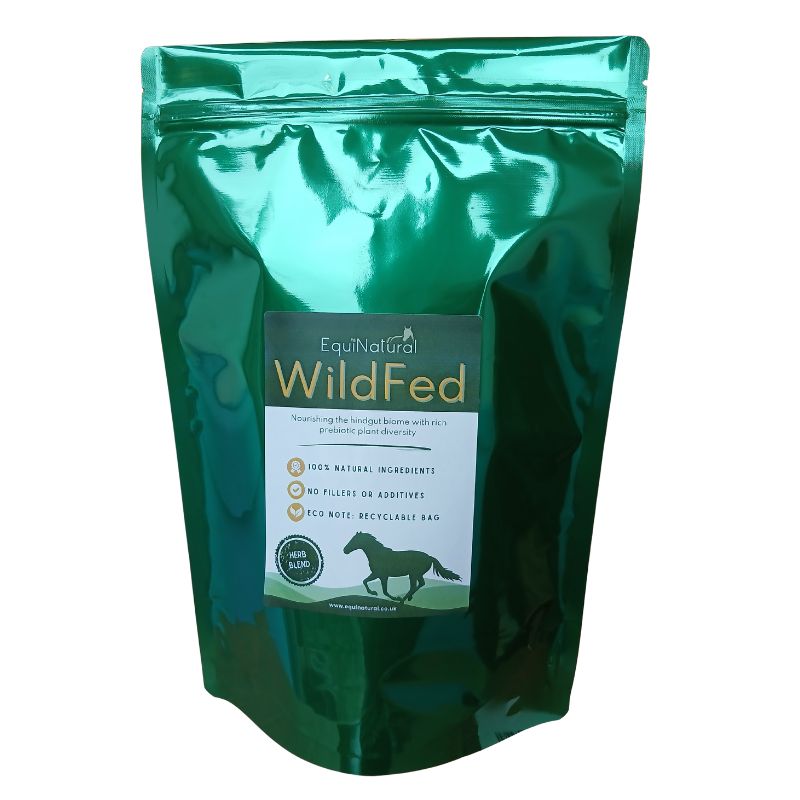
WILDFED for Horses | Natural Prebiotic Plant Diversity for the Hindgut Microbiome
Have you ever noticed how horses will happily leave a perfectly good field of grass just to bury their face in a hedge, strip bark from a fallen branch, or disappear into a patch of brambles?
" A perfect addition for my hedge-munching horse - filling the natural gap in his diet.” Amy W.
I've always found that fascinating - because if grass was all they needed... why would they bother?
The answer is that horses didn't evolve eating one or two plants - they evolved browsing hundreds.
Leaves. Bark. Flowers. Seeds. Mosses. Shrubs. Herbs. Even sea plants in coastal regions. Every day brought something different, and with it came an extraordinary diversity of fibres, minerals, bitters, and phytonutrients that helped nourish the hindgut microbiome.
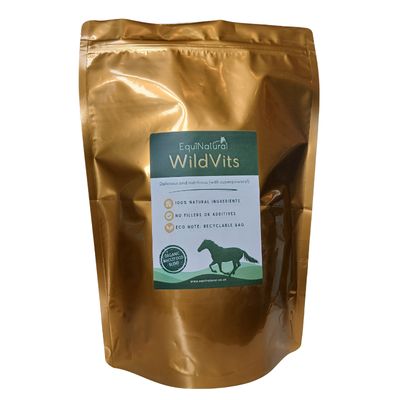
Meet WildFed - nature's botanical buffet. It mimics the diverse diet of the natural horse, offering a variety of natural prebiotic botanical roughage to support a healthy hindgut microbiome, by providing the plant diversity your horse is naturally designed to thrive on.
Rather than targeting a particular problem, it simply brings a little of that lost botanical diversity back into the modern feed bowl - helping nourish the beneficial microbes that thrive on variety, while supporting the natural browsing instincts horses have followed for thousands of years.
Sometimes the simplest question is the most revealing - if horses are always looking for more than grass, perhaps they know something we've forgotten.
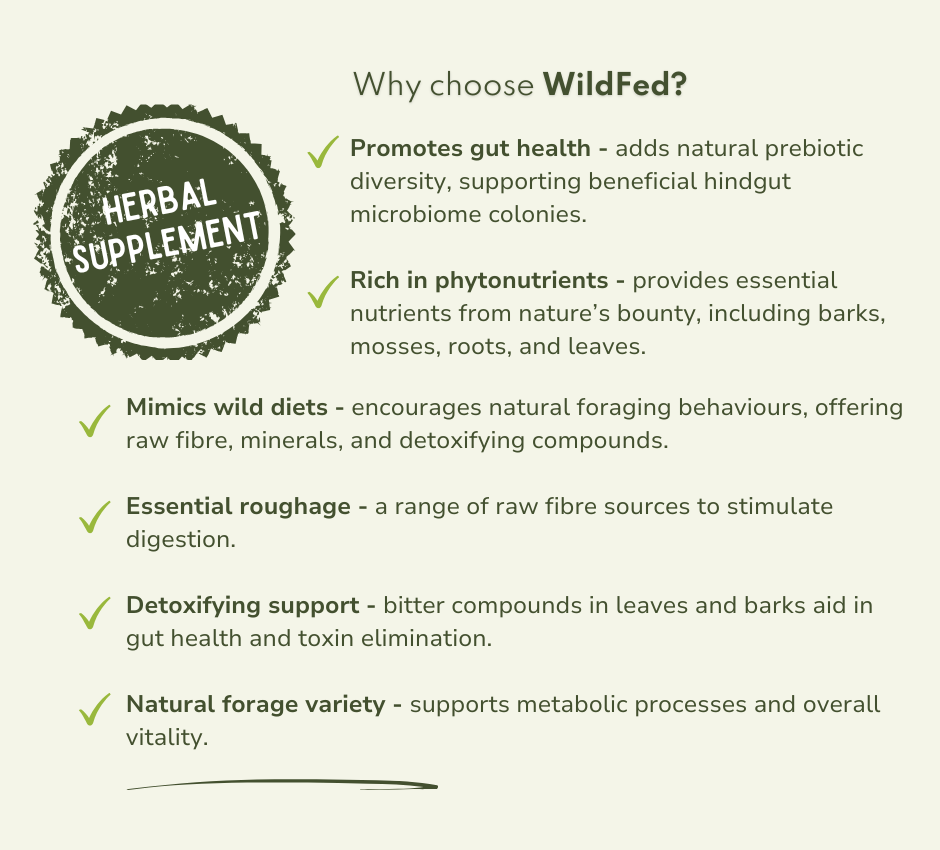
Overview - why plant diversity matters to the hindgut
One of the biggest differences between a wild horse and a domesticated horse isn't how much they eat - it's how many different plants they eat.
Wild horses rarely graze one species for weeks on end. Instead, they move constantly through the landscape, browsing whatever is seasonally available - grasses, hedgerows, leaves, bark, flowers, seed heads, roots, berries, and countless other plants. Every mouthful offers something slighty different - fibres, minerals, polyphenols, and plant compounds, all helping to nourish an incredibly diverse microbial ecosystem within the hindgut.
Modern horses, by comparison, often eat remarkably little botanical diversity - the same grass, the same hay, and the same feed every single day. Functional, yes. Diverse? No.
Nutritionally, that may meet basic requirements, but biologically it's a long way from the menu the equine digestive system evolved to expect.
A horse’s digestive system hasn't changed from that of its wild ancestors - it's built for variety. So isn't it interesting that given the opportunity, horses will instinctively browse hedges, trees, and branches because they need more than grass alone, such as:
- structural fibre
- natural bitters
- essential minerals and nutrients
- antioxidant and immune-modulating compounds
All of which support microbial resilience, digestive rhythm, and the body’s natural detox pathways.
WildFed was created around that idea.
Rather than acting as another supplement or gut treatment, it simply reintroduces some of the botanical diversity that's largely disappeared from modern equine diets. Barks, leaves, sea plants, flowering tops, and other naturally fibrous plants all contribute different compounds that help nourish the hindgut microbiome.
In short?
WildFed doesn't feed the horse - it feeds the incredible ecosystem living inside the horse, restoring that missing natural diversity that the hindgut biome needs to stay robust.
How Wildfed fits into your horse's support plan
WildFed is a year-round forage-diversity enhancer — think of it as gently re-wilding the feed bowl.
✔ Your horse lives mainly on grass, hay, and a relatively simple diet
✔ They instinctively browse hedgerows, trees, or shrubs whenever they get the chance
✔ You'd like to increase natural plant diversity within the hindgut
✔ You're thinking about long-term digestive resilience rather than fixing one specific problem
✔ Your horse has completed a gut reset and you're looking for everyday nutritional support
✔ You enjoy feeding as nature intended, rather than relying on highly processed feeds
In short: if you're looking to nourish the hindgut rather than chase digestive problems, WildFed is one of the simplest places to start.
From there, support can be adapted depending on what you're seeing.
- When the gut needs more targeted support
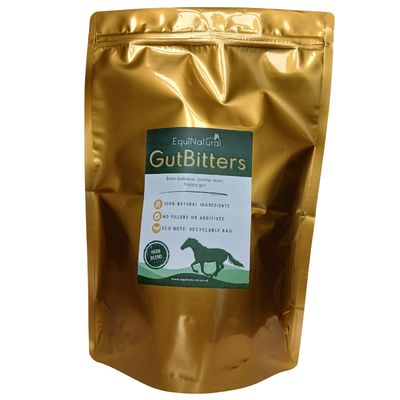
- GutBitters – during spring and autumn, or whenever rapid forage changes leave digestion struggling to adapt.
- BiomeTonic – to help maintain a balanced hindgut ecology where ongoing microbial support is beneficial.
- SiboCARE – where gas, bloating, or microbial imbalance suggest the hindgut has become unstable and needs resetting.
- GutAminos – where additional nutritional support for the gut lining is needed.
- Building wider resilience
That's one of the lovely things about WildFed. It works beautifully alongside almost every EquiNatural programme because it isn't trying to steer the body in a particular direction. Instead, it provides the diverse fibres, leaves, barks, and plant compounds that help create a richer environment for the hindgut microbiome every day.
- Foundation support
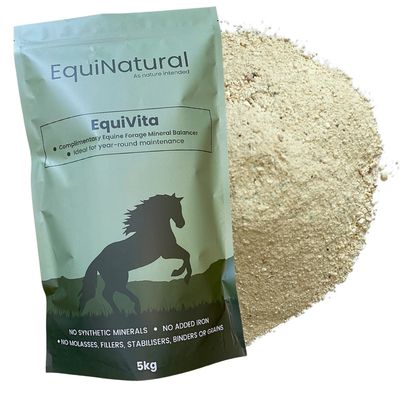
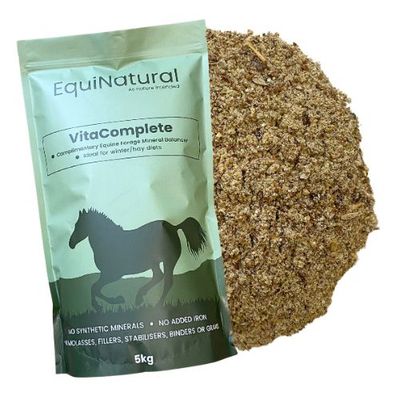
WildFed complements rather than replaces the foundations of a healthy diet. Good-quality forage, a forage-balanced mineral solution such as VitaComplete or EquiVita, and opportunities for natural movement all help create the conditions in which the hindgut microbiome can flourish.
*If you're not already feeding a mineral balancer, try one of our 1kg trial bags.
In summary
Use WildFed to bring natural plant diversity back into your horse's everyday diet. Feed it year-round as a little slice of the hedgerow, layer more targeted support around it when needed, and think of it as nourishing the ecosystem inside your horse rather than treating the horse itself.
Composition & feed guide
WildFed is a nutritional, functional food supplement and not veterinary medicine. For more information, see Dr Kellon's article - Nutrition is not 'Alternative' Therapy .
Composition glossary
WildFed brings back the diverse, fibre-rich plants found in a natural browsing diet. These botanicals nurture the hindgut biome through raw fibre, minerals, tannins, mucilage, and antioxidants.
- Fraxinus excelsior (Ash bark and leaves) Mineral-rich, mildly bitter foliage traditionally browsed in the wild. Supports digestion, circulation, joint comfort, and natural waste elimination.
- Betula pendula (Birch bark and leaves) Gently diuretic and cleansing; supports fluid balance, lymphatic flow, and natural toxin processing.
- Rubus fruticosus (Blackberry leaves) A source of tannins and antioxidants that support gut integrity, microbial balance, and calm mucosal behaviour.
- Crataegus oxyacantha (Hawthorn flowering tops & berries) Renowned as a circulatory tonic for vitality and tissue oxygenation - a classic natural browsing species.
- Chondrus crispus (Irish Moss) A mucilaginous, mineral-rich sea plant that soothes gut lining and provides trace elements often missing from inland forage.
- Silybum marianum (Milk Thistle herb) Supports liver function, metabolic clarity, and natural antioxidant pathways.
- Salix alba (Willow bark and leaves)
A traditional foraged plant that supports natural comfort and tissue ease.
( See Clinical Considerations: salicylates are controlled under competition rules. )
Feed guide
🌿Dried herb blend
Human grade, produced to ecological standards and free from agro-chemicals. See our Quality page for Organic Certification Documents.
- Feed a generous handful per horse, half for ponies, spread over hay or as a top-dressing to the feedbowl, every couple of days.
♻️ Eco Note: Our packaging is recyclable and refillable.
Energetic architecture - the synergy behind the blend
Energetic architecture – the synergy behind WildFed
Energetic Architecture explains how the plants in a formula are structured to work together in a balanced and purposeful way.
WildFed is built around one simple idea: feeding the microbiome the kind of botanical diversity horses naturally evolved alongside.Think of it as feeding the ecosystem inside the horse rather than feeding the horse alone.
Functional intent
WildFed is designed to support:
- natural plant diversity within the diet
- microbial nourishment through varied plant fibres
- long-term hindgut ecology and resilience
- everyday digestive wellbeing
- instinctive browsing behaviour
The goal is to recreate some of the botanical richness that horses naturally evolved alongside.
Functional categories – biodiversity in action
- Diverse prebiotic nourishment - l eaves, barks, berries and sea plants
- Providing a broad range of fibres, tannins, minerals, and phytonutrients that help nourish a diverse hindgut microbiome. - Botanical variety - m
ixed hedgerow and browsing species
- Bringing together plants that horses would naturally encounter while browsing, rather than relying on a single forage source. - Everyday nutritional resilience
- Helping provide the nutritional diversity that supports long-term digestive wellbeing and microbial stability. - Natural browsing enrichment
- Encouraging one of the horse's oldest feeding instincts by reintroducing the variety that modern grazing often lacks.
Big picture
Here's something I've always found fascinating - if grass really provided everything horses needed, why do they spend so much time searching for everything else?
Perhaps they're simply following thousands of years of evolution, to bring a little of nature's diverse browsing basket back into their gut ecology.
Clinical considerations / veterinary reference
Advisories
- Feed alongside a balanced forage-based diet.
- Ideal year-round, especially for stabled horses or those with limited browsing.
Contraindications
- Contains Salix alba (Willow), which provides salicylates - always check competition rules.
- Use caution with pregnant or nursing mares (mild hormonally active plant compounds).
Veterinary Reference / Formulary Extract
A concise, vet-friendly reference is available for sharing with your vet.
FAQs about plant diversity & the hindgut microbiome
What is WildFed designed to support?
WildFed is designed to bring natural botanical diversity back into the modern horse's diet.
Rather than targeting one specific problem, it provides a wide variety of fibre-rich leaves, bark, berries, sea plants, and other browsing species that help nourish the hindgut microbiome and support long-term digestive resilience.
Think of it as nature's botanical buffet.
Why do horses browse hedges, trees, and shrubs if they already have plenty of grass?
It's one of the questions that inspired WildFed.
Wild horses evolved eating hundreds of different plants, not just grass.
Given the opportunity, many domestic horses instinctively browse hedgerows, tree bark, leaves, flowers, and shrubs - suggesting they're following deeply ingrained feeding behaviours that developed over thousands of years.
WildFed simply helps bring a little of that natural diversity back into the feed bowl.
Is WildFed a prebiotic?
Yes - but perhaps not in the way people usually think of prebiotics.
Rather than supplying a single purified fibre, WildFed provides a naturally diverse range of plant fibres and botanical compounds that help nourish the many different microbial communities living within the hindgut.
Its strength lies in diversity.
What's the difference between WildFed and BiomeTonic?
Although both support the hindgut, they have different roles.
WildFed focuses on increasing natural plant diversity and providing varied botanical fibres that nourish the hindgut microbiome.
BiomeTonic focuses on maintaining the everyday ecological balance of the hindgut using carefully selected aromatic herbs.
Think of WildFed as feeding the microbes.
BiomeTonic helps maintain the environment they live in.
What's the difference between WildFed and SiboCARE?
WildFed is designed for horses whose gut is already reasonably stable.
SiboCARE is used when microbial imbalance, gas, bloating, or digestive instability are already established and the hindgut needs targeted support.
In simple terms:
- SiboCARE helps restore balance.
- WildFed helps nourish that balance for the long term.
Can WildFed be fed all year round?
Absolutely. WildFed was designed as an everyday nutritional addition rather than a short course - but it's fine to feed a couple of days a week or every other week too.
Many owners feed it simply to help increase plant diversity and support the long-term health of the hindgut microbiome.
My horse is already on good hay and grass. Why would they need WildFed?
Good forage remains the foundation of every healthy diet.
However, modern horses often eat remarkably little botanical variety compared with their wild ancestors.
WildFed doesn't replace forage - it complements it by reintroducing some of the leaves, bark, flowering plants, berries, and sea plants that horses naturally evolved browsing.
Can WildFed be fed alongside other EquiNatural products?
Yes. WildFed sits comfortably alongside almost any feeding programme because it isn't trying to steer the body in one particular direction.
Instead, it simply provides greater botanical diversity, making it an ideal companion to products such as BiomeTonic, GutBitters, SiboCARE, or GutAminos where appropriate.
Does WildFed replace a mineral balancer?
No. WildFed provides natural plant diversity, but it isn't designed to replace the balanced mineral nutrition provided by products such as VitaComplete or EquiVita.
The two work beautifully together.
My horse has completed a gut reset. Is WildFed a good next step?
Yes. Once the hindgut has become more stable, WildFed provides an excellent way of supporting long-term microbial nourishment through increased botanical diversity.
Many owners use it as part of their everyday feeding routine after completing programmes such as SiboCARE or LeakyGutCOMBO.
Why is plant diversity so important?
Different plants provide different fibres, minerals, polyphenols, tannins, bitters, antioxidants, and other naturally occurring compounds.
The greater the diversity within the diet, the more varied the nutritional environment becomes for the billions of microbes living within the hindgut.
Rather than relying on one or two forage species, WildFed helps recreate some of the botanical richness horses naturally evolved alongside.
My horse absolutely loves searching through WildFed. Is that normal?
Very! Many horses seem to enjoy sorting through the different leaves, bark, and plant pieces, almost as if they're recreating natural browsing behaviour.
For many owners, WildFed becomes enrichment as well as nutrition.
Do I feed WildFed every day?
Not necessarily. Many owners feed a generous handful every couple of days, sprinkled over hay or added to the feed bowl.
Because it's designed to increase botanical diversity rather than provide a measured daily dose of one nutrient, it fits easily into a flexible feeding routine.
Is WildFed suitable if my horse doesn't currently have digestive problems?
Absolutely. WildFed isn't just for horses with digestive challenges.
It was created to nourish the hindgut microbiome before problems develop, bringing back some of the natural plant diversity that modern equine diets often lack.
It's one of the simplest ways to feed a little more like nature intended.
© EquiNatural 2026. All content is original work protected under copyright, and may not be re-published, duplicated, or rewritten for commercial use without permission.