KOLICTONIC for Horses | Digestive Spasmodic & Post-Colic Gut Support 🍂NOVEMBER SALE - 20%-OFF - USE CODE TRANSITION20
Has your horse's gut suddenly become uncomfortable – or are they still settling after colic?
They might be looking at their flank, seem gassy or crampy, or you're seeing one of those familiar digestive episodes that has you reaching for the phone and watching them like a hawk.Or perhaps the colic itself has passed, but their appetite and digestive rhythm still don't feel back to normal.
That's where we'd look at KolicTonic.
“All I can say is thank god we had this on the shelf with DuoBute. This tincture gave me precious extra time with our beautiful old boy.” – Carolina T.
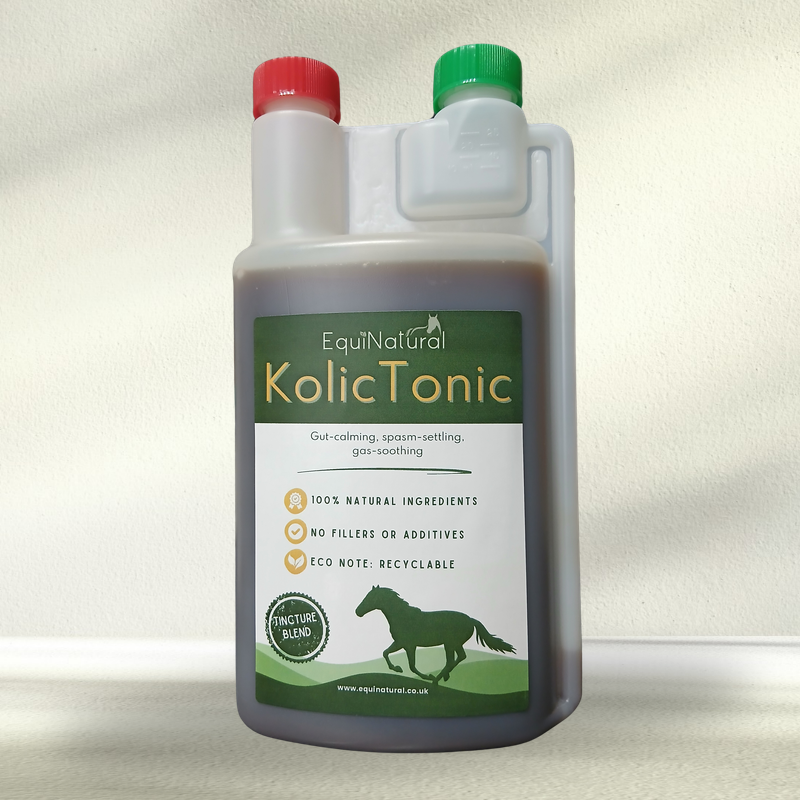
Our organic herbal tincture combines soothing, carminative and calming herbs to support digestive comfort, normal gut motility and the gut–nervous system connection – both during mild digestive spasms while veterinary advice is being sought, and through the days that follow a colic episode.
* For our comprehensive guide to optimal gut health , see our main A-Z Horse Library/Colic page in the Info Centre above.

Overview - why settling the gut after colic matters
Anyone who's been through colic with a horse knows the relief when the immediate crisis passes.
We certainly do. When our old boy Murf colicked back in 2011, I was in such a panic I couldn't even remember how to use my phone to call the vet.
But afterwards came something else we remember just as clearly: waiting for his gut to feel normal again.
That's really where KolicTonic began.
Colic isn't one single digestive problem, and recovery will depend on what caused the episode in the first place.
But following digestive disruption, the gut can remain sensitive for a while. Depending on the cause, normal digestive rhythm may take time to return, while the horse who's been uncomfortable can understandably remain tense too.
KolicTonic brings together herbs traditionally used for digestive spasm, gas and gut comfort, alongside calming nervines that recognise how closely digestive function and the nervous system are connected.
That also makes it useful to have on the shelf for horses prone to occasional mild, spasmodic or gassy digestive episodes – while remembering that suspected colic always means calling the vet.
Once everything has settled, that's when we'd start asking the next question: what unsettled the gut in the first place?
KolicTonic helps with the immediate digestive picture. Longer-term support is about understanding why it happened – and what Ned's gut may need next.
How KolicTonic fits into your horse's support plan
KolicTonic is a good fit when your horse's gut has suddenly become uncomfortable – or when the colic itself has passed but everything still feels a bit unsettled afterwards.
Choose KolicTonic if your horse:
✔
Has previously been assessed for recurrent mild spasmodic or gas-related episodes and your vet is happy for KolicTonic to form part of the support plan
✔ Becomes gassy, crampy or tense through the abdomen
✔ Is recovering from a recent colic episode and their digestive rhythm isn't quite back to normal
✔ Is eating again, but appetite, droppings or gut comfort still need time to settle
✔ Is one of those horses who has you watching every mouthful of hay and every pile of droppings for the next fortnight
In short: KolicTonic is for supporting mild digestive spasms while veterinary advice is being sought, or helping everything find its rhythm again afterwards.
Supporting the wider picture
Not every horse needs another gut product after KolicTonic. If the episode was isolated, your horse has recovered beautifully and everything is back to normal, we'd be perfectly happy to leave well alone.
But if a pattern remains, follow the clue.
- SiboCARE – where recurring gas, bloating, right-flank sensitivity or digestive instability points towards hindgut microbial imbalance.
- GutAminos – where supporting the intestinal lining is the next priority following significant digestive disruption.
- GutBitters – useful during grass flushes, forage changes or other seasonal dietary transitions.
And once the gut is settled, BiomeTonic or WildFed may have a place where ongoing microbial balance or greater plant diversity would genuinely benefit that particular horse – but they're maintenance options, not compulsory graduation presents for finishing KolicTonic.
Foundation support
A recovering gut likes boringly good basics. Plenty of appropriate forage, fresh water, movement as advised by your vet, and a carefully managed return to normal feeding all matter far more than piling supplements into the bucket.
Supporting your horse's baseline nutrition with a forage-balanced mineral solution such as EquiVita or VitaComplete also helps provide the nutritional foundations that normal digestive function and longer-term gut resilience depend upon.
*If you're not already feeding a mineral balancer, try one of our 1kg trial bags to start with.
In summary
Use KolicTonic when the gut needs help settling, moving and finding its normal rhythm again.
Keep it on the shelf if you have a horse with a history of mild spasmodic or gassy episodes, and use it during post-colic recovery once veterinary guidance says feeding can resume.
Meanwhile, build longer-term digestive resilience by supporting the underlying patterns that may have unsettled the gut in the first place.
Composition & feed guide
*KolicTonic is a nutritional, functional food supplement and not veterinary medicine. For more on this, see Dr Kellon's article - Nutrition is not 'Alternative' Therapy
.
What's in KolicTonic?
KolicTonic combines traditional digestive and nervine herbs chosen to support comfortable gut movement, digestive ease and nervous-system calm.
- Althaea officinalis Radix – Rich in mucilage and traditionally valued for soothing digestive tissues and supporting mucosal comfort.
- Matricaria chamomilla – Traditionally valued for its carminative, antispasmodic and calming properties.
- Foeniculum vulgare – Gentle carminative herb that supports natural gas dispersion and digestive rhythm.
- Melissa officinalis – Traditionally used for both digestive comfort and nervous tension.
- Mentha piperita – Cooling and aromatic, supports normal intestinal motility and comfort.
- Scutellaria laterifolia – Traditional nervine included to support relaxation and nervous-system calm.
- Valeriana officinalis – Traditional nervine and antispasmodic herb, naturally supporting relaxation and helping settle the stress response.
- Verbena officinalis – Restorative herb with mild antispasmodic and nervine properties, supporting smooth muscle relaxation and steady digestive rhythm.
💧Tincture
Our human-grade, certified organic tinctures capture the plants' naturally occurring constituents in a concentrated, easy-to-feed liquid form.
- Feed 6ml/100kg bodyweight per day, i.e. 30ml for a 500kg horse.
Fussy eater?
Horses sometimes have their own opinions (and strong tastebuds!), so introduce gradually, building up over several days. See our Fussy Eaters guide for helpful tips if needed.
♻️ Eco Note: Our packaging is recyclable and refillable.
Energetics - how KolicTonic works
If you want the science, 'energetic architecture' explains how a blend is designed to work across the body's interconnected systems – not just which herbs are included, but how they interact to create a specific effect.
KolicTonic is built around how an unsettled gut and an unsettled horse can keep each other going.
Digestive discomfort can increase tension; tension can influence digestive function. So the formula doesn't look at gut movement, gas or nervous tension in isolation – it supports them together.
How the formula works
- Settling spasm, gas and digestive tension - Chamomile, Fennel and Peppermint bring the digestive side of the formula, traditionally used to support comfortable intestinal movement, gas dispersion and a more settled digestive rhythm.
- Soothing the gut itself - Marshmallow Root brings mucilage-rich support for the sensitive digestive lining, helping maintain comfort while everything settles back down.
- Supporting the gut–nervous system conversation - This is where Lemon Balm, Skullcap, Valerian and Vervain come in. Their traditional nervine and antispasmodic roles complement the digestive herbs, supporting relaxation when physical discomfort and nervous tension have become rather too interested in each other.
Big picture
KolicTonic is there to support comfortable movement, digestive ease and nervous-system calm together – whether the gut is having a mild spasmodic wobble or finding its rhythm again after a colic episode.
Settle the gut, settle the tension, then support normal digestive rhythm as things settle.
Clinical considerations / veterinary reference
Advisories
Designed for use during or following digestive tension or mild colic episodes to help settle intestinal spasms and ease post-episode discomfort.
- Feed alongside ad-lib quality forage and ensure constant access to fresh water to maintain gut motility and hydration.
- Introduce gradually whenever nutritional support is being started following veterinary assessment, or during mild digestive spasms while veterinary advice is being sought.
- If your horse has received sedatives, antispasmodics, analgesics or other medication during a colic episode, check with your vet before beginning KolicTonic.
Contraindications
- Not suitable for pregnant or nursing mares.
- Use caution if the horse is receiving sedative, tranquillising, or central nervous system–active medications, as mild additive effects may occur.
- Competition horses: contains Valerian ( Valeriana officinalis ), which is prohibited under many equestrian competition rules. Check the current rules applying to your discipline and seek appropriate veterinary guidance regarding withdrawal before competing.
Veterinary reference / formulary extract
A concise, vet-friendly reference is available for sharing with your vet.
KolicTonic FAQs
My horse looks colicky – can I give KolicTonic while I'm waiting for the vet?
Yes, where your horse has previously been assessed for mild spasmodic or gas-related episodes and your vet is happy for KolicTonic to form part of their support plan.
Important note though: suspected colic still means calling the vet, and KolicTonic isn't there to decide whether this particular episode is mild – or to delay finding out.
When should I start KolicTonic after a colic episode?
Once your horse has been assessed and your vet is happy for feeding to resume.
That's often the point when the immediate drama is over, but you're still watching every mouthful of hay, every poo, and every suspicious glance towards the flank.
And yes, staring at a fresh pile of droppings as though you've just won the lottery is entirely normal post-colic behaviour.
How long should I feed KolicTonic?
Think short-term support while the gut settles, rather than an automatic month-long course.
Once your horse is comfortably eating, passing normal droppings and their usual digestive rhythm has returned, we'd reassess.
If everything is beautifully back to normal after an isolated episode, they may need nothing else at all.
If a pattern remains, that's when we'd follow the clue rather than simply carrying on with KolicTonic indefinitely.
My horse is prone to mild gas or spasmodic colic – is KolicTonic worth keeping on the shelf?
Yes – and this was exactly our old boy Murf.
For a horse with a known history of mild gas or spasmodic digestive episodes, KolicTonic can be a very useful cupboard resident, provided you've discussed that recurring pattern with your vet and know when your horse needs veterinary assessment.
Its carminative and antispasmodic herbs support gas dispersion and comfortable gut movement, while the nervine herbs help with the tension that can accompany digestive discomfort, but - recurrent episodes deserve investigating too.
The bottle on the shelf is the support plan – not the explanation for why it keeps happening.
What's the difference between KolicTonic and SiboCARE?
They're both gut products, but they're looking at quite different moments in the story.
- KolicTonic is for the more immediate picture – digestive spasm, gas, tension, or helping the gut find its rhythm again after a colic episode.
- SiboCARE is where an ongoing pattern of gas, bloating, right-flank sensitivity or digestive instability points us towards hindgut microbial imbalance.
So if the episode passes and everything returns happily to normal, you don't automatically graduate from KolicTonic to SiboCARE. But if Ned's gut keeps dropping the same hints, that's when we'd start asking what sits underneath them.
What should I feed once my horse has recovered?
Possibly nothing extra at all. If this was an isolated episode, your horse has recovered perfectly, and everything is back to normal, we'd be perfectly happy to leave well alone.
Good forage, water, appropriate movement and a balanced nutritional foundation matter more than building a tower of gut supplements in the feed room.
If something does remain, follow that particular clue. SiboCARE may fit an ongoing gas or hindgut pattern; GutAminos where intestinal-lining support is the priority; or GutBitters around grass flushes and forage changes.
And BiomeTonic or WildFed may have a place later where microbial balance or plant diversity genuinely needs support.
The aim is a settled gut – not a horse with an increasingly impressive supplement collection.
KolicTonic is designed to support horses during the days and weeks following a colic episode, when the immediate veterinary emergency has passed but the digestive system is still settling back into its normal rhythm.
Do I still need a mineral balancer if I'm feeding KolicTonic?
Yes. Digestive recovery depends on good nutritional foundations.
Providing quality forage alongside a forage-based mineral balancer such as VitaComplete or EquiVita helps support the recovering digestive system and longer-term gut resilience.
© EquiNatural 2026. All content is original work protected under copyright, and may not be re-published, duplicated, or rewritten for commercial use without permission.