HARMONYTONIC for Horses | Organic Herbal Support for Grief, Loss & Separation🍂OCTOBER SALE - 20%-OFF - USE CODE RESET20
Lost a companion, changed yards, joined a new herd – and your horse just doesn't seem quite themselves?
"H e is on the Stress and Harmony tonics at each end of the day as you prescribed and what an improvement already!" Helen
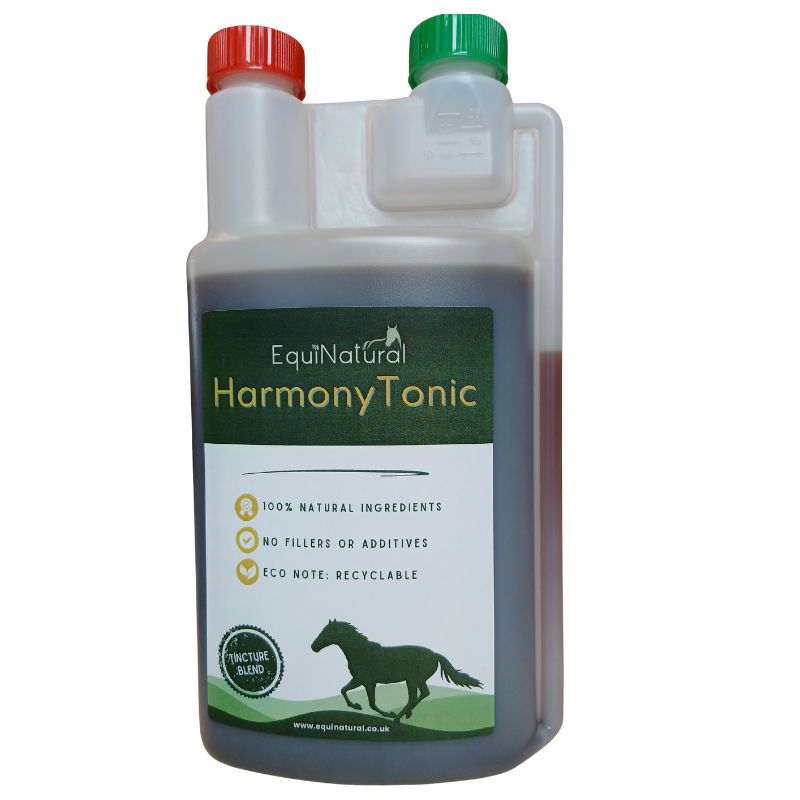
Th at's where we'd look at HarmonyTonic, o ur organic herbal blend for horses struggling with loss, separation or significant change, supporting emotional steadiness and resilience while they adjust to their new circumstances.
Sometimes it's not about calming a horse down - it's about helping them find their feet again.
NB. For ongoing, cumulative stress rather than a particular emotional upheaval, we'd look at StressTonic instead.
*For the latest equine calming insights, see our A-Z Horse Library/Calming
page
in our Advice Centre above.
Overview -
– when their world changes, their behaviour can change with it
Horses are social animals. Their companions, familiar surroundings and everyday routines are a huge part of how they feel secure.
So when a horse loses a much-loved companion, moves yards or finds themselves in an unfamiliar herd, it isn't necessarily just their behaviour that changes. Their appetite, energy, confidence and ability to settle can all be affected.
There's biology behind those feelings
Deep within the brain is a network involved in emotion, memory and stress responses, often called the limbic system.
And within that network sits the amygdala , which helps the brain recognise emotionally significant experiences and respond to potential threats.
It's one reason emotional upheaval can feel so much bigger than the event itself. Familiarity and companionship are part of what helps an animal feel secure, and when those things disappear, the brain and body's stress responses can be affected too.
We can't know exactly how a horse experiences grief, but we do know that losing familiar social relationships can affect far more than whether they call for their missing friend.
It's not always about making them calmer
That's the important distinction. A horse struggling after losing a companion doesn't necessarily need the same support as one who's frightened of travelling or living in a constant state of stress.
They may need time, familiar routines, reassuring companionship and the chance to establish new social connections.
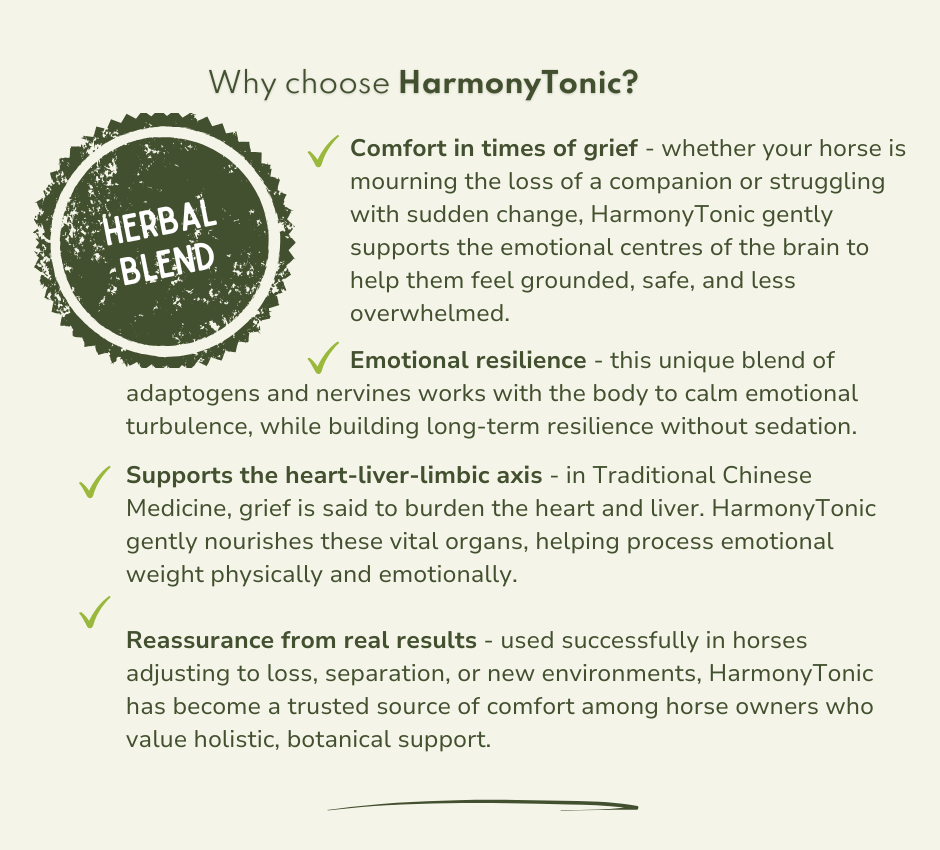
HarmonyTonic was created to support the horse through that adjustment, not to hurry it along.
Where plant power comes in
This is where traditional adaptogenic and nervine herbs may have a useful supporting role – not by removing the emotion, but by supporting the nervous system and normal stress response while the horse adjusts.
HarmonyTonic brings together herbs chosen to provide gentle support during periods of emotional and physical change.
And there's no set timetable. Some horses settle relatively quickly; others need longer, particularly after losing a companion of many years.
Sometimes the best thing we can offer isn't a way around the change, but a little support while they find their way through it.
How HarmonyTonic fits into your horse's support plan
HarmonyTonic is a good fit when something important has changed in your horse's world – and they don't seem themselves afterwards.
Choose HarmonyTonic if your horse:
✔ Has lost a much-loved field companion, stablemate or long-term herd partner, and seems quieter or withdrawn in their usual surroundings
✔ Is struggling to settle after moving yards or joining a new herd
✔ Has become unusually clingy, unsettled or reluctant to leave familiar companions
✔ Has lost some of their usual confidence or spark following a significant change
✔ Needs gentle, longer-term support while adjusting to a different way of life
In short: if you can trace the change in your horse's behaviour back to something they've lost, left behind or are struggling to adjust to, HarmonyTonic is where we'd start.
Supporting the wider picture
Not every horse who's lost a companion will struggle in the same way.
Some settle surprisingly quickly, whereas others might need more time, familiar routines, steady companionship and plenty of reassurance while they find their feet again.
But if there's more going on, we'd look a little wider.
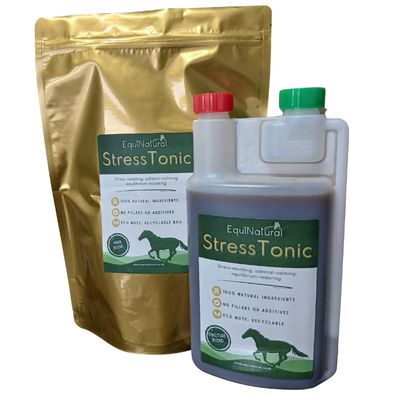
- StressTonic – where the emotional upheaval has developed into a more persistent stress pattern. If your horse remains tense, hypervigilant, reactive, tired-but-wired or withdrawn long after the original change, we'd look at supporting their wider stress response too.
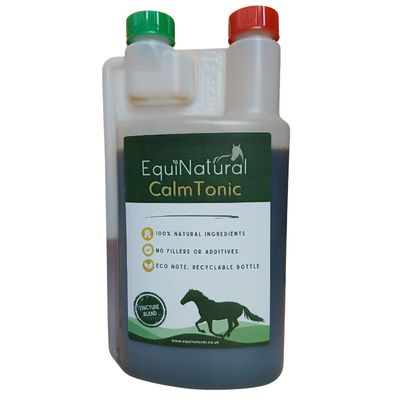
- CalmTonic – where your horse is generally coping but becomes particularly anxious around a specific event, such as travelling, separation or another temporary challenge.
And sometimes HarmonyTonic and StressTonic may have complementary roles, particularly where emotional loss and ongoing stress have become intertwined. But we'd always follow what the horse is showing us.
Foundation support
Emotional recovery isn't something we can hurry along with a bottle of herbs.
Familiar companions, predictable routines, plenty of forage, appropriate turnout and opportunities for natural social behaviour can make an enormous difference to a horse adjusting to loss or change.
Good nutrition matters too. Supporting your horse's baseline nutrition with a forage-based mineral blend such as EquiVita or VitaComplete helps provide the nutritional foundations that healthy nervous-system function, energy and everyday resilience depend upon.
In summary
Use HarmonyTonic when life has changed for your horse, and they're finding it difficult to find their feet again.
Supporting them through to their new normal is like a good friend, just understanding that they're having a bit of a moment.💚
Composition & feed guide
*HarmonyTonic is a nutritional, functional food supplement and not veterinary medicine. For more on this, see Dr Kellon's article - Nutrition is not 'Alternative' Therapy .
What's in HarmonyTonic?
Each herb in HarmonyTonic plays a gentle yet important role in supporting your horse’s natural emotional balance and inner calm following times of change or loss.
- Eleutherococcus senticosus – Adaptogenic root traditionally valued during periods of increased physical or emotional demand.
- Centella asiatica – Gentle restorative herb traditionally associated with nervous-system support, mental steadiness and healthy circulation.
- Crataegus oxycanthoides – Traditionally associated with cardiovascular and emotional wellbeing, bringing a gentle, steadying quality to the blend.
- Melissa officinalis – Gentle aromatic nervine traditionally valued where restlessness, nervous tension and digestive sensitivity overlap.
- Urtica dioica folia – Mineral-rich nutritive herb providing broader nutritional support and everyday vitality during periods of increased demand.
- Ganoderma lucidum – Traditional restorative mushroom included for wider immune and physiological support.
- Rhodiola rosea – Adaptogenic root traditionally associated with maintaining energy and coping capacity during demanding periods.
- Verbena officinalis – Traditional nervine included where nervous tension and emotional unsettledness seem to travel together.
- Withania somnifera – Classic adaptogenic root traditionally valued for supporting the nervous system through prolonged stress.
💧Tincture
Our human-grade, certified organic tinctures capture the plants' naturally occurring constituents in a concentrated, easy-to-feed liquid form.- Feed 6ml/100kg bodyweight per day, i.e. 30ml for a 500kg horse.
Fussy Eater?
Horses sometimes have their own opinions (and strong tastebuds!), so introduce gradually, building up over several days. See our Fussy Eaters guide as we've many helpful tips to make introducing new supplements easier
♻️ Eco Note: Our packaging is recyclable and refillable.
"Energetics" - how HarmonyTonic works
If you want the science, ' energetic architecture ' explains how a blend is designed to work across the nervous system, body, and emotional response pathways - not just which herbs are included, but how they interact to create a specific effect.
HarmonyTonic is built around one simple idea: when a horse's world changes, their ability to adapt can need a little support too.
It brings together adaptogens, calming nervines and restorative herbs to support the horse through that adjustment.
How the formula works
- Supporting emotional resilience - Eleuthero, Rhodiola and Withania form the adaptogenic foundation, traditionally valued for supporting normal stress responses, energy balance and resilience when life becomes demanding.
- Helping the nervous system find its feet - Lemon Balm, Vervain and Gotu Kola provide gentle nervine support for horses who seem unsettled, withdrawn or less able to cope with unfamiliar circumstances. Hawthorn adds its traditional association with emotional steadiness and cardiovascular wellbeing.
- Supporting vitality through the adjustment - Emotional upheaval can leave a horse looking rather flat. Reishi and Nettle provide broader support for normal immune function, nutritional wellbeing and everyday vitality while the horse finds their new rhythm.
Big picture
HarmonyTonic supports the nervous system, stress response and wider resilience while familiar routines, companionship and time do their own important work.
Sometimes a horse just needs a little help finding their feet again. Not suppressing emotion, not manufacturing happiness, but just supporting the horse while life rearranges itself. 💚
Clinical considerations / veterinary reference
Advisories
- Depending on the impact of loss, especially for the older horse, it's recommended to feed HarmonyTonic for a minimum 1-3 months.
- Contains adaptogen herbs - best fed earlier in the day to align with natural cortisol rhythm, to avoid interfering with the natural evening-energy drop.
- Caution if your horse is on steroid or immune-suppressant medications due to adaptogenic synergy (Rhodiola and Withania can mildly influence cortisol regulation).
Contraindications
- Not suitable for pregnant or nursing mares due to hormonal and adaptogenic activity.
- Avoid concurrent use with sedatives or stimulant medications without veterinary guidance.
- Not advised during acute illness or fever - allow the body to stabilise first before use.
Veterinary reference / formulary extract
A concise, vet-friendly reference is available for sharing with your vet.
HarmonyTonic FAQs
Can horses really grieve when they lose a companion?
We can't know exactly how a horse experiences grief, but we certainly know that losing a familiar companion can affect them.
Horses form strong social bonds, and losing those familiar relationships can be a significant adjustment.
That's where HarmonyTonic comes in – not to take the loss away, but to support your horse while they find their feet again.
My horse has gone very quiet since losing a companion. Could HarmonyTonic help?
Yes – and this is one of the situations where we'd particularly consider it.
We often think of emotional stress as something noisy: calling, pacing, fretting or refusing to settle - but some horses respond quite differently. More withdrawn, less interested, less enthusiastic, or simply seem to have lost a little of their spark.
HarmonyTonic's traditional adaptogenic and nervine herbs support emotional resilience and everyday vitality during difficult changes.
Is HarmonyTonic only for horses who've lost a companion?
Not at all. Losing a much-loved friend is perhaps the most obvious example, but horses can find all sorts of changes unsettling.
Moving yards, joining an unfamiliar herd, losing a long-standing field companion to another home, changing routines or suddenly finding themselves separated from familiar horses can all affect their sense of security.
Some take it beautifully in their stride, whereas others really struggle. If you can trace a change in your horse's behaviour back to something important changing in their world, HarmonyTonic may be a good place to start.
What's the difference between HarmonyTonic, StressTonic and CalmTonic?
This is where we'd ask one simple question - w hat's actually happening in your horse's world?
If they've lost a companion, moved yards or experienced a significant emotional upheaval and are struggling to adjust, we'd usually think HarmonyTonic.
If they're generally happy but become overwhelmed by something specific – travelling, clipping, a veterinary visit or another temporary challenge – that's more CalmTonic territory.
And if the stress seems to have become part of everyday life, with a horse who's constantly vigilant, tense, tired-but-wired or withdrawn, we'd look towards StressTonic.
Sometimes HarmonyTonic and StressTonic can work alongside one another, particularly when an emotional loss has developed into a longer-term stress pattern.
It's not about choosing the strongest calming supplement - it's always about understanding what your horse is actually struggling with.
Will HarmonyTonic make my horse sleepy or change their personality?
That's certainly not what we're trying to achieve.
HarmonyTonic isn't formulated as a sedative - its adaptogenic and nervine herbs are traditionally used to support the nervous system, normal stress responses and emotional resilience.
The aim is to help your horse feel more settled and better able to adapt to their new circumstances - not acquire a different personality but hopefully a little more of the horse you recognise.
How long should I feed HarmonyTonic after my horse has lost a companion?
There's no fixed timetable for adjusting to a loss, and horses can be wonderfully individual about it.
Some begin settling once familiar routines and new social relationships are established. Others take considerably longer, especially after losing a companion they've lived alongside for years.
We'd generally suggest allowing at least 1–3 months of consistent support, then reviewing how your horse is coping.
What we'd hope to notice over time is renewed interest in their surroundings, a more settled routine, growing confidence or simply more of their usual personality beginning to reappear.
And don't worry if progress isn't perfectly linear - some days are easier than others – for horses as well as humans.
© EquiNatural 2026. All content is original work protected under copyright, and may not be re-published, duplicated, or rewritten for commercial use without permission.