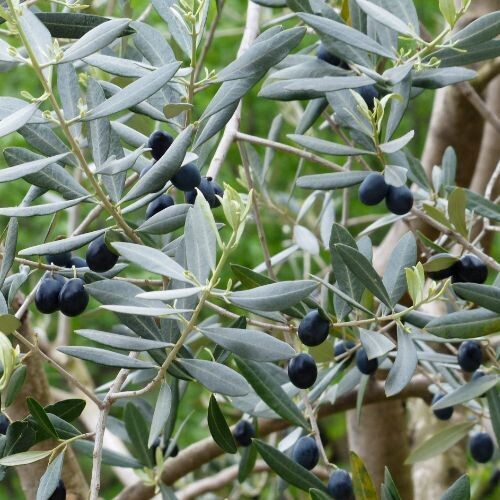
OLIVE LEAF for Horses (Olea europaea) | Stomach & Gastric Support
Benefits of Organic Olive Leaf for Horses
When people search for Olive Leaf for horses, they're often looking for natural support for the stomach, digestive comfort, or as one of the Mediterranean's most celebrated botanical protectors.
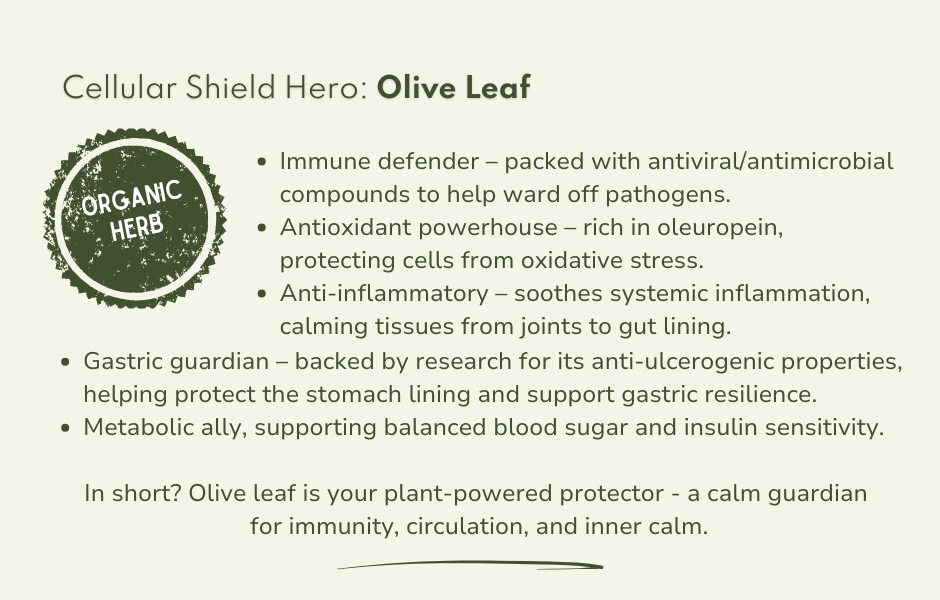
Best known for its remarkable antioxidant polyphenols, particularly oleuropein
, Olive Leaf has attracted growing interest for its ability to help support healthy tissues, natural immune function, and the stomach's own protective defences during everyday digestive challenge.
From sacred symbol to science-backed powerhouse, olive leaf is valued not simply for supporting the immune system, but for helping protect delicate tissues from everyday oxidative and inflammatory pressures. That's why we use it as part of our gastric support range to help maintain the stomach's natural protective defences.
*Please note this is a nutritional, functional horse food supplement and not veterinary medicine. For more information, see Dr Kellon's Horse Sense - 'Nutrition is not 'Alternative' Therapy.
Find organic Olive Leaf in the EquiNatural range
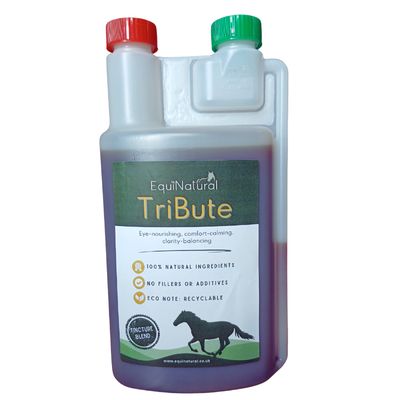
We use Olive Leaf for its anti-ulcerogenic properties, so you'll find it in our gastric ulcer blends:
Overview - why the stomach's natural defences matter
One of the questions we're occasionally asked is, "Why Olive Leaf ? Surely olives are all about the oil?"
In fact, it's the leaves that have fascinated herbalists for centuries.
Long before modern laboratories began studying olive trees, traditional healers throughout the Mediterranean were using the leaves to support health during times of illness, infection, and recovery. Today, much of that interest centres around one remarkable naturally occurring compound - oleuropein .
Oleuropein belongs to a family of plant compounds called polyphenols, produced by plants to help protect themselves from environmental stress. When included as part of the diet, these same compounds help support the body's own natural protective systems.
That's why Olive Leaf has attracted attention across so many different areas of health:
- Its antioxidant activity helps defend tissues against oxidative stress.
- Researchers have also explored its broad antimicrobial properties.
- More recently, attention has turned towards its ability to support healthy inflammatory balance.
At EquiNatural, that's where we find Olive Leaf particularly valuable.
The stomach lining is continually exposed to hydrochloric acid, digestive enzymes, physical abrasion from forage, and the effects of everyday stress. Supporting the stomach isn't simply about soothing irritation - it's also about helping maintain the strength and resilience of the tissues themselves.
That's why you'll find Olive Leaf in both UlsaTonic and UlsaCOMBO, where it complements the soothing mucilaginous herbs by adding another layer of nutritional support for the stomach's natural protective defences.
In short? Olive Leaf helps protect.
Composition & feed guide
💧Organic olive leaf tincture
Our human-grade, certified organic tinctures give you a ready-to-absorb potent source of phytonutrients at the highest-strength available, for immediate absorption straight into the bloodstream and to the body’s cells.
- Olea europaea, Leaf
- Infused 1:3 25%
- Organic Cultivated
- Feed Guide - 6ml/100kg bodyweight, daily in feed.
🌿Organic ground olive leaf
Grown, harvested and dried without the use of agri-chemicals, non-irradiated and GMO free - see our Quality page for Quality Management & Certification Documents.
- Olea europaea, le af
- Wild Harvested
- Origin Spain
- Feed Guide - 5g/100kg bodyweight per day, i.e. 25g for a 500kg horse.
Footnotes
- Laboratory tested for identification and compliance to the British and European Pharmacopoeia standards.
- Human grade.
- Please be aware that if you're purchasing our dried botanicals for human use, our dried range is cut to appropriate sizes for feeding to horses.
- ♻️ Eco Note: Our packaging is recyclable and refillable.
- 🧊 Storage Tip: Keep cool and dry.
Functional nutritional value
Constituents: Secoiridoid monoterpenes (e.g., oleuropein), triterpenoids, flavonoids, hydroxytyrosol
"Energetics" - the science behind Olive Leaf
When it comes to herbs and herbal formulations, you may have heard herbalists talk about " energetics". It's simply the way we describe how a herb or formula has been designed to support the body in a balanced and purposeful way. The science helps us understand why that structure works.
Olive Leaf is built around one remarkable characteristic - protection.
The olive tree produces a rich collection of polyphenols to help defend itself against environmental stress. Those same compounds have made its leaves one of herbal medicine's most respected botanicals for supporting healthy tissues and the body's natural protective systems.
Think of Olive Leaf as quietly strengthening the castle walls rather than waiting for invaders to arrive.
How Olive Leaf works
Rather than focusing on one isolated action, Olive Leaf helps support several closely connected aspects of tissue resilience.
- Supporting healthy gastric tissues
- Rich in naturally occurring polyphenols such as oleuropein, Olive Leaf helps maintain the stomach's own protective defences, making it a valuable partner alongside soothing mucilaginous herbs. - Supporting antioxidant protection
- Its diverse polyphenols and flavonoids help protect cells from the normal oxidative pressures created by everyday metabolism. - Supporting microbial equilibrium
- Rather than trying to eliminate microbes, Olive Leaf helps maintain a balanced internal environment where healthy microbial communities can coexist with healthy tissues. - Supporting the body's natural defences
- By nourishing healthy tissues and maintaining normal inflammatory balance, Olive Leaf contributes to the body's everyday resilience during periods of challenge.
Big picture
One of the things I love about Olive Leaf is that it doesn't work by forcing the body in one particular direction.
Instead, it supports the protective systems that are already there.
Perhaps that's why this remarkable Mediterranean tree has remained such a respected medicinal plant for thousands of years. Sometimes the most effective support isn't about fighting harder - it's about helping the body's own defences stay strong.
Clinical considerations
- In human studies there appear to be no known toxicities in either long or short-term usage of the leaf (Wood, 2008), although research in this area is lacking (European Medicines Agency, 2011).
- Again in human studies, due to the fact that olive leaf lowers blood sugar levels, it may be considered contraindicated for individuals with hypoglycemia (Gonzalez et al., 1992; Winston & Kuhn, 2008).
Olive Leaf in history & tradition
The humble olive tree, Olea europaea, has been an integral part of human history and culture since its cultivation began in Greece before 3500 BC. It was the original globetrotter, making itself at home from Africa to New Zealand, and made its way to the Americas by the 16th century.
The ancient Greeks loved their olive trees. They weren't just for snacking; olive branches symbolised peace, prosperity, and were the original Olympic medals. They even played a crucial role in marriage ceremonies. The Romans, not to be outdone, used them as peace tokens. This symbolism was embraced by various cultures and religions, with olive branches appearing in Christian, Islamic, and Jewish traditions as symbols of peace and purity.
Olive leaves were the ancient go-to remedy, used for everything from treating fevers to spicing up love life with a bit of magic (seriously). Women would stand beneath an olive tree, back towards the trunk, then pick an olive leaf and toss it over her right shoulder while reciting, “Go forth, little messenger, and bring to me an olive-leaf of love." If the leaf fell to the ground, it meant misfortune in love, but if caught and carried by the wind, it was a sign that she would be a happy wife within a year!
Olea comes directly from the Latin noun olea , meaning either 'an olive' or an 'olive tree.' Medicinally, olive leaves have been used since ancient times, with their healing properties documented by Greek and Roman texts. In modern times, scientific interest has reignited in the leaf's potential, particularly focusing on oleuropein , a compound known for its astringent, antioxidant, anti-inflammatory, antimicrobial, febrifual, and disease-fighting properties.
Modern research has also explored its potential role in supporting gastric tissues. Studies show how it's antioxidant and anti-inflammatory properties have exhibited an antiulcerogenic therapeutic option to support gastric ulcers, while taking olive leaf with meals may avoid gastrointestinal discomfort (Winston & Kuhn, 2008).
Furthermore, olive leaf extract has gained popularity as a dietary supplement, especially in light of the Mediterranean diet's heart-healthy reputation. Its use in traditional medicine across various cultures, for conditions ranging from fevers and infections to hypertension and diabetes, has sparked a wave of scientific inquiry into its therapeutic potential.
So, there you have it, a tale of the olive tree: part global traveller, part ancient influencer, and full-time provider of tasty snacks and health benefits. A supremely impressive tree, with deep historical roots and a wide-ranging impact on human culture, health, and religion.
FAQs for Olive Leaf in horses
What is Olive Leaf used for in horses?
Olive Leaf is valued for its remarkable naturally occurring polyphenols, particularly oleuropein , which has attracted growing scientific interest for its antioxidant, antimicrobial, and tissue-protective properties.
At EquiNatural, we use Olive Leaf primarily to help support the stomach's natural protective defences, making it an important part of our gastric support philosophy.
Why do you use Olive Leaf in your gastric support blends?
Great question - and one we're occasionally asked!
Most people associate olives with olive oil, not stomach health. However, it's actually the leaves that have fascinated researchers in recent years. Studies suggest the polyphenols found within Olive Leaf may help support healthy gastric tissues and their natural protective mechanisms.
That's why you'll find Olive Leaf in both UlsaTonic and UlsaCOMBO, where it complements soothing herbs by helping support the stomach's own resilience.
Is Olive Leaf only useful for the stomach?
Not at all. Although we use it primarily for gastric support, Olive Leaf has been widely studied for its broader role in supporting antioxidant activity, microbial balance, immune function, and healthy inflammatory responses.
One of the reasons it has remained such a respected botanical for centuries is that its actions extend well beyond one single body system.
What is oleuropein?
Oleuropein is one of the principal naturally occurring compounds found in Olive Leaf.
It belongs to a family of plant compounds known as polyphenols - substances plants produce to help protect themselves from environmental stress.
When included as part of the diet, these same compounds help support the body's own natural protective systems, which is why oleuropein has become the focus of so much modern research.
Can Olive Leaf help support horses prone to gastric ulcers?
Olive Leaf forms part of our wider nutritional approach to supporting gastric health.
Research has highlighted its antiulcerogenic potential, making it an excellent partner to the soothing and mucilage-rich herbs found within our gastric support blends.
Rather than replacing veterinary treatment where needed, its role is to help maintain healthy gastric tissues and support the stomach's natural protective defences.
Why don't you sell Olive Leaf as an immune supplement?
Whilst Olive Leaf has long been associated with immune support, that's not the primary reason we include it in the EquiNatural range.
We believe its greatest value lies in helping protect tissues exposed to everyday oxidative, inflammatory, and microbial challenges - particularly within the stomach.
That's why you'll find it sitting within our gastric support range.
Is Olive Leaf an antimicrobial herb?
Olive Leaf has attracted considerable scientific interest because many of its naturally occurring compounds have demonstrated antimicrobial activity in laboratory studies.
Within equine nutrition, however, we view Olive Leaf rather differently.
Rather than trying to eliminate microbes, we value its ability to support healthy microbial equilibrium whilst simultaneously helping protect the tissues those microbes live alongside.
Can Olive Leaf be fed every day?
Yes. Olive Leaf is commonly fed as part of an everyday nutritional programme supporting gastric health and tissue resilience.
Many owners include it within longer-term feeding plans, particularly where maintaining healthy stomach function is a priority.
Why is antioxidant support important for the stomach?
The stomach works hard every single day.
Alongside digestive acids and enzymes, its tissues are continually exposed to physical wear, metabolic activity, and everyday oxidative stress.
Supporting the body's natural antioxidant systems helps maintain healthy, resilient tissues capable of coping with these normal challenges.
What's the difference between feeding Olive Leaf on its own and using UlsaTonic?
Olive Leaf provides one important piece of the gastric support puzzle.
UlsaTonic builds on that foundation by combining Olive Leaf with a carefully selected range of soothing, mucilage-rich, and protective botanicals designed to support the stomach from several complementary angles.
Think of Olive Leaf as one specialist member of the team, whilst UlsaTonic brings the whole team together.
Why has Olive Leaf remained popular for thousands of years?
Very few medicinal plants have stood the test of time quite like the olive tree.
From the physicians of Ancient Greece to modern scientific research of today, Olive Leaf has earned a reputation as a botanical that supports the body's natural protective systems.
Perhaps that's the secret to its longevity - it doesn't try to force the body in one direction. It simply helps support the protective mechanisms that are already there.