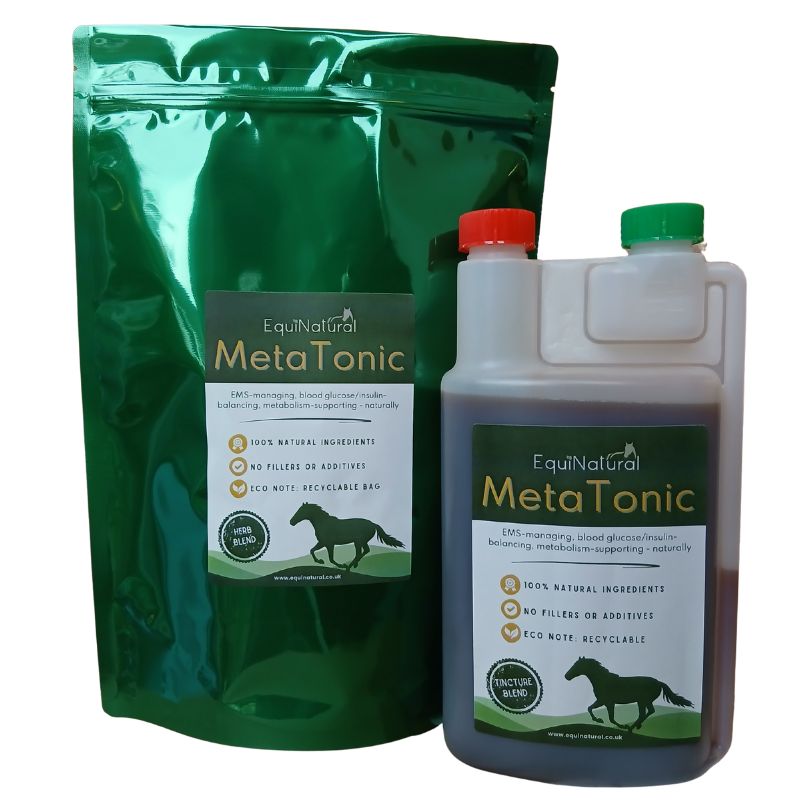
METATONIC for Horses | Daily Organic Metabolic Support for EMS-Prone & Insulin-Sensitive Horses
When your horse is EMS-prone, every day feels like a balancing act.
" T his is a gamechanger - even my vet told me to put her back on it!" Jane C.
For many owners, EMS isn’t a one-off diagnosis - it’s a constant low-level worry:
- A crest that feels more solid today
- Footiness as soon as the grass changes
- A horse who gains weight on fresh air and somehow seems able to find sugar where none should exist
- Digital pulses you check more than your phone
- And that constant thought in the background... p lease, not laminitis.
That was certainly true of my dear old Murf, who we formulated MetaTonic for.
Like many native ponies, he taught me that EMS isn't something you fix and forget about. It's something we learn to manage by the day, and with one eye always on the bigger picture.
It’s designed as a daily foundation blend for horses who need steady, ongoing metabolic support. The aim is simple - to help the system stay more stable, so you’re not constantly firefighting the inevitable challenges of grass, seasons, and modern horse keeping.
MetaTonic is the daily anchor that helps support the wider metabolic systems that influence how these horses cope with grass, seasonal change, and the challenges of modern horse keeping.
🏷️ SUBSCRIBE & SAVE 10% on MetaTonic
*For the latest EMS insights, see our A-Z Equine Condition/EMS/IR
page in the Advice Centre above.
Important note
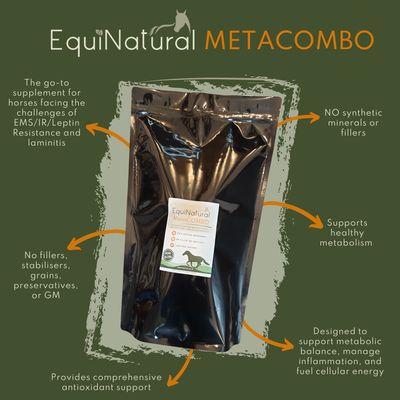
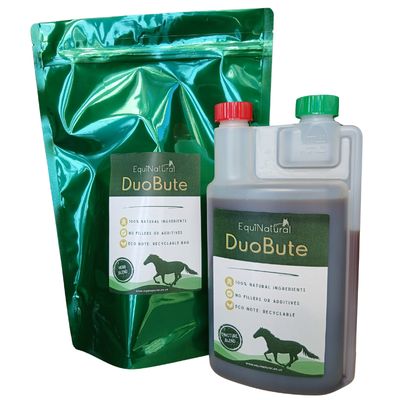
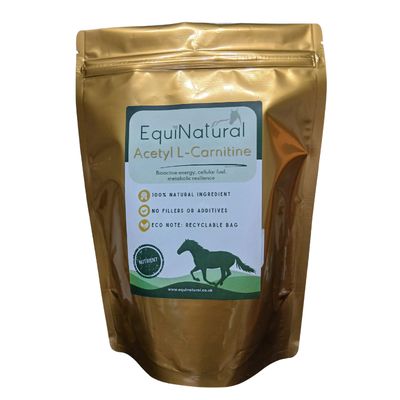
If you're feeding MetaTonic alongside our DuoBute(anti-inflammatory) and Acetyl L-Carnitine(crest/leptin-resistance), you might prefer our MetaCOMBO
– combining all three blends into one convenient formula, with a 5% saving over the individual products. More on this is the "Is MetaTonic right for your horse" section below.
Overview
Here's something I've noticed over the years - the horses that seem easiest to manage with EMS aren't necessarily the thinnest horses, the horses on the strictest diets, or even the horses receiving the most supplements.
They're usually the horses whose owners have become very good at spotting patterns.
They notice when the crest starts to change, when the spring grass effect is affecting them, or when pulses feel a little different... because EMS rarely appears out of nowhere.
A harder crest, footier on some surfaces, weight that becomes increasingly difficult to shift - the same seasonal patterns appearing year after year.
And that's because EMS isn't really one problem - it's a wider metabolic pattern involving glucose handling, circulation, inflammation, liver function, and the body's ability to maintain balance when conditions become challenging.
Understanding that bigger picture is often the turning point - once we stop chasing individual symptoms and start supporting the systems underneath them, everything tends to make a lot more sense.
How MetaTonic fits into your horse's support plan
Choose MetaTonic when your horse is:
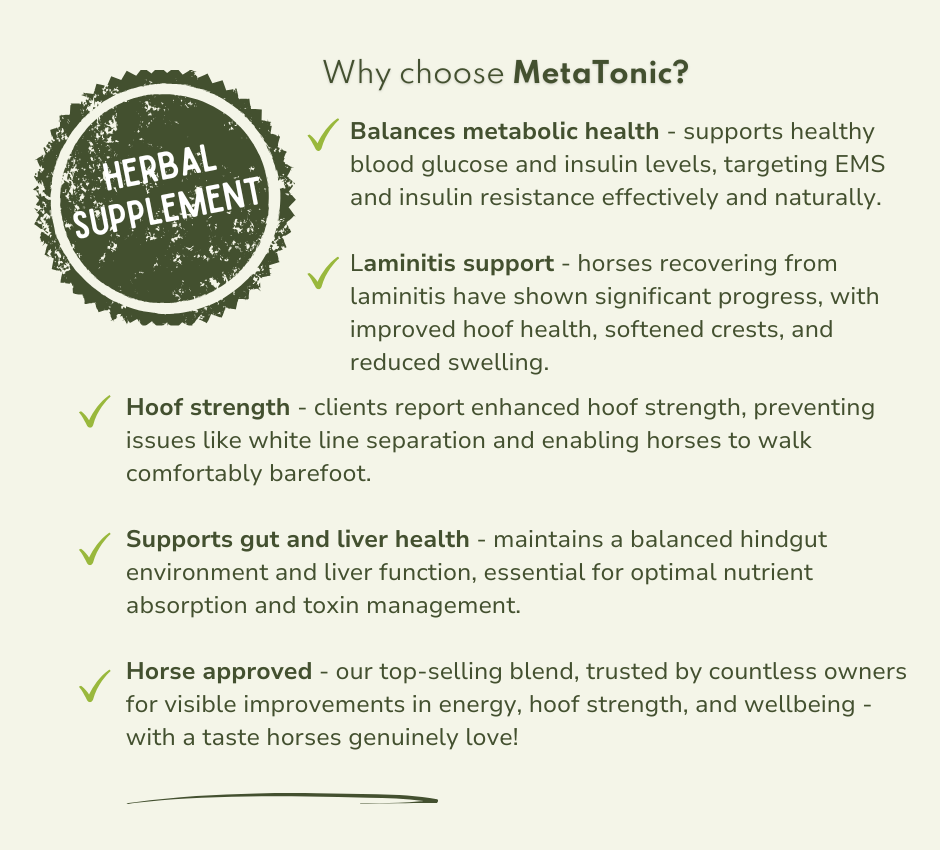
✔ Prone to EMS or insulin sensitivity
✔ Footy or uncomfortable on grass
✔ Showing fat pads
✔ Triggered by spring or autumn grass changes
✔ Needing daily, steady, long-term metabolic support
✔ A horse where you're always keeping one eye on the bigger laminitis picture
NB. Not for acute laminitis episodes - start only when your horse is comfortably mobile and stable post-crisis.
In short: MetaTonic is your foundation blend - the nutritional daily support fed each day to help support glucose–insulin balance - that everything else builds around.
This is exactly how we used it with Murf, as part of his daily routine that helped keep him comfortable and metabolically balanced over the long term.
From there, support can be adapted depending on what you're seeing.
- Layering support (as needed)
- Acetyl L-Carnitine – where crestiness/fat pads are more resistant, i.e. leptin resistance/the permanently hungry horse.
- DuoBute – for additional comfort support during periods of footiness or increased inflammatory pressure.
- MetaCOMBO – combines MetaTonic, Acetyl L-Carnitine, and DuoBute into one comprehensive metabolic support blend, with a 5% saving over the individual products.
- Looking deeper
Sometimes EMS is not the whole story - metabolic patterns can be part of a deeper, whole-system picture.
If EMS sits alongside recurring gut issues, skin reactivity, allergies, coughs, or sensitivity to environmental change, this may point to a broader underlying pattern.
- KPUCOMBO – for horses showing recurring, interconnected patterns across multiple body systems.
- Foundation support
Without a solid nutritional foundation, metabolic support becomes much harder work. Supporting your horse's baseline nutrition with a forage-based mineral blend such as VitaComplete or EquiVita helps create the conditions for healthier metabolic function and more consistent long-term results.
In short
Use MetaTonic as your daily foundation – step up to MetaCOMBO when additional support is needed, and if patterns keep returning or widening, it may be time to look deeper at the bigger picture.
Composition & feed guide
Each herb is chosen for its traditional role in supporting metabolic steadiness, liver and lymphatic function, and the gut–liver axis that underpins EMS.
MetaTonic is a nutritional food supplement and not veterinary medicine. For more on this, see Dr Kellon's article - Nutrition is not 'Alternative' Therapy
.
Composition glossary
- Berberis vulgaris (Barberry) - Traditionally used to support metabolic harmony, especially during sugar sensitivity. Helps maintain a healthy gut–liver axis - essential for steadier glucose handling.
- Galium aparine (Cleavers) - Supports lymphatic flow and natural fluid balance, used for easing internal congestion during metabolic strain.
- Foeniculum vulgare (Fennel) - A gentle, soothing carminative botanical supporting digestion and comfort - helpful when EMS affects gut motility, bloat, or tension.
- Galega officinalis (Goat’s Rue)
- Historically valued for supporting healthy glucose handling and metabolic steadiness. Grown biodynamically for us. - Crataegus oxyacanthoides (Hawthorn) - Supports healthy peripheral nutrient delivery - especially valuable for hoof comfort in metabolic horses.
- Silybum marianum (Milk Thistle) - Renowned for gentle liver nourishment, supporting natural detox pathways and metabolic resilience.
- Urtica dioica (Nettle) - Rich in natural plant minerals that support circulation, metabolism, and lymphatic clearance.
- Tabebuia impetiginosa (Lapacho/Pau d’Arco) - Traditionally used to maintain a healthy internal microbial terrain - important when gut balance influences metabolic stability.
- Smilax ornata (Sarsaparilla) - A harmonising botanical valued for supporting toxin clearance and helping maintain a comfortable internal environment, especially in crest-prone horses.
- Rosa canina (Rosehips) - Antioxidant-rich fruit supporting connective tissue integrity and helping buffer metabolic stress, particularly in the peripheral tissues.
Feed guide
🌿Organic dried herb blend
Human grade and produced to ecological standards. See our Quality page for Organic Certification Documents.
- Feed 5g/100kg bodyweight per day, i.e. 25g for a 500kg horse.
- 1 level 75ml scoop = 12g
💧Organic tincture blend
- Feed 6ml/100kg bodyweight per day, i.e. 30ml for a 500kg horse.
♻️ Eco Note - Our packaging is recyclable and refillable.
Fussy eater?
Horses sometimes have their own opinions (and strong tastebuds!), so now and then a new blend might need a little extra encouragement.
Check out our Fussy Eaters page, or send us a message - we've many helpful tips to make introducing new supplements easier.
Energetic architecture - the synergy behind MetaTonic
Energetic Architecture explains how the herbs in a formula are structured to work together in a balanced and purposeful way.
MetaTonic is built around how metabolic health depends on multiple systems working together.
Rather than focusing on a single pathway, the blend combines botanicals traditionally used to support glucose/insulin handling, liver function, circulation, lymphatic movement, and the gut–liver connection - the very systems that help our EMS-sensitive horses stay steadier and more resilient over time.
Think of it as supporting the wider metabolic orchestra rather than trying to silence a single instrument.
Functional intent
MetaTonic is designed to support:
- Metabolic steadiness and glucose handling
- Liver and lymphatic function
- Healthy peripheral circulation
- Gut–liver communication
- Tissue comfort and metabolic resilience
The goal is steady day-to-day support that helps maintain a calmer metabolic rhythm over time.
Functional categories – metabolic support in action
- Glucose–insulin regulation - Galega officinalis & Berberis vulgaris
- Supporting the body's ability to maintain stable metabolic responses to dietary sugars. - Gut–liver communication - Berberis vulgaris, Tabebuia impetiginosa, Foeniculum vulgare
- Supporting the connection between digestion, microbial balance, and healthy metabolic processing. - Liver support & metabolic balance - Silybum marianum & Urtica dioica
- Supporting the liver's central role in maintaining healthy metabolic - and everyday physiological - balance. - Lymphatic movement & fluid balance - Galium aperine & Urtica dioica
- Supporting healthy fluid movement and the clearance of everyday metabolic by-products (detoxification). - Peripheral circulation & hoof support - Crataegus oxyacanthoides & Rosa canina
- Supporting healthy blood flow to peripheral tissues, particularly important in metabolically sensitive horses. - Tissue resilience & metabolic housekeeping - Smilax ornata, Rosa canina
- Supporting tissue integrity and the body's natural management of the by-products associated with metabolic strain.
Big picture
Here's something Murf taught me years ago - the horses that do best with EMS are rarely the ones relying on a single dramatic intervention. They're the ones supported consistently, day after day, through good management, sensible nutrition, and steady routines.
MetaTonic was built around that philosophy - helping create a steadier metabolic environment so that the challenges of grass, seasons, and modern horse keeping become a little easier to navigate.
Clinical considerations
Advisories
- For best results, combine with appropriate forage management, movement, and a balanced low-NSC diet.
- Many owners choose to layer Acetyl L-Carnitine or DuoBute alongside MetaTonic depending on their horse's individual needs.
Contraindications
- Not suitable for pregnant or nursing mares
- Seek veterinary guidance before use alongside prescription metabolic medications, steroid or hormone-modifying therapy, or in horses with significant liver compromise.
- Not intended for use during an acute laminitic episode - introduce once your horse is stable, comfortable, and safely into recovery.
Veterinary reference / formulary extract
A concise, vet-friendly reference is available for sharing with your vet.© EquiNatural 2026. All content is original work protected under copyright, and may not be re-published, duplicated, or rewritten for commercial use without permission.