MUCUNA PRURIENS for Horses (Velvet Bean) | Natural PPID & Dopamine Support
Benefits of organic Mucuna for horses
When people search for Mucuna pruriens for horses, they're usually looking for natural support for PPID (Cushing's disease), dopamine production, or horses that seem mentally flat, disconnected, or lacking their usual spark.
" Totally improved the mood and motivation of my cushing mare within days." Julien B.
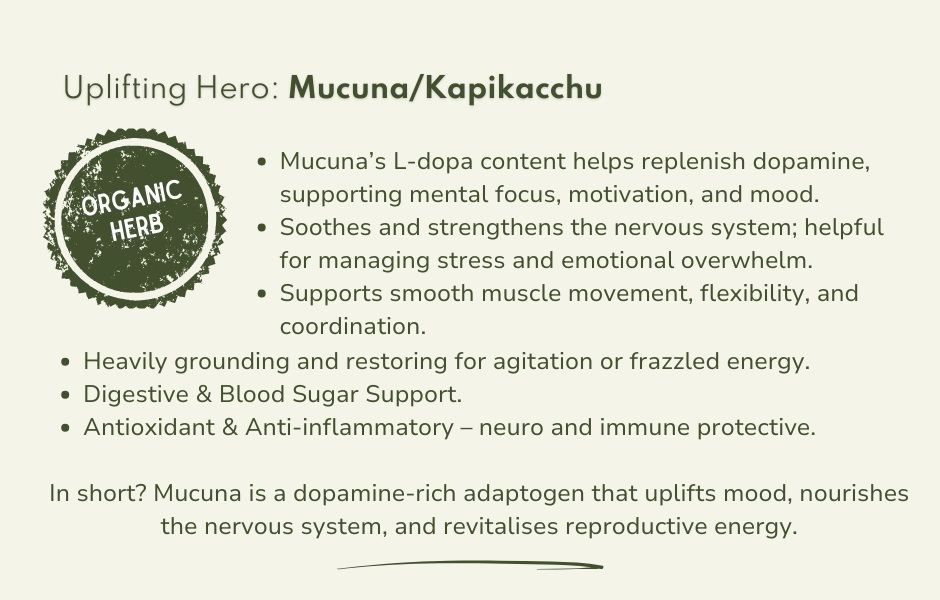
Naturally rich in L-DOPA - the precursor to dopamine - Mucuna has been valued for centuries as a restorative botanical that supports nervous-system resilience, motivation, and emotional balance during times of stress, ageing, or hormonal change.
*Please note this is a nutritional, functional horse food supplement and not veterinary medicine. For more on this see Dr Kellon's Horse Sense - Nutrition is not 'Alternative' Therapy
.
Find organic Mucuna in the EquiNatural range
Here’s where you’ll also find Mucuna in our supplement support for horses:
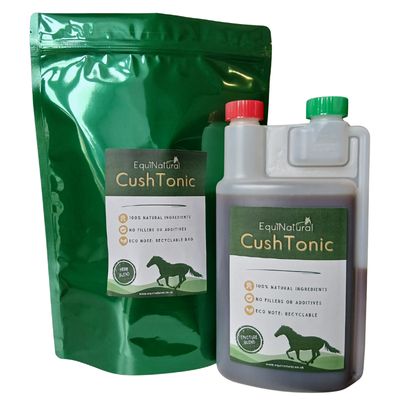
- CushTonic-1 - natural endocrine support for Cushing's/PPID symptoms
Overview - why dopamine matters in horses
When people first hear about dopamine in horses, they often think it's simply the body's "happy hormone." In reality, dopamine is much more important than that.
Dopamine is one of the nervous system's key messenger chemicals, helping different parts of the brain and body communicate with one another. It's involved in movement, motivation, focus, learning, emotional balance, and even the way the brain communicates with the endocrine system.
That's one of the reasons dopamine and PPID are so closely linked. In healthy horses, dopamine helps regulate the pituitary gland. As horses age, this signalling can become less efficient, which is one of the factors involved in the development of PPID (Cushing's disease).
While PPID is far more complex than dopamine alone, understanding this relationship helps explain why herbs such as Mucuna have attracted so much interest.
Beyond PPID, dopamine also helps explain why some horses simply seem to lose their spark. They may appear mentally flat, less motivated, slower to engage with their surroundings, or somehow not quite themselves.
That doesn't necessarily mean a horse has a dopamine deficiency- there are many possible reasons for these changes, from pain and illness to stress or ageing - but it does help us appreciate just how many aspects of everyday wellbeing dopamine influences.
This is where Mucuna becomes so fascinating. Naturally rich in L-DOPA, the precursor the body can use to produce dopamine, Mucuna has been valued for centuries as a traditional botanical for supporting nervous system vitality during times of stress, ageing and depletion.
Long before scientists understood dopamine, herbalists had already recognised that this remarkable plant seemed to help restore engagement, resilience and a brighter outlook.
And perhaps that's the most interesting thing about Mucuna. It isn't simply a herb for mood. It's a herb that reminds us how closely the nervous system, endocrine system and emotional wellbeing are connected - and why supporting the body's natural communication networks can be just as important as supporting any one organ in isolation.
Composition & feed guide
💧Organic mucuna tincture
Our human-grade, certified organic tinctures give you a ready-to-absorb potent source of phytonutrients at the highest-strength available, for immediate absorption straight into the bloodstream and to the body’s cells.
- Mucuna pruriens, Bean
- Decocted 1:3 65%
- Organically Cultivated
- Feed Guide - 6ml/100kg bodyweight, daily in feed
🌿Organic ground mucuna
Grown, harvested and dried without the use of agri-chemicals, non-irradiated and GMO free - see our Quality page for Quality Management & Certification Documents.
- Mucuna pruriens, Bean, Ground
- Wild Crafted
- Origin India
- Feed Guide - 5g/100kg bodyweight per day, i.e. 25g for a 500kg horse
Footnotes
- Laboratory tested for identification and compliance to the British and European Pharmacopoeia standards.
- Human grade.
- Please be aware that if you're purchasing our dried botanicals for human use, our dried range is cut to appropriate sizes for feeding to horses.
- ♻️ Eco Note: Our packaging is recyclable and refillable.
- 🧊 Storage Tip: Keep cool and dry.
Functional nutritional value
Mucuna seeds are naturally rich in L-DOPA - a precursor the body can use to produce dopamine, one of the nervous system’s key messenger chemicals involved in mood, motivation, focus, and emotional steadiness.
Alongside this, the seeds contain a broad spectrum of amino acids, antioxidant phytonutrients, minerals, and supportive plant compounds traditionally associated with nervous system nourishment, resilience, and vitality during periods of stress or depletion.
Energetic architecture - Mucuna's functional role
Mucuna is traditionally viewed as a restorative nervous-system tonic - supporting the connection between emotional balance, motivation, resilience, and neurological steadiness.
Rather than acting as a stimulant, it’s traditionally valued for helping depleted or over-stressed systems feel more settled, engaged, and emotionally resilient again over time.
Its role within functional support is often centred around:
→ nervous-system nourishment
→ emotional steadiness
→ motivation & engagement
→ endocrine resilience
→ recovery from long-term stress or depletion
Clinical considerations
- Introduce gradually in sensitive horses.
- Not suitable for pregnant or nursing mares without veterinary guidance.
Mucuna in history & tradition
Mucuna is one of those herbs that secretly fascinates people once they discover what it actually does.
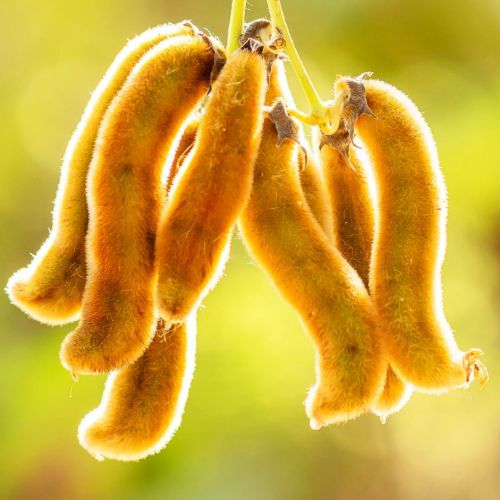
At first glance it doesn’t look especially glamorous - just a tropical climbing bean with furry pods so itchy they earned it the nickname “ the monkey that itches. ” But underneath its itchy exterior sits one of herbal medicine’s most interesting nervous system plants.
Traditionally used throughout Ayurveda as a restorative tonic for exhaustion, depletion, motivation, and vitality, Mucuna has long been associated with helping the body and mind find their spark again after periods of stress or strain. And for our horses, doesn't this feel incredibly relevant too?
These days we see so many horses who aren’t necessarily dramatically ill - they just seem mentally tired, flat, tense, over-reactive, disconnected, or as though their nervous systems are permanently stuck on high alert.
This is where herbs like Mucuna become so interesting - because for centuries, traditional herbalists valued it as a deeply nourishing nerve and vitality tonic, particularly during times of depletion, stress, ageing, or recovery.
Modern science later discovered one of the reasons why - the seeds naturally contain L-dopa - a precursor the body can use to produce dopamine, which plays a major role in mood, motivation, focus, and emotional regulation.
But long before anybody knew the word “dopamine,” herbalists had already observed the plant’s effects. They simply noticed that certain exhausted, depleted individuals often seemed brighter, steadier, calmer, and more engaged again when Mucuna became part of the picture.
And honestly, herbal medicine is full of plants like that - plants where traditional observation naturally arrived at conclusions science only began investigating much later.
That’s part of what makes herbs like Mucuna so fascinating.
FAQs for mucuna in horses
Can Mucuna help horses with PPID (Cushing's)?
Many owners first discover Mucuna whilst looking for natural ways to support horses with PPID.
One of the reasons is that Mucuna is a natural source of L-DOPA, the direct precursor to dopamine - an important neurotransmitter involved in movement, motivation, and communication between the brain and the endocrine system.
Within the EquiNatural approach, Mucuna is viewed as nutritional support for healthy dopamine pathways. It is not intended to replace veterinary diagnosis or prescribed medication such as Prascend, but may be considered as part of a wider support programme alongside appropriate veterinary care.
Why is dopamine important in horses?
Dopamine is often thought of as the "motivation" neurotransmitter, but its role goes far beyond mood.
It helps coordinate communication between the brain and body, supporting movement, focus, endocrine signalling, motivation, and many aspects of normal nervous system function.
As horses age, or where dopamine-producing pathways become less efficient, owners may notice subtle changes such as reduced sparkle, slower responses, altered movement, or a general feeling that their horse isn't quite themselves.
Supporting healthy dopamine pathways is one of the reasons Mucuna has attracted so much interest in equine nutrition.
What does Mucuna Pruriens do for horses?
Mucuna Pruriens is a tropical legume traditionally valued for supporting the nervous system and healthy dopamine production.
Its naturally occurring L-DOPA provides the raw material the body uses to produce dopamine, making it a popular choice for horses needing nutritional support for vitality, motivation, and healthy neurological function.
Rather than acting as a stimulant, Mucuna supports one of the body's own natural biochemical pathways.
Can Mucuna help horses that seem flat or lacking motivation?
This is one of the most common reasons owners choose Mucuna.
Sometimes a horse isn't obviously unwell - they simply seem less enthusiastic, slower to engage, or lacking the sparkle they once had.
Whilst there can be many reasons for these changes, supporting healthy dopamine pathways may form part of a wider nutritional approach where reduced vitality or motivation has become noticeable.
As always, persistent or unexplained changes should first be discussed with your vet.
Is Mucuna suitable for older horses?
Many owners choose Mucuna for veteran horses as part of a programme supporting healthy ageing.
Because dopamine plays an important role in movement, nervous system function, and endocrine communication, nutritional support for these pathways often becomes increasingly relevant as horses grow older.
Many owners report that their older horses simply seem brighter, more engaged, and more themselves.
Can Mucuna be fed alongside Prascend?
If your horse has been prescribed Prascend for PPID, we don't recommend feeding mucuna to avoid the risk of over-stimulating dopamine levels.
We'd always suggest discussing any additional supplementation with your vet before introducing Mucuna.
How long does Mucuna take to work?
Every horse is different. Some owners notice changes within the first week or so, whilst others see more gradual improvements over a longer period.
Because Mucuna works by supporting the body's own dopamine pathways, it is generally best viewed as part of a consistent, long-term nutritional programme rather than a quick fix.
Is Mucuna only useful for horses with PPID?
Not at all. Although Mucuna is frequently discussed in relation to PPID, healthy dopamine pathways are important for every horse.
Owners also choose Mucuna during periods of ageing, increased physical or mental demand, or whenever they feel their horse needs additional support for vitality, resilience, and nervous system function.
In many ways, Mucuna isn't simply about one condition - it's about supporting one of the body's most important communication pathways.
© EquiNatural 2026. All content is original work protected under copyright, and may not be re-published, duplicated, or rewritten for commercial use without permission.