ULSATONIC for Horses | Organic Stomach & Gastric Support for Ulcer-Prone Horses
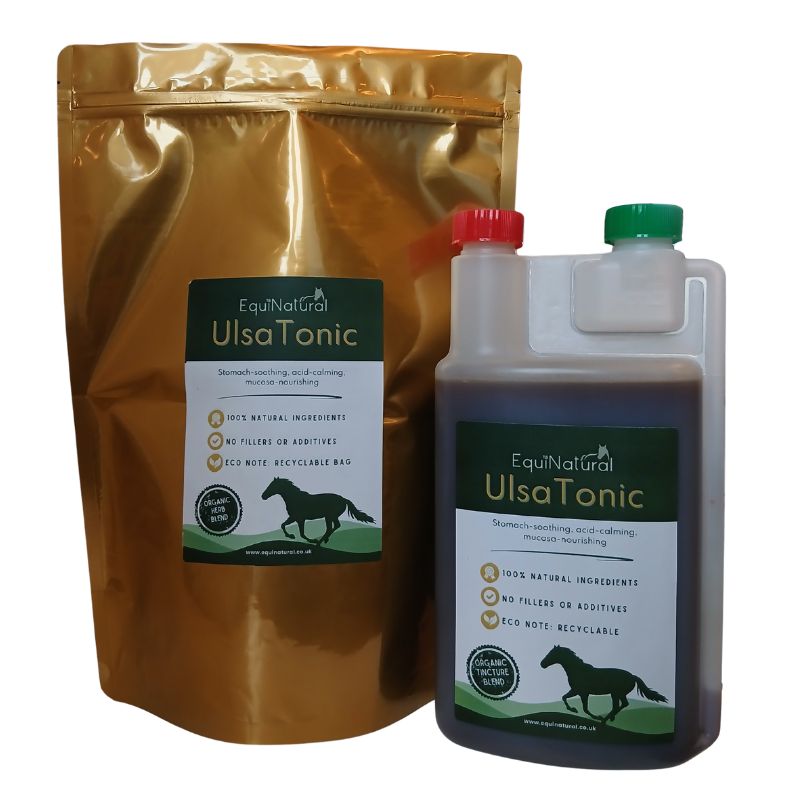
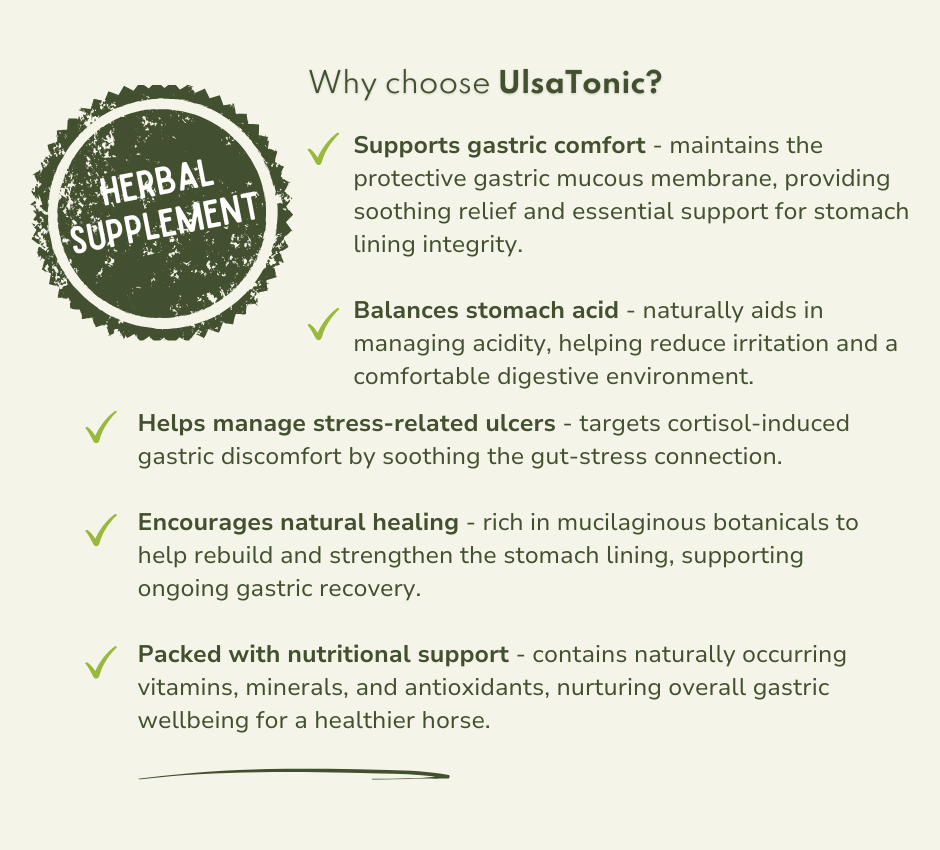
UlsaTonic for horses is an effective blend of organic, regenerative phytonutrients, formulated to support the stomach's natural defences against equine gastric ulcers.
"Pony went in for another scope a month later- no sign of an ulcers or scaring from them. Vets couldn't believe how good & fast recovery was." Cath K.
Some horses wear their stomach discomfort on their sleeve - they're girthy, grumpy when groomed, tighten up when the saddle appears, reluctant to go forward. Others are harder to spot - more reactive, less comfortable around feeding or everyday handling.
The signs can be subtle, varied, and easy to dismiss until they start becoming a pattern - and that's where UlsaTonic fits.
Designed to support stomach comfort, gastric health, and the stomach's natural protective defences, this carefully structured botanical blend helps support horses whose stomachs may be struggling to cope with the demands of modern management, stress, training, travel, or disrupted forage routines.
*For the latest gastric ulcers insights and updates, see our main A-Z/Ulcers
page in the Info Centre above.
Important Note
For horses with more significant gastric ulcers requiring pain/anti-inflammatory support, stress management, and intestinal repair, you might prefer our UlsaCOMBO – combining a full gastric ulcers programme into one convenient formula tailored to support healing at all ulcerogenic grades, with a 5% saving over the individual products. More on this is the Support Plan section below.
Overview - why gastric ulcers are rarely just a stomach problem
Did you know? Unlike us humans or dogs, horses produce stomach acid continuously - matching their trickle-feed pattern. Which means, unlike us, a horse's stomach was never designed to spend long periods empty. So to avoid acid-spash hitting the fragile stomach wall lining, it's vital that a horse has permanent access to forage.
In the wild, horses move, browse, and forage for up to 23hrs per day. Food arrives little and often, saliva is produced continuously, and the stomach's protective systems are constantly being topped up.
Modern horse life can look very different - travel, competition, box rest, restricted grazing - and the riskiest time of not enough forage - overnight stablising, where one haynet served up at 6pm will be long gone by 10pm, meaning many horse will stand their with empty stomachs for 6-8 hours.
Long gaps between available forage means one thing - acid splash on the stomach's natural protective wall.
The result? Hydrochloric acid continues to be produced, but with no forage inside the stomach to buffer it. Over time, that can begin to challenge the stomach lining itself.
And then there's the stress - food anxiety, worrying when the next forage is coming, but also stress at the burning pain.
When stress becomes ongoing, it can influence digestion and alter some of the stomach's normal protective mechanisms - contributing to the cycle many owners recognise all too well.
It's why so many ulcer-prone horses also develop behaviours such as weaving, cribbing, wind-sucking, or box-walking. These isn't "naughty" - it's a horse struggling to cope with an environment that doesn't match how (a) their digestive system evolved to function, and (b) their natural instincts to forage are removed.
This is also where the distinction between squamous and glandular ulcers begins to emerge.
Squamous ulcers are often linked to forage disruption and acid exposure, while glandular ulcers have a much stronger connection to stress and the body's wider physiological response.
That's why gastric ulcers are rarely just a stomach problem - they're often the result of a mismatch between how the horse's digestive system evolved to work and how modern management sometimes asks it to function.
Understanding that difference is often the first step towards supporting long-term gastric health.
How UlsaTonic fits into your horse's support plan
UlsaTonic is a good fit when your horse is showing the subtle signs that stomach comfort may not be quite where it should be.
✔ Girthiness, tightening up, or avoiding being tacked up
✔ Sensitivity when groomed around the stomach area
✔ Changes in attitude around feeding, handling, or work
✔ A tucked-up appearance or recurring discomfort that seems difficult to pinpoint
✔ A history of gastric ulcers or stomach sensitivity
✔ Increased risk during travel, competition, box rest, forage disruption, or stressful periods
In short: if your horse's stomach seems sensitive, reactive, or prone to discomfort, UlsaTonic provides targeted support for gastric comfort and the stomach's natural protective defences.
From there, support can be adapted depending on what you're seeing.
- Supporting the wider ulcer picture
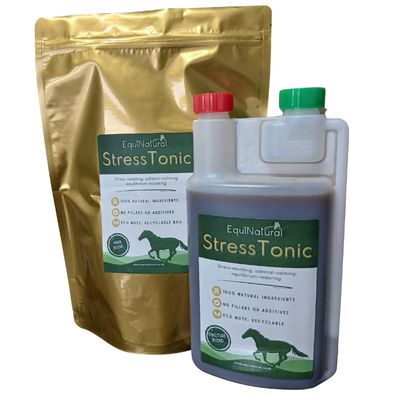
- StressTonic – where stress, anxiety, routine changes, or nervous behaviour appear to be contributing to the picture.
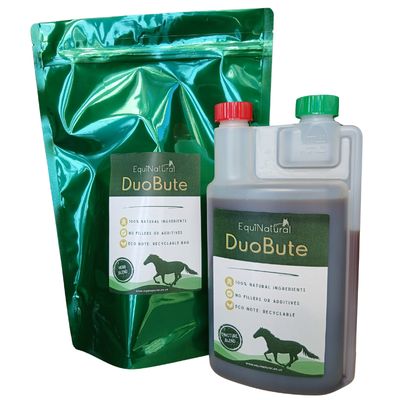
- DuoBute – where discomfort and inflammation are adding to the challenge.
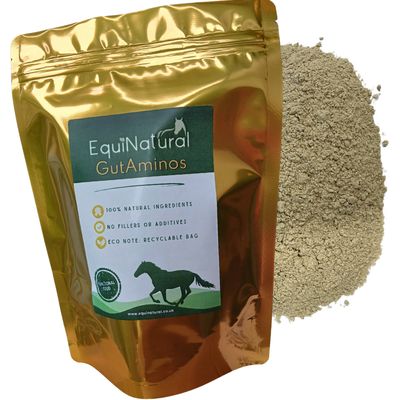
- GutAminos – where additional support for the intestinal lining and wider digestive tract is needed.
- The complete programme combined
- UlsaCOMBO – combines UlsaTonic, StressTonic, DuoBute, and GutAminos into one structured programme for horses needing broader multi-level support.
- Looking beyond the stomach
Sometimes the signs are not coming from the stomach at all.
If your horse shows right-hand-side sensitivity, gas, bloating, acidic droppings, or reactions linked more closely to hindgut imbalance, it may point towards microbial disruption further along the digestive tract.
- SiboCARE – for horses where hindgut dysbiosis, gas, and microbial imbalance appear to be the primary drivers.
- Foundation support
Gastric health starts with management as much as supplementation - quality meadow hay fed adlib, and a solid nutritional foundation through a forage-based mineral blend such as VitaComplete or EquiVita all help create the conditions that the stomach's natural protective systems depend upon.
*If you're not already feeding a mineral balancer, try one of our 1kg trial bags.
In summary
Use UlsaTonic when the stomach itself needs support. Add targeted stress, comfort, or intestinal support where needed, or choose UlsaCOMBO when you want the complete programme in one formula.
Composition & feed guide
UlsaTonic is a nutritional, functional food supplement and not veterinary medicine. For more on this, refer to Dr Kellon's article - Nutrition is not 'Alternative' Therapy .
Composition glossary
Each herb in UlsaTonic plays a vital role in nurturing the stomach’s natural defences, soothing irritation, and supporting mucosal integrity.
- Withania somnifera – Adaptogenic root that helps buffer the physiological impact of stress, reducing cortisol-related acid surges while supporting adrenal and nervous system balance.
- Matricaria recutita/chamomilla – Gentle anti-inflammatory and antispasmodic herb known to soothe the gastric lining, ease tension, and support healthy digestive motility.
- Symphytum officinale Folia – Traditionally used for tissue regeneration; its allantoin content supports mucosal repair and renewal of the stomach’s epithelial cells. (Feed for limited durations of up to 4 weeks, with a break between courses.)
- Trigonella foenum-graecum – Rich in mucilage and amino acids, Fenugreek helps coat and protect the stomach wall, supporting the body’s natural anti-ulcer defences.
- Althaea officinalis Radix – Demulcent powerhouse that forms a soothing film over irritated mucosa, calming inflammation and promoting repair of the stomach lining.
- Filipendula ulmaria – Rich in natural salicylates with a natural affinity for the gut, helping to buffer stomach acid and support balanced digestive comfort. (Contains salicylic acid — a controlled substance under competition rules.)
- Mentha piperita – Cooling and carminative; helps relax the stomach’s smooth muscle, aiding comfort and reducing discomfort from trapped gas.
- Olea europaea – Recognised for its anti-ulcerogenic and antioxidant compounds, olea supports gastric resilience and healthy digestive function.
Feed guide
🌿Dried herb blend
Human grade, produced to ecological standards and free from agro-chemicals. See our Quality page for Organic Certification Documents.
- Feed 5g/100kg bodyweight per day, i.e. 25g for a 500kg horse.
- 1 x level 15ml scoop = 6-grams
💧Tincture
- Feed 6ml/100kg bodyweight per day, i.e. 30ml for a 500kg horse.
Fussy Eater?
Horses sometimes have their own opinions (and strong tastebuds!), so introduce gradually, building up over several days. See our Fussy Eaters guide for helpful tips if needed.
♻️ Eco Note - Our packaging is recyclable and refillable
Energetic architecture - the synergy behind UlsaTonic
Energetic Architecture explains how the herbs in a formula are structured to work together in a balanced and purposeful way.
UlsaTonic is built around a simple observation: healthy stomach function relies on more than acid control alone.
The stomach's natural protective systems depend upon resilient mucosal tissues, efficient starch/protein pre-digestion, appropriate stress responses, and the continual renewal of the stomach lining itself.
Rather than focusing on a single pathway, UlsaTonic supports the wider factors that help maintain gastric comfort and resilience over time.
Think of it as supporting the stomach's natural defences rather than simply reacting to the acid.
Functional intent
UlsaTonic is designed to support:
- Gastric comfort and stomach resilience
- Healthy mucosal protection and renewal
- Balanced digestive function
- Stress-related influences on gastric health
- Long-term stomach wellbeing
The goal is to help maintain the conditions that healthy gastric tissues depend upon.
Functional categories – gastric support in action
- Mucosal coating & gastric protection - Althaea officinalis, Trigonella foenum-graecum
- Providing soothing mucilage-rich support that helps maintain comfort and protect delicate stomach tissues. - Gastric tissue renewal & resilience - S
ymphytum officinale, Matricaria recutita
- Supporting the natural renewal and resilience of the stomach lining while helping maintain digestive comfort. - Stress & gastric communication - Withania somnifera, Matricaria recutita
Supporting the body's response to stress - an important part of the picture for many gastric-sensitive horses. - Digestive comfort & acid balance - Filipendula ulmaria, Mentha piperita
- Supporting digestive comfort and helping maintain a balanced gastric environment. - Antioxidant & gastric resilience - Olea europaea
- Supporting cellular resilience and helping maintain the stomach's natural protective systems during periods of physiological challenge.
Big picture
No question - the horses most prone to stomach issues are often the horses trying hardest to cope.
They're the sensitive horses, the worriers, the horses whose routines change, whose forage disappears too soon, or whose systems seem to react to life's pressures a little more intensely.
That's why UlsaTonic isn't simply about the stomach - it's about supporting the wider factors that allow the stomach to protect itself in the first place.
Put simply, healthy stomachs rely on healthy defences.
Clinical considerations / veterinary reference
Advisories
- If your horse is prone to chronic gastric ulcers or is on long-term proton pump inhibitors (i.e. omeprazole), introduce gradually and consult your vet regarding concurrent use.
- Always ensure quality meadow hay is available 24/7 to ensure the stomach never empties.
Contraindications
- Not suitable for pregnant or nursing mares without veterinary oversight (due to hormonal and uterine activity of certain herbs).
- Competition horses: Meadowsweet (Filipendula ulmaria) contains salicylic acid, a controlled substance under FEI rules - always check current regulations before competition use.
- Avoid concurrent use with NSAIDs or anticoagulant medications unless under veterinary supervision, as natural salicylates may enhance their effects.
Veterinary reference / formulary extract
A concise, vet-friendly reference is available for sharing with your vet.
FAQs for gastric ulcers in horses
What is UlsaTonic designed to support?
UlsaTonic is designed to support gastric comfort, stomach resilience, and the stomach's natural protective defences.
It is often chosen for horses showing signs of gastric sensitivity, a history of ulcers, or those going through periods of stress, travel, competition, box rest, or forage disruption.
What signs suggest my horse may benefit from UlsaTonic?
Many horses don't show obvious signs. Common clues can include:
✔ Girthiness or tightening up during tacking up
✔ Sensitivity around the stomach area
✔ Changes in attitude or willingness to work
✔ Stress-related behaviours
✔ A tucked-up appearance
✔ A history of gastric ulcers or stomach sensitivity
✔ Increased risk during travel, competition, or box rest
Can horses get ulcers even when they're always eating?
Yes. Whilst long periods without forage are one of the biggest risk factors for g"squamous" gastric ulcers, they're not the only factor involved.
Stress, travel, competition, box rest, herd changes, illness, pain, and routine disruption can all influence the stomach's natural protective mechanisms.
This is particularly relevant for "glandular" ulcer patterns, where stress appears to play a much greater role than simple acid exposure alone.
That's why some horses develop gastric sensitivity despite appearing to have a well-managed diet and plenty of forage available.
In many cases, supporting both the stomach and the wider stress response produces the best long-term results.
What's the difference between squamous and glandular ulcers?
Although both occur within the stomach, they affect different areas and often develop for different reasons.
Squamous ulcers typically occur in the upper portion of the stomach. They are most commonly associated with acid splash, forage disruption, fasting periods, and management practices that leave the stomach empty for too long.
Glandular ulcers occur in the lower portion of the stomach, where acid is naturally produced. These ulcers appear to have a much stronger connection to stress, pain, illness, inflammation, and disruption of the stomach's normal protective mechanisms.
Many horses have a combination of both.
Understanding which type is involved can help guide management decisions and explain why some horses respond differently to seemingly similar treatment approaches.
This is one reason why gastric ulcers are rarely just an acid problem – they often involve management, stress, physiology, and the horse's wider environment working together.
How long should I feed UlsaTonic?
This depends on your horse and the situation. It's recommended to feed UlsaTonic as a 1-month course.
Can UlsaTonic be fed long term?
Some horses may need a 2nd month's UlsaTonic support, particularly if management challenges are still underway, i.e. forage availability, stress, feeding practices, and management routines wherever possible.
What's the difference between UlsaTonic and UlsaCOMBO?
UlsaTonic focuses specifically on supporting stablising the stomach and its natural protective systems.
UlsaCOMBO provides a broader programme by combining:
- UlsaTonic for gastric support
- StressTonic for stress management
- DuoBute for comfort support
- GutAminos for intestinal support
In simple terms, UlsaTonic supports the stomach directly, whilst UlsaCOMBO supports the wider ulcer picture.
My horse has confirmed ulcers. Should I choose UlsaTonic or UlsaCOMBO?
If your horse is dealing with more significant gastric challenges, UlsaCOMBO is often the preferred option because it addresses several factors commonly associated with ulcer-prone horses, including stress, comfort, gastric support, and digestive tract support.
UlsaTonic remains the starting point where targeted stomach support is the main priority.
Can UlsaTonic be fed alongside StressTonic?
Yes. In fact, this is one of our most common combinations.
Stress and gastric health are closely connected, particularly in horses prone to glandular ulcer patterns, routine changes, travel stress, or anxiety-related digestive disruption.
Can UlsaTonic be fed alongside veterinary treatment?
Many owners choose to use UlsaTonic alongside veterinary-led management programmes.
If your horse is receiving prescription medication, including omeprazole or other gastric treatments, we recommend discussing supplementation with your vet.
What's the difference between stomach ulcers and hindgut problems?
Although some signs can overlap, there are often clues.
Stomach-related issues commonly show up as girthiness, sensitivity during tacking up, behavioural changes around work, or discomfort linked to fasting periods.
Hindgut disruption is more commonly associated with gas, bloating, right-hand-side sensitivity, acidic droppings, or reactions linked to grass and forage changes.
Where hindgut imbalance appears to be the primary issue, SiboCARE may be more appropriate.
Why is constant access to forage so important?
Unlike humans, horses produce stomach acid continuously.
Their digestive system evolved around near-constant grazing, which means long periods without forage can leave the stomach more vulnerable to acid exposure.
This is why ad-lib meadow hay and minimising long fasting periods remain among the most important aspects of gastric management.
How quickly will I notice a difference?
Every horse is different. Some owners report changes within a very short time (i.e. a few days to a week), whilst others notice more gradual improvements over time.
The response often depends on the severity of the challenge, management factors, forage availability, and the wider support programme being used.
Do I still need a mineral balancer if I'm feeding UlsaTonic?
Yes. Healthy gastric function relies on good overall nutrition.
A forage-based mineral balancer such as VitaComplete or EquiVita helps provide the nutritional foundations that support normal digestive function, tissue maintenance, and overall resilience.
© EquiNatural 2026. All content is original work protected under copyright, and may not be re-published, duplicated, or rewritten for commercial use without permission.